
Andy Burnham Pledges ‘Clear’ Growth Plan In First Parliament Address As UK PM
UK Prime Minister Andy Burnham has pledged a “clear, coherent and credible approach” to boosting economic growth, as he made his first major statement to Parliament since taking office and prepared for his first Prime Minister’s Questions on Wednesday.
Burnham, who took over from Keir Starmer six weeks ago, faced MPs in the House of Commons as Parliament returned from its summer recess. He said his tour across the UK had given him a “clear diagnosis of what has gone wrong” and promised a new approach focused on economic growth, devolution and optimism.
“From the 1980s, this country took a series of wrong turns. Political power was centralised. Economic power was privatised. The country deindustrialised. Austerity followed, hollowing out councils and depriving them of the agency to act to reverse any of this,” Burnham said.
He also blamed Brexit for compounding Britain’s economic problems, saying it had contributed to a decade of low growth and stalled regeneration.
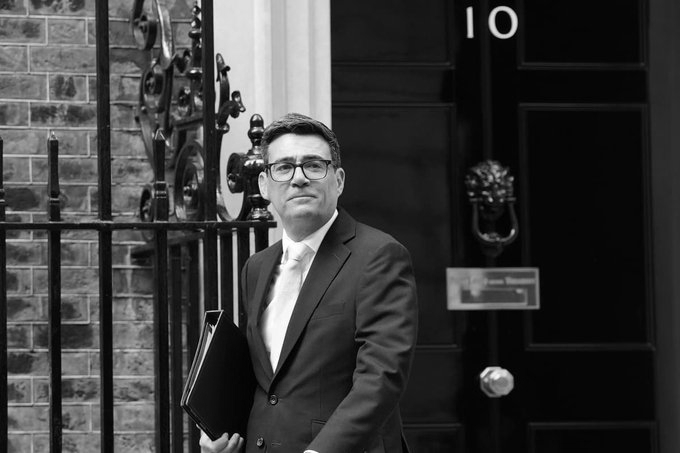
“Six weeks ago, when I stood outside Downing Street, I said that Britain needs a circuit-breaker after a decade of turbulence, negativity and divisive politics,” Burnham said.
He pledged a “clear, coherent and credible approach to growth” aimed at creating “positivity and possibility in every postcode in Britain”, adding that he wanted to make the next decade better than the last.
A central part of his agenda is devolution, with Burnham promising to move decision making away from Westminster and establish a No. 10 North base in Manchester. He has also committed to moving civil servants out of Whitehall and giving regions greater control over their affairs.
Burnham said his Labour government would be “relentless” in pursuing greater public ownership and control, arguing that giving people and communities greater control over their services and economic futures would drive change and growth.
His government has also placed the cost of living at the centre of its agenda, with measures including VAT relief on household electricity bills and a planned £2 bus fare cap. However, questions remain over how some of the government's wider spending commitments will be funded.
Burnham has refused to rule out tax increases in the October 28 Budget, saying he would not be unrealistic about the state of the public finances. The issue is likely to come under renewed scrutiny as he faces Conservative leader Kemi Badenoch at his first PMQs.
The economic backdrop has become more difficult. UK government borrowing costs have climbed sharply, with the 10 year gilt yield reaching 5.268 per cent, its highest level in 18 years, amid a global bond market sell off and concerns over inflation driven by higher oil prices. The rise has reduced the government's fiscal room ahead of the Budget.
Badenoch has also reshuffled her Conservative shadow cabinet ahead of the confrontation with Burnham, appointing Andrew Griffith as shadow chancellor and Tom Tugendhat as shadow foreign secretary.
Burnham opened his Commons statement by paying tribute to Starmer for a “lifetime of public service”. Starmer has announced that he will leave frontline politics and resign as MP for Holborn and St Pancras.
On foreign policy, Burnham said his government's position on the Russia Ukraine conflict would not change. “We do not seek escalation, but will instead stand firm in providing what help we can to enable Ukraine to defend itself,” he said.
Burnham concluded with a call for renewed national optimism. “We can let Britain believe again. We can bring back hope,” he said, promising to make the next decade better than the last.