
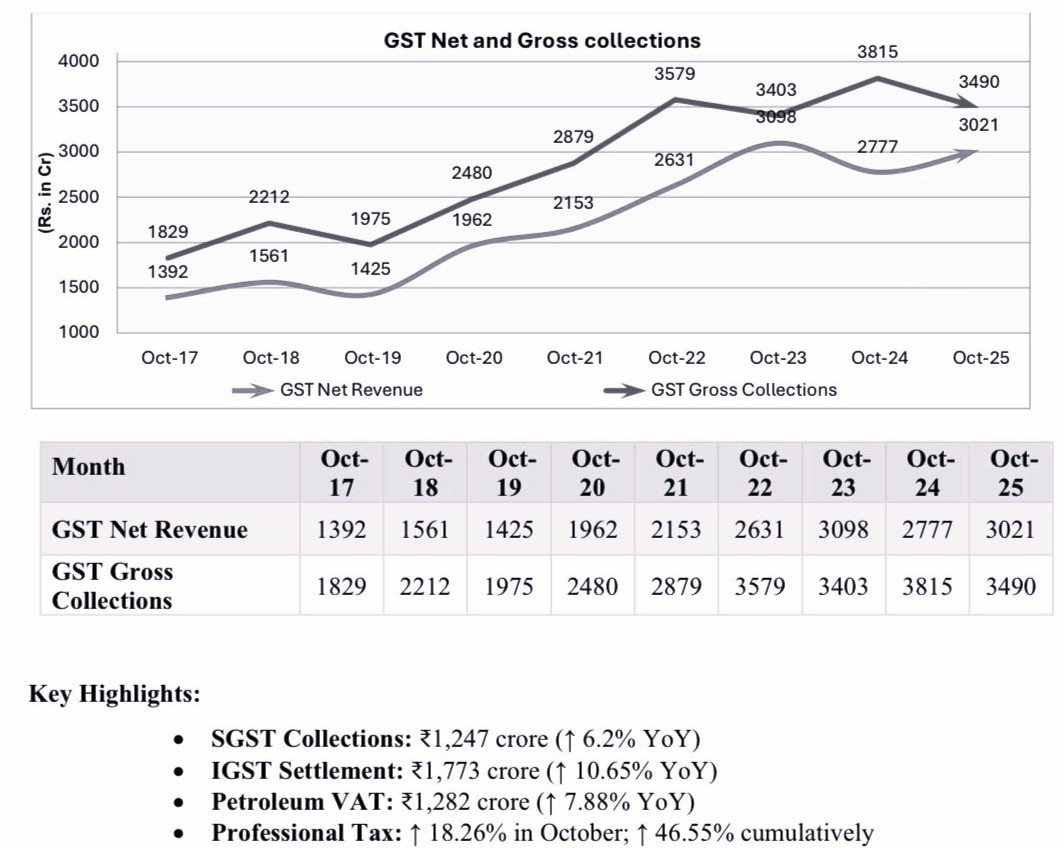
Andhra’s GST collections hit ₹3,021Cr in October, Second-highest since 2017
Andhra Pradesh recorded net GST collections of ₹3,021 crore in October 2025 the second-highest for the month of October since the GST regime was introduced in 2017. According to the Commercial Taxes Department, the state posted 8.77 per cent growth over the same month last year, despite rate rationalisation on several goods this year. Gross GST stood at ₹3,490 crore, a 2.54 per cent rise year-on-year. State GST contributed ₹1,247 crore and IGST settlements fetched ₹1,773 crore, reflecting a 10.65 per cent annual increase. Petroleum VAT collections also continued to remain strong, rising by 7.88 per cent to ₹1,282 crore, while professional tax collections surged by 18.26 per cent, with the cumulative growth touching 46.55 per cent so far this fiscal. Officials said that from April to October this year, Andhra Pradesh consistently recorded higher GST receipts compared to the same period last year, indicating strengthening formal economic activity and a maturing compliance environment post COVID disruptions.
Officials attribute this revenue rise to the state’s enforcement reforms driven by data-driven audits and advanced analytics. Over the past 18 months, AI-based invoice scrutiny, targeted sector audits, route-mapping of e-way bills, high-performing officer deployment in vulnerable zones and an improved Centre-State IGST settlement coordination model have collectively helped curb leakages, spot discrepancies earlier and increase overall compliance discipline. The government also stepped up MSME compliance advisory measures, focusing more on early correction rather than post-loss recovery.
Total tax revenue across all categories in October stood at ₹4,458 crore, marking an overall rise of 8.03 per cent compared to last year. With GST showing steady upward momentum, department officials believe Andhra Pradesh now has a realistic path to narrowing fiscal stress over the next two quarters while still protecting capital expenditure and welfare commitments.