
Andhra Pushes Gram Swaraj With Reforms in Rural Development, Rural Water Supply and Sanitation
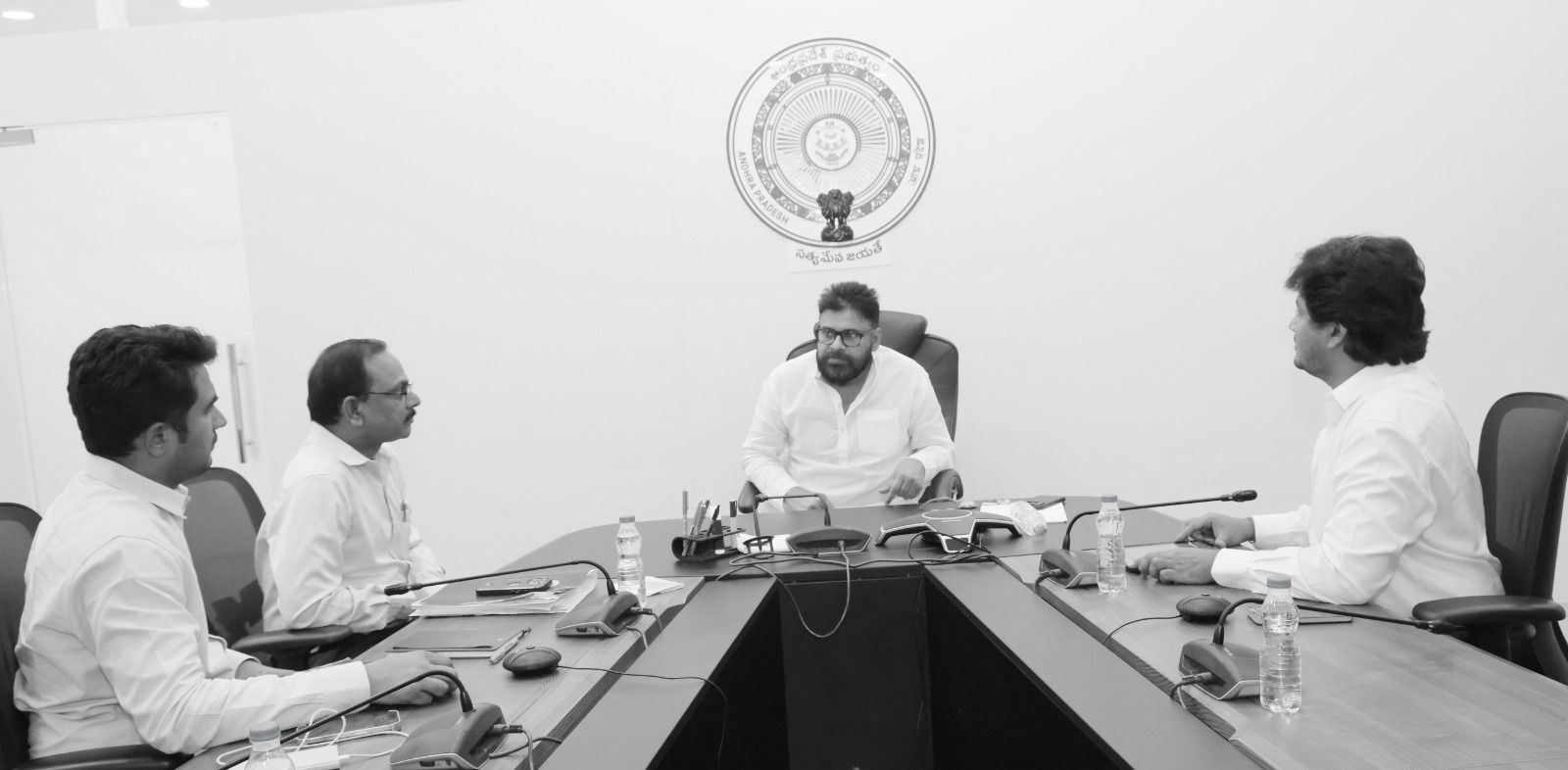
Andhra Pradesh Deputy Chief Minister and Minister for Panchayat Raj, Rural Development and Rural Water Supply and Sanitation (RWS) Pawan Kalyan on Thursday held consultations with senior officials to roll out a comprehensive reform agenda aimed at improving rural governance, sanitation, drinking water delivery and employment generation, in line with the vision of Gram Swaraj .
The meeting, held at the Deputy Chief Minister’s camp office, focused on streamlining administrative processes in the Rural Development and RWS departments from the field level to the State level. Officials discussed staffing patterns, organisational structures and mechanisms to accelerate development works while improving public satisfaction.
Mr. Pawan Kalyan underlined the need to speed up the delivery of basic amenities through the Rural Development department, while ensuring that reforms translate into tangible benefits for people. He stressed that encouraging and confidence-building working conditions should be created for employees, as motivated staff are essential for successful implementation of reforms.
Swachh Andhra and Innovative Sanitation Models
As part of the Swachh Andhra campaign , the State has introduced specially designed vehicles that visit villages to collect dry waste directly from households . In a distinctive incentive-based approach, villagers receive groceries and daily-use items of equal value in return, at no cost. Officials said the model is intended to improve waste segregation at source and increase public participation in sanitation efforts.
The Deputy Chief Minister also reviewed the progress of the ‘Magic Drain’ pilot project, a low-cost and eco-friendly wastewater management system designed for rural and semi-urban areas. The project replaces conventional concrete drains with natural filtration trenches, significantly reducing costs while addressing sanitation and public health concerns.
Piloted in villages such as Somavaram in NTR district , the Magic Drain system involves trenches layered with large stones at the bottom, followed by smaller stones, pebbles and a top layer of gravel or sand, with soak pits provided at regular intervals of about 30 metres. Household wastewater flows into the trenches through pipes and percolates through these layers, where it is naturally filtered before seeping into the ground.
Officials estimate that the system costs around 75 per cent less than traditional concrete drains. The model helps eliminate stagnant water, foul odours and mosquito breeding, contributes to groundwater recharge , and generates local employment through works carried out under MGNREGS .
Strengthening Rural Water Supply Under JJM
Reiterating the coalition government’s priority of providing safe drinking water and better roads in rural areas, Mr. Pawan Kalyan said the RWS department must be strengthened through technical and institutional reforms. He called for continuous monitoring of works under the Jal Jeevan Mission (JJM) , which aims to provide functional household tap connections to every rural home.
A key component of the reform strategy is community-led Water Quality Monitoring and Surveillance (WQMS) . Under this approach, five women in each village are trained as ‘Jal Sahelis’ to test water quality using Field Test Kits for basic parameters. Community Health Officers support wider surveillance and reporting, enabling early detection of contamination risks.
The RWS department is also adopting smart technologies , including IoT-based sensors to monitor groundwater levels, water flow and quality parameters such as fluoride, arsenic and iron. Data from these systems will be analysed on cloud-based platforms to generate real-time dashboards for officials, facilitating timely corrective action.
Existing water supply schemes are being retrofitted to ensure a minimum supply of 55 litres per capita per day , with upgrades to ageing pipelines, treatment plants and storage systems. Emphasis is being placed on source sustainability , bulk water transfer where required, and greywater management to protect aquifers.
Monitoring, Maintenance and Accountability
Deputy CM Pawan Kalyan directed officials to ensure regular water quality testing of all sources and to prioritise the efficient implementation of existing schemes before focusing on new projects. He stressed that regular maintenance is as important as infrastructure creation and instructed officials to prepare a dedicated maintenance action plan .
In cases of contamination, officials were told to promptly inform affected communities and hold village-level discussions on preventive measures, reinforcing the principle of “ Jal se Suraksha ” or safety from water-related risks.
Employment Guarantee and Community Oversight
Discussions also covered the implementation and monitoring of works under the employment guarantee programme, implemented in the State as the Andhra Pradesh Rural Employment Guarantee Scheme (APREGS) . Mandal Parishads act as the principal authorities at the Mandal level, operating within the State’s three-tier Panchayat Raj system.
The Deputy Chief Minister said priority should be given to works related to water conservation, water management and water enhancement , ensuring the creation of durable community assets. He instructed officials to conduct regular reviews based on Gram Sabha resolutions , ensure transparency through social audits, and maintain positive engagement with workers.
Officials were reminded of statutory provisions, including timely issuance of job cards, acceptance of work applications and allocation of employment within 15 days .
Deputy CM Pawan Kalyan instructed senior officials to submit a detailed report on proposed reforms and best practices in the Rural Development and RWS departments at the earliest. It was decided that a review meeting would be held within a week to assess progress.
Panchayat Raj and Rural Development Commissioner and Officer on Special Duty were among the officials who participated in the consultations. Officials said the pilot initiatives and administrative reforms would be reviewed for wider rollout, with the objective of delivering accountable, sustainable and people-centric rural governance across Andhra Pradesh.