
Andhra Pradesh Relied on RBI Borrowings for Most of FY25, Says CAG Report
The Andhra Pradesh government depended extensively on short-term borrowing from the Reserve Bank of India (RBI) to manage its finances during the 2024–25 financial year , according to a report by the Comptroller and Auditor General (CAG) tabled in the state Assembly on Friday.
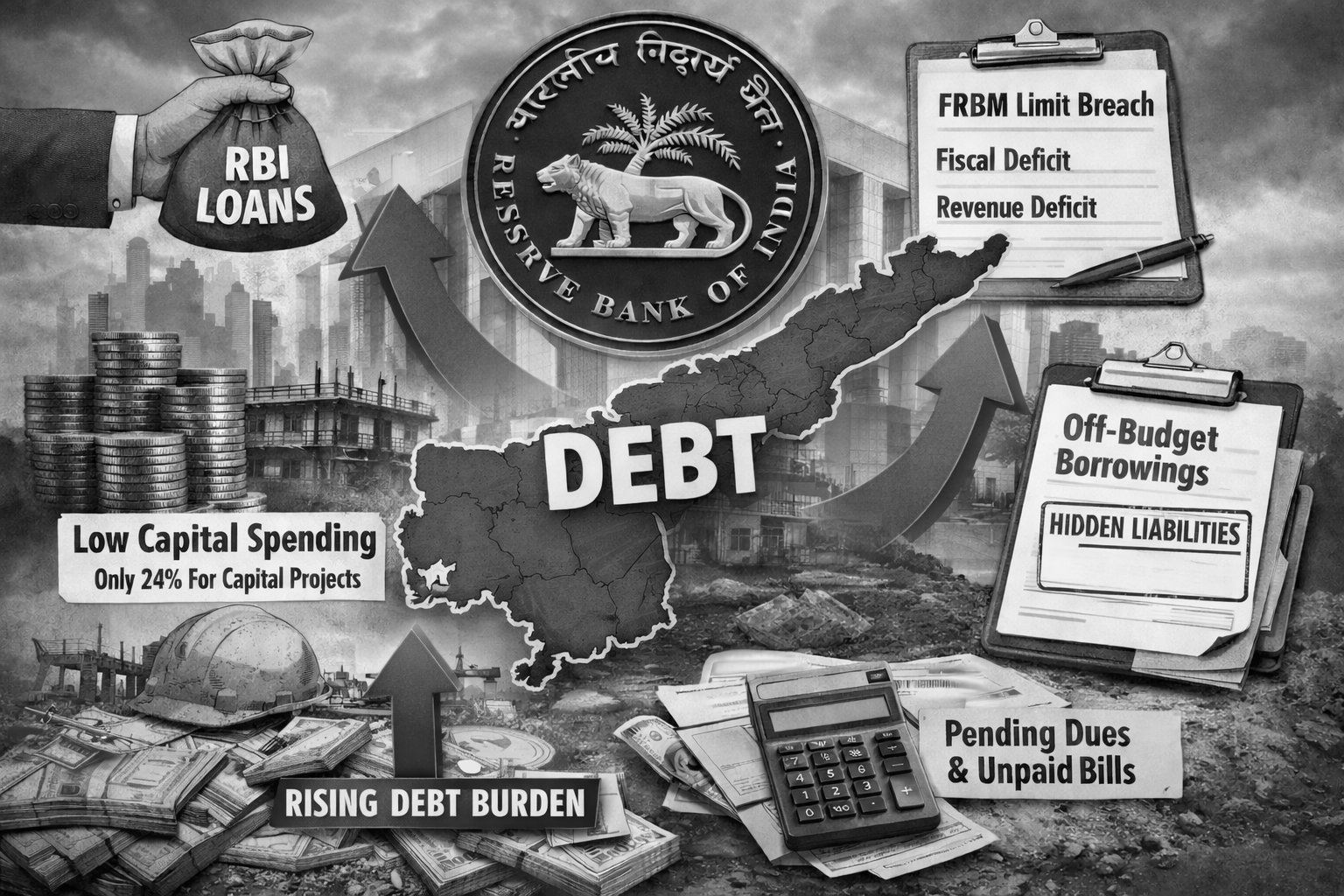
The audit found that the state could maintain the minimum cash balance with the RBI without resorting to borrowing for only eight days during the entire year. For the remaining period, the government relied on temporary liquidity support mechanisms such as Ways and Means Advances (WMA) , Special Drawing Facility (SDF) , and overdraft arrangements to meet its day-to-day expenditure.
According to the report, the state accessed temporary borrowings amounting to about ₹1.72 lakh crore during 2024–25 through these RBI facilities. Servicing these short-term loans resulted in the government paying around ₹303 crore as interest, reflecting the increasing fiscal pressure caused by reliance on borrowings even for routine financial operations.
The CAG report also flagged serious concerns about the state’s fiscal health, particularly the widening revenue deficit . Under the Fiscal Responsibility and Budget Management (FRBM) framework, the revenue deficit should ideally remain within 2.7% of Gross State Domestic Product (GSDP) . However, the audit noted that Andhra Pradesh’s revenue deficit rose to 3.75% of GSDP in 2024–25, exceeding the recommended threshold.
Similarly, the fiscal deficit also breached the permissible limit. While the ceiling for fiscal deficit is 4% of GSDP , the state recorded a deficit of 5.05% of GSDP during the year, indicating mounting financial strain.
The report further pointed to the growing debt burden , noting that borrowings during the financial year reached ₹81,071 crore . The increasing dependence on loans, the audit warned, has reduced the funds available for capital expenditure , potentially affecting long-term investments and infrastructure development needed for sustained economic growth.
Another concern raised by the CAG relates to the utilisation of borrowed funds. The audit found that only 24% of the total borrowings were directed towards capital expenditure. Of the ₹87,773 crore borrowed , just ₹21,173 crore was used for creating capital assets, while the majority of the funds were spent on other expenditures.
The report also highlighted discrepancies in the disclosure of off-budget borrowings . While the 2024–25 state budget did not mention such borrowings and the government reportedly informed the Union Finance Ministry that no off-budget loans were taken, the audit identified off-budget liabilities of ₹27,241.99 crore as of March 31, 2025.
Responding to the report, TDP spokesperson Neelayapalem Vijay Kumar said the current NDA government assumed office on June 10, 2024 , by which time the previous YSRCP government had already borrowed around ₹38,000 crore during the financial year. He said the new administration had to raise about ₹42,000 crore more to meet financial commitments.
According to him, pending payments to contractors and employees , along with other liabilities left by the previous government, forced the present administration to depend on RBI borrowing facilities to maintain liquidity and continue government spending.