
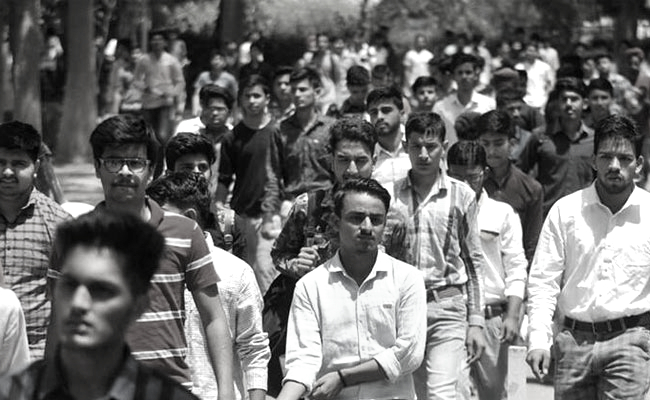
Andhra Pradesh Posts 17.5% Youth Unemployment due to limited Industrial base
Andhra Pradesh has posted a youth unemployment rate of 17.5%, according to the latest Periodic Labour Force Survey (PLFS) 2022–23 released by the Ministry of Statistics and Programme Implementation (MOSPI). The figure, which represents the proportion of jobless individuals aged 15 to 29 years, has drawn attention because it comes from a state that is still rebuilding its administrative capital and does not yet possess the large-scale industrial clusters seen in neighbouring southern states.
The state’s youth unemployment level is lower than that of several developed regional economies, including Kerala, Tamil Nadu and many northeastern states, even though Andhra Pradesh lacks a Hyderabad-style technology corridor, Bengaluru’s unicorn-driven startup ecosystem or Chennai’s established automobile manufacturing giants. The data suggests that Andhra Pradesh’s labour market dynamics are evolving in a distinct manner, shaped by a mix of economic structure, skilling patterns and migration trends.
A surprising competitive position
The 17.5% youth unemployment rate places Andhra Pradesh in the middle tier among Indian states. While it faces challenges typical of a developing economy, the state performs better than those with far more advanced industries. For example, Kerala continues to record one of the highest youth unemployment figures in India, largely due to a combination of educational inflation, mismatch between qualifications and available jobs, and high aspirations among graduates. Likewise, Jammu and Kashmir and several northeastern states remain among the most affected regions.
In contrast, states such as Gujarat and Madhya Pradesh have presented comparatively lower youth unemployment levels, driven by strong manufacturing bases and steady non-farm employment expansion. Andhra Pradesh’s position, though not among the top performers, is considered relatively stable in the national context.
Why the unemployment rate matters
Youth unemployment is one of the most important indicators of economic preparedness and future growth potential. A state that is able to absorb young people quickly into productive employment typically benefits from better economic stability, increased consumption and improved social outcomes. For Andhra Pradesh, which is navigating administrative restructuring and long-term capital development plans, the ability to maintain a moderate youth unemployment rate is being closely analysed by economists.
Experts point out that the number reflects not just job availability but also the composition of the state’s younger population. Many youth in this age group remain engaged in informal work, gig labour, agriculture-linked activities or seasonal employment, which often does not get captured as unemployment under the survey methodology. The PLFS counts a person as unemployed only if they are actively seeking work but are unable to find it, meaning that informal forms of livelihood can push unemployment figures downward even when underemployment remains an issue.
Factors influencing Andhra Pradesh’s youth employment landscape
Multiple structural factors shape the state’s labour market outcomes. Agriculture continues to be a major source of employment, absorbing a significant share of young workers, although often in low-productivity roles. At the same time, the growth of micro, small and medium enterprises (MSMEs) in manufacturing, textiles, food processing and aquaculture has created pockets of job opportunities.
Andhra Pradesh has also seen a sustained outflow of youth seeking employment in Hyderabad, Bengaluru, Chennai and Gulf countries. This outward migration acts as a safety valve that reduces pressure on the domestic labour market. Additionally, a portion of the youth population remains enrolled in educational institutions or vocational training, which also influences unemployment calculations.
Lacking a large metropolitan industrial hub, the state has attempted to position itself as an emerging destination for IT, electronics and renewable energy investments. Skill development programmes under the Andhra Pradesh State Skill Development Corporation (APSSDC), along with apprenticeship-based training initiatives, have been highlighted as contributing factors to relatively stable youth employment outcomes.
Cautionary notes from experts
Economists emphasise that the 17.5% figure should not be interpreted as complete economic health. Youth unemployment remains significantly higher than the state’s overall unemployment rate, indicating a structural challenge in transitioning young people into stable, well-paying jobs. Many youths are employed informally or in low-wage work, which does not guarantee long-term income security.
Moreover, the absence of a strong IT sector and limited high-value manufacturing restricts the availability of aspirational jobs. While the state has shown resilience, its ability to generate formal employment on a large scale remains a critical concern. The ongoing development of the capital region and the push for industrial corridors may influence these figures in the coming years.
A broader national context
The PLFS data indicates that youth unemployment varies dramatically across states, reflecting deeper differences in economic development, education systems, migration behaviour and job market expectations. States with diversified economies, robust MSME sectors and strong skilling ecosystems tend to fare better, while those with high educational attainment but limited job creation report higher unemployment.
In this landscape, Andhra Pradesh’s performance stands out as both stable and surprising. While not among the top performers, the state has avoided the high unemployment seen in several other advanced regions, signalling a labour market shaped as much by necessity-driven employment as by emerging opportunities.
Looking ahead
The state government has indicated that long-term employment generation will depend on expanding industrial capacity, accelerating capital region development and improving higher education quality. With Andhra Pradesh still defining its economic identity after the 2014 bifurcation, youth employment trends will remain a crucial indicator of its development trajectory.
For now, the PLFS numbers underline an important reality: Andhra Pradesh, despite its structural limitations, has maintained a moderate youth unemployment rate, reflecting a complex mix of labour absorption patterns, informal sector participation and migration dynamics.