
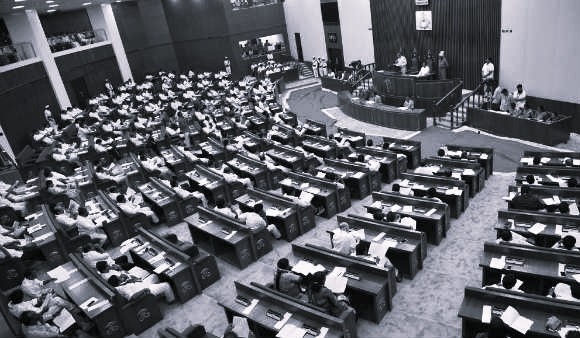
Andhra Pradesh Assembly Adjourned Indefinitely After Four-Day Session
The Andhra Pradesh Legislative Assembly was adjourned sine die after a four-day session, with Speaker Chintakayala Ayyanna Patrudu releasing details of the House’s proceedings and legislative business.
The seventh session of the 16th Assembly functioned for 25 hours and 15 minutes, the Speaker said. Oral replies were given to 40 starred questions, while written answers to another 25 starred questions and one unstarred question were placed before the House.
The Assembly introduced 12 Bills, all of which were passed unanimously, while one Bill was withdrawn. Members also held three short-duration discussions. Under Rule 344, the Chief Minister and a concerned minister made statements on separate issues. One government resolution and a committee report were also unanimously approved. As many as 103 members participated in debates during the session.
The Speaker said the House currently has 135 TDP members, 21 Jana Sena members, 11 YSRCP members and eight BJP members before announcing the indefinite adjournment.
The Assembly unanimously passed the Andhra Pradesh Contract Employees’ Services Regularisation (Amendment) Bill, 2026, introduced by Finance Minister Payyavula Keshav.
The amendment brings the Directorate of Secondary Health under the 2023 contract employees’ regularisation law. Around 157 eligible employees had been excluded from the benefits because of a legal timeline mismatch. The amendment removes the hurdle and enables them to be considered for service regularisation.
The House also unanimously approved a resolution to implement the Water (Prevention and Control of Pollution) Amendment Act, 2024 in Andhra Pradesh.
The resolution was moved on behalf of Deputy Chief Minister Pawan Kalyan by Civil Supplies Minister Nadendla Manohar, who said the Centre notified the amendment on February 15, 2024.
The legislation seeks to strengthen pollution control, simplify regulatory procedures and improve the ease of doing business. For certain violations, financial penalties will replace imprisonment. It also provides for an adjudicating officer to deal with violations and penalties and simplifies the appointment process for the State Pollution Control Board chairman.
Manohar said the changes would improve transparency, efficiency and accountability in water pollution control while making compliance procedures simpler for industries and businesses.