
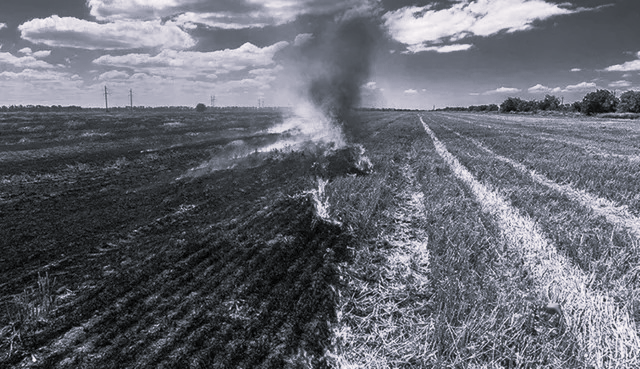
Andhra Pradesh agriculture department urges farmers not to burn crop residue
As the Kharif rice harvest gains momentum across Andhra Pradesh, the state government has raised concerns over the increasing practice of burning crop residue in fields. Authorities warn that this practice not only weakens the soil but also contributes to air pollution and reduces essential nutrients in the land.
Director of Agriculture, Manzeer Zeelani Samoon, issued a statement on Monday emphasizing that burning leftover rice stalks and straw can severely damage soil fertility. “Even though harvesting has been underway for the past two weeks, several districts have reported farmers setting crop residue on fire, which poses a serious threat to both soil health and the environment,” he said.
According to Samoon, burning crop residue destroys crucial nutrients like nitrogen, phosphorus, and potassium in the soil, leading to a significant reduction in soil fertility. It also lowers soil organic carbon levels, which weakens soil structure and diminishes its capacity to retain nutrients essential for crops.
Additionally, the practice kills beneficial microorganisms in the soil, reducing biodiversity and soil vitality. This can further affect soil quality over time, including its moisture retention and pH balance, ultimately harming crop growth. The smoke and harmful gases released during burning also contribute to air pollution and pose health risks to nearby communities.
Samoon urged farmers to adopt eco-friendly alternatives instead. Incorporating crop residue back into the soil helps replenish essential nutrients, improves soil carbon content, and enhances overall soil quality. Better soil quality, in turn, supports higher productivity for future crops.
The Agriculture Department has instructed staff at all district farmer service centers and field-level agricultural officers to visit villages immediately to raise awareness about the dangers of burning crop residue. Farmers are encouraged to follow scientific methods for managing crop waste, which can ensure long-term sustainability and stable yields.
“Protecting soil fertility is critical for the future of agriculture,” Samoon concluded, urging farmers to adopt sustainable crop residue management practices without delay.