
Andhra Government to map all village roads under geo rural road management system
A comprehensive technology-driven initiative is being taken up by the Government of Andhra Pradesh to make all rural road data publicly accessible through a new Geo Rural Road Management System (GRRMS). The move is aimed at bringing transparency, accountability, and efficiency to rural infrastructure management across the state.
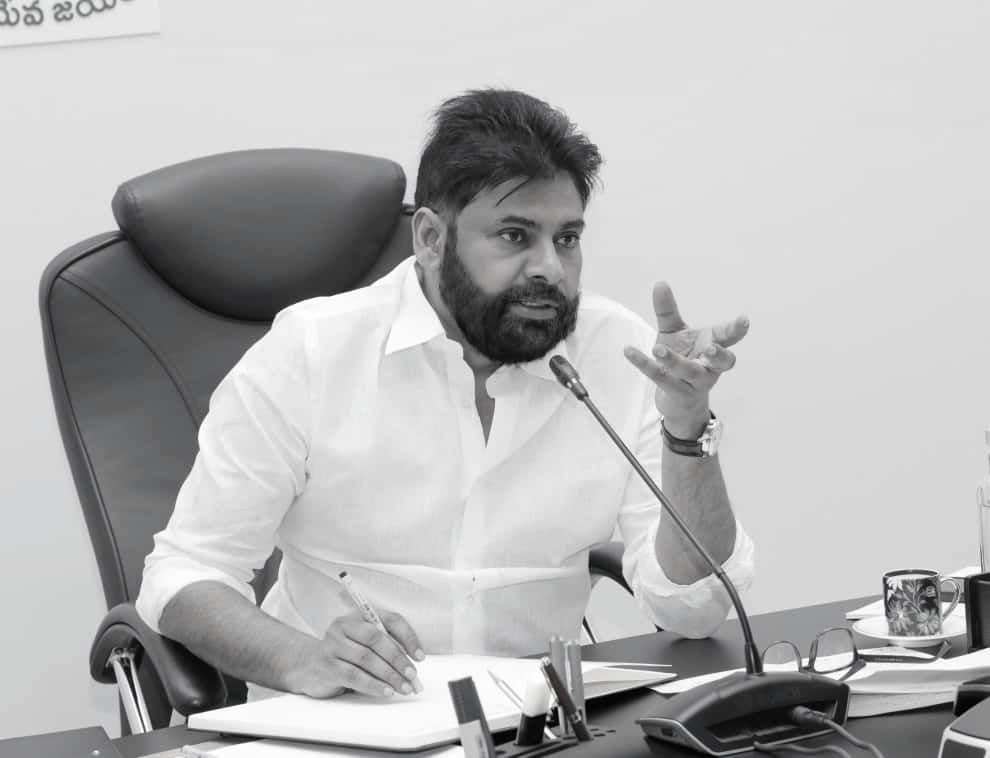
Deputy Chief Minister Pawan Kalyan, who also holds the Panchayati Raj, Rural Development, and Rural Water Supply portfolios, stated that the government’s priority is to ensure safe drinking water and pothole-free rural roads for every village. He announced that the GRRMS would be launched soon under the supervision of the Panchayati Raj and Rural Development Department, allowing citizens to view real-time information about every rural road in the state.
The announcement was made during a review meeting held at the Deputy CM’s camp office in Mangalagiri with officials of the Panchayati Raj, Rural Development, and Rural Water Supply departments. Progress on Adavi Thalli Baata, Jal Jeevan Mission, Palle Panduga 2.0, and the Swamitva Scheme was reviewed in detail.
Pilot under Adavi Thalli Baata
It was stated that the Adavi Thalli Baata programme, which focuses on connecting 761 tribal villages through 662 rural roads, would be used as the pilot project for integrating data into the GRRMS platform. The project, launched to improve connectivity in remote tribal areas, is being implemented with an estimated allocation of ₹1,158 crore, combining State Plan, Tribal Sub-Plan (TSP), and District Mineral Foundation (DMF) funds.
Officials were directed to expedite work in agency regions such as Alluri Sitarama Raju and Parvathipuram-Manyam, where progress has been slower due to terrain and forest clearance challenges. Coordination between the Panchayati Raj Engineering Department, the Forest Department, and Integrated Tribal Development Agencies (ITDAs) was ordered to be strengthened.
Budget and Funding Model
According to official sources, Adavi Thalli Baata is being funded primarily under the State Plan Budget (Head: 5024 – Capital Outlay on Roads and Bridges) of the Panchayati Raj and Rural Development Department. Supplementary support is being provided through TSP allocations in tribal districts and DMF contributions in mining-affected areas.
The geo-tagging component (GRRMS) is being developed by the Andhra Pradesh Centre for Financial Systems and Services (APCFSS) and Real Time Governance Society (RTGS) in Mangalagiri, with technical collaboration from the National Remote Sensing Centre (NRSC) and National Informatics Centre (NIC). No direct central funding has been provided at this stage, but the system is aligned with the Pradhan Mantri Gram Sadak Yojana (PMGSY) GIS framework for interoperability.
Digital Transparency and Citizen Access
The GRRMS platform is being designed to make road-related data available to every citizen. Information such as road availability to the specific route and will be accessible through a public portal and mobile application.
Deputy CM Pawan Kalyan emphasized that the initiative would ensure citizen-accessible governance, where every new or ongoing road project could be verified digitally. He instructed officials to prepare a clear action plan within 48 hours and to constitute a working group to oversee integration and updates in coordination with RTGS and the Engineering Department.
He explained that the system would allow people to know whether a road exists, its current condition, and its stage of completion. This digital framework is expected to prevent duplication of works, detect delays, and strengthen accountability at every administrative level.
Parallel Focus on Jal Jeevan Mission and Swamitva
During the meeting, the Deputy CM reviewed progress under the Jal Jeevan Mission (JJM) and Swamitva Scheme. It was directed that quality standards be strictly followed in all ongoing JJM works, especially in Chittoor, Prakasam, Palnadu, and East and West Godavari districts.
It was announced that by March 2026, around one crore people across rural Andhra Pradesh are expected to receive property ownership cards under the Swamitva scheme. Surveys have already been completed in 613 villages, and another 5,847 villages are in process. The third phase is expected to begin in December.
Deputy CM Kalyan clarified that the property cards issued will be digitally verifiable and will serve as legal proof of ownership, enabling citizens to use their land for financial or legal transactions.
Palle Panduga 2.0 with Sasci Funds
The Deputy CM instructed that Palle Panduga 2.0 be launched shortly using Sasci (State and Central Shared Infrastructure) funds amounting to ₹2,123 crore. The plan includes the construction of 4,007 kilometres of roads, magic drains, and Gokulams in rural areas. Departments have been directed to coordinate with the Finance Department to ensure the timely release of funds.
Broader Governance and Development Perspective
Officials stated that the Geo Rural Road Management System could transform Andhra Pradesh into a model state for rural infrastructure transparency. The integration of geospatial data with citizen access is expected to reduce corruption, improve project monitoring, and enhance administrative efficiency.
Experts believe that such systems could later be extended to cover drinking water supply, sanitation, and housing projects, leading toward a unified “Geo Governance Dashboard” for all rural assets. If implemented effectively, it could set a national precedent for digital accountability in public works.
Deputy CM’s Emphasis on Accountability
Concluding the meeting, Pawan Kalyan stated that every government programme must be answerable to the people. He stressed that technology should serve as a bridge between citizens and administration, ensuring transparency and responsibility.
He also noted that the Chief Minister N. Chandrababu Naidu had given in-principle approval for the use of Sasci funds and directed the Finance Department to expedite necessary clearances.
Implementation Outlook
The meeting was attended by Principal Secretary Shashi Bhushan Kumar, Commissioners Krishna Teja and Kurmanath, Chief Engineers Balu Naik and Gayatri, and senior officials from the Survey and Engineering departments.
If completed as planned, the GRRMS initiative is expected to make Andhra Pradesh the first state in India to provide open, citizen-accessible data on rural roads, improving transparency and efficiency in the delivery of rural infrastructure.
Summary of Current Status of Projects
The GRRMS project is currently in the pilot testing phase in tribal mandals and is targeted for completion by March 2026. Under the Adavi Thalli Baata initiative, about 33 percent of the road works have been completed while 47 percent are still in progress, with the overall completion expected by October 2026. The Palle Panduga 2.0 program is awaiting the release of funds and is planned for launch in early 2026. The Jal Jeevan Mission has so far achieved 79.6 percent coverage and aims to reach full completion by March 2026. Meanwhile, under the Swamitva Scheme, approximately 50.8 lakh property cards have already been prepared, with the scheme also expected to meet its final target by March 2026.