
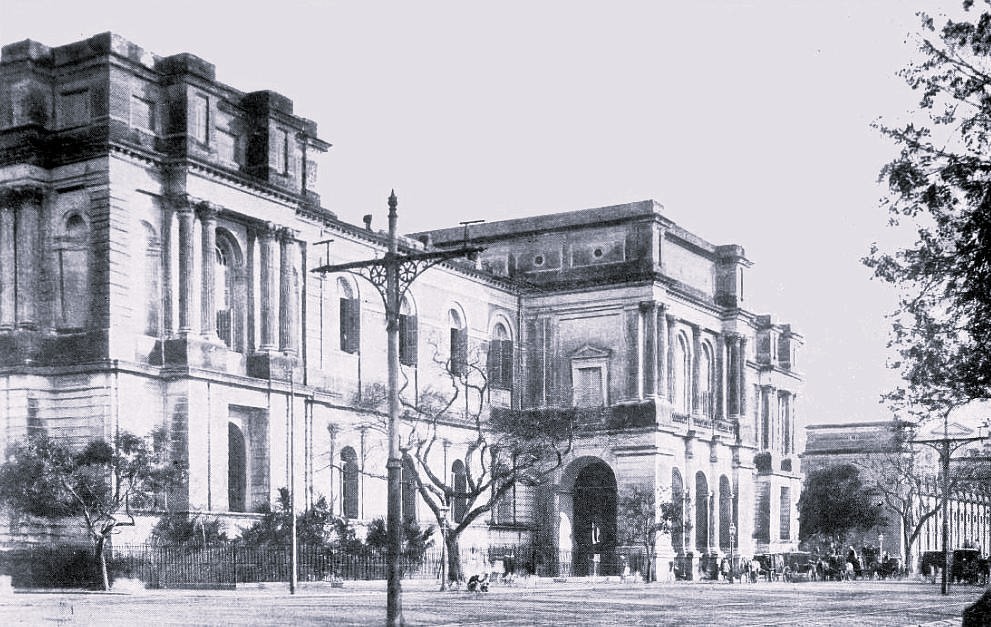
Ancient museums and historical evidence
In modern times, population growth has led to urban and rural development, resulting in the emergence of new regions. With this expansion, traces of history are being discovered in previously remote areas. Many enthusiasts actively explore these regions, comparing new findings with existing evidence to contribute to the construction of new historical knowledge. Historians rely on the available resources and methods to reconstruct history, and these approaches form the basis of contemporary historical exploration. History, as we know it, exists between the past and the present. The Stone Age provides insight into the lifestyle of early humans, while the Indus Civilization reflects the evolution of human development. History requires factual evidence, which must be critically analyzed internally and externally. Facts need to be presented clearly, elaborated upon, and correlated with current knowledge to produce new interpretations. Some historians, however, have added fictitious elements to enhance the prominence of their region in written accounts. Hence, archaeological evidence is generally considered more reliable than written sources, and museums allow us to observe these tangible proofs.
In India, the Archaeological Survey of India manages these findings, collaborating with state historians and departments. Explorations often begin with excavations. Archaeologists employ three main methods: sending flights, helicopters, or drones to inaccessible areas to capture photographs and continue research; exploring coastal and riverine areas using anchors and examining artifacts like sculptures; and traveling on foot through hills, forests, and caves. Once a site is identified, a team conducts excavations, bringing out historical treasures using a toolkit that includes small brushes and precision instruments. Recovered evidence such as structures, inscriptions, coins, and Buddhist stupas are transported to museums and analyzed by experts. These artifacts are cataloged, labeled, and exhibited for public viewing with government approval. This process not only involves meticulous work but also preserves valuable treasures, which is often a challenging task.
Any lapse in management can alter historical understanding. Therefore, historians meticulously examine and safeguard these artifacts. By preserving them, ancient texts, epics like the Ramayana and Mahabharata, chronicles such as Rajatarangini and Harsha Charita, Arthashastra manuscripts, coins from the Mauryan period, terracotta figurines of the Indus Civilization, Gupta-era manuscripts, Delhi Sultanate structures, and architectural innovations of the Qutb Shahis remain accessible to us. These discoveries reveal ancient engineering techniques and human knowledge, making museums invaluable classrooms for visitors interested in history.
Historical evidence
To understand ancient Indian history, evidence can be broadly classified into two types: archaeological and written. Archaeological evidence includes tools, weapons, burial sites, structures, urban layouts, temples, murals, sculptures, clay vessels, and ornaments used by our ancestors. Written evidence encompasses Vedas, Puranas, epics, classical poems, Dharmasutras, manuscripts, and palm-leaf documents. While written sources are often heavily relied upon, archaeological evidence is considered more authoritative as it is not subject to alteration. As historian Acharya Neelakanta Shastri emphasized, archaeological evidence cannot be fabricated.
Based on such evidence, the pre-writing period of human history is called the Prehistoric Age, while the post-writing period is the Historic Age. The intermediate period, known as the Protohistoric Age, includes civilizations like the Indus Valley, where evidence of writing exists in pictorial form but the script itself remains undeciphered. Archaeological findings, such as tools, coins, inscriptions, and ancient manuscripts, along with writings of foreign travelers, assist in reconstructing historical understanding.
Stone age civilization
The earliest stage of human civilization, the Stone Age, spans roughly from 50,000 BCE to 5,000 BCE. Based on tools and artifacts, it is divided into three phases: the Paleolithic, Mesolithic, and Neolithic periods. Archaeological findings such as cave dwellings, utensils, tools, terracotta objects, weapons, sculptures, and paintings form the primary evidence for understanding this early history. Excavations to uncover these artifacts began formally in 1906 during Lord Curzon’s administration and were further developed under Sir John Marshall, leading to groundbreaking discoveries like the Indus Valley Civilization, which predated Aryan settlements and revealed urban sophistication prior to Vedic civilization. These discoveries, preserved and documented in museums, provide a window into the past for future generations.
Museums and their management
A museum is not merely a building; it is a repository that preserves and displays historical and cultural heritage. Museums reveal thousands of years of human history, showing the development of tools, weapons, clothing, bricks, clay vessels, and other everyday objects under one roof. They allow visitors to visualize ancient life and understand historical transformations. Museums are organized into sections, some preserving architectural artifacts, sculptures, and figurines, while others focus on paintings, inscriptions, coins, and manuscripts. These artifacts provide evidence to study history from multiple perspectives.
Museums also serve as technical and cultural centers. Even visitors who cannot read can understand historical developments through displayed objects and illustrations, tracing progress from the earliest periods to modern times. Artifacts are displayed on special stands or in glass cases with proper lighting to maintain their natural appearance while highlighting their significance. Labels provide detailed information about each object, and trained guides assist visitors in understanding the collection. Conservation measures, including laboratory analysis for dating, chemical preservation, and careful handling, are strictly implemented.
Museums in Telangana
Telangana has a rich historical heritage comparable to other regions of ancient India. Archaeological sites from the Lower Paleolithic period, including traditional tools and dwelling remains, have been found in Ramagundam (Peddapalli district) and Godavari coalfields. Excavations across districts reveal that Telangana played a key role in the progression of human civilization through the Paleolithic, Mesolithic, and Neolithic periods. Historical records also show Telangana’s prominence in folk settlements during the 6th century, such as the Asmaka Janapada with its capital at Bodhan (Nizamabad). Mauryan trade in South India is mentioned in Kautilya’s Arthashastra, and coins from Satavahana sites near Kondapur and Warangal illustrate regional significance. Inscriptions and artifacts from the Chalukya, Qutb Shahi, and Asaf Jahi periods provide evidence of Telangana’s economic, political, and social development.
Museums in Telangana, such as the Telangana State Museum, Salar Jung Museum, B.M. Birla Museum, and Heritage Museum, preserve and showcase these historical treasures. While the state museums are managed by the Telangana government, the Salar Jung Museum operates under the Central Government. The Archaeology Department oversees excavations, artifact preservation, dating, and transportation, ensuring that historical evidence reaches museums safely and is studied by experts for public exhibition.
Museums face challenges such as delayed permissions, conservation issues, and the risk of artifacts being damaged or inaccessible. Nevertheless, these institutions play a crucial role in fostering awareness of history among students, researchers, and the general public. They preserve not just physical objects but also the stories, intelligence, and lifestyles of our ancestors. Museums create a tangible link between the past and present, maintaining national identity and heritage. Proper maintenance, respect for exhibits, and public awareness are essential to protect this invaluable legacy for future generations.