
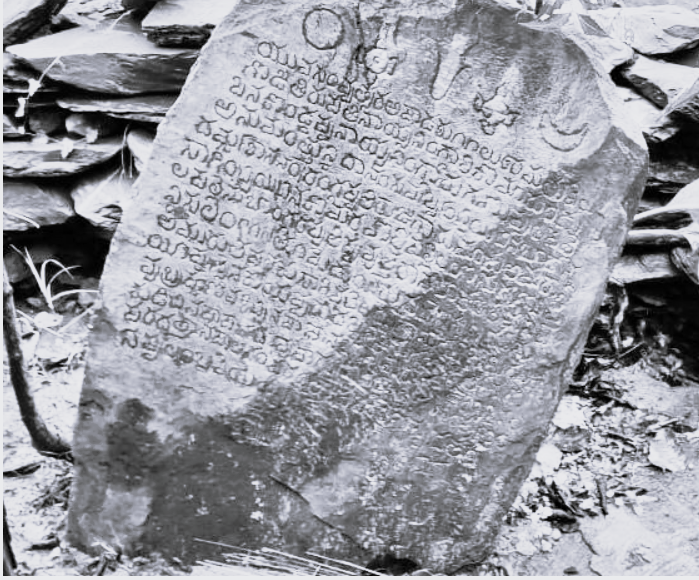
Ancient Inscription discovered in Anantharayunipalli
A significant 17th-century inscription has been unearthed near Anantharayunipalli village in Komarolu mandal, Prakasam district. The inscription highlights a religious donation made by Velugoti official Kondappa Nayani.
The inscription, located on the outskirts of the village, was identified and submitted to the Archaeological Survey of India’s Epigraphy Department by Shri Chandramouli, a retired headmaster from Addanki town. Carved in Telugu and Kannada scripts, it is dated to the Yavana year, Ashadha month, Shukla Paksha Ekadashi—consistent with dating methods commonly seen in South Indian inscriptions of the period.
The record names Kondappa Nayani, son of Tirupati Nayani, as the main donor and a Velugoti dynasty official. The Velugoti family was a local ruling lineage affiliated with the Vijayanagara Empire, historically known to serve the king militarily and receive villages as grants.
According to the inscription, Kondappa Nayani donated the village of Ganupulapalli and portions of Bongaraputi village for daily worship at a Hanuman temple. This reflects his devotion, faith, and adherence to dharma. During this period, temples served not only as religious centers but also as hubs of social and economic activity.
The inscription also mentions that Kondappa Nayani received the villages of Komaravolu as an “Amaranayakankara” from Rangapathi Raju. The term “Amaranayakankara” exemplifies the military and land tenure system of the time, wherein kings granted land to their military officials in recognition of service.
Religious and Cultural Significance The donation dedicated to Hanuman showcases the piety and dharmic lifestyle of the leaders of the period. Hanuman was revered among warrior classes as a symbol of strength, devotion, and protection. Such temple endowments contributed to community harmony and economic stability.
Historical Importance This inscription provides valuable insight into 17th-century political, religious, and cultural developments in Prakasam district. It stands as a historical testament to the influence of the Velugoti dynasty, the continuity of the Amaranayaka system, and the prevalence of Hanuman worship in Andhra Pradesh. Unearthed under the supervision of the Archaeological Survey of India, the inscription adds an important chapter to the region’s history.