
Anantapur Apple Cultivation: A New Chapter in South Indian Horticulture
In a development that challenges the long-standing dominance of Jammu & Kashmir and Himachal Pradesh in India’s apple market, an unusual agricultural breakthrough has emerged from Anantapur district of Andhra Pradesh . Known for its extreme heat and low rainfall, the successful cultivation of apples in this region has sparked widespread discussion in the agricultural sector.
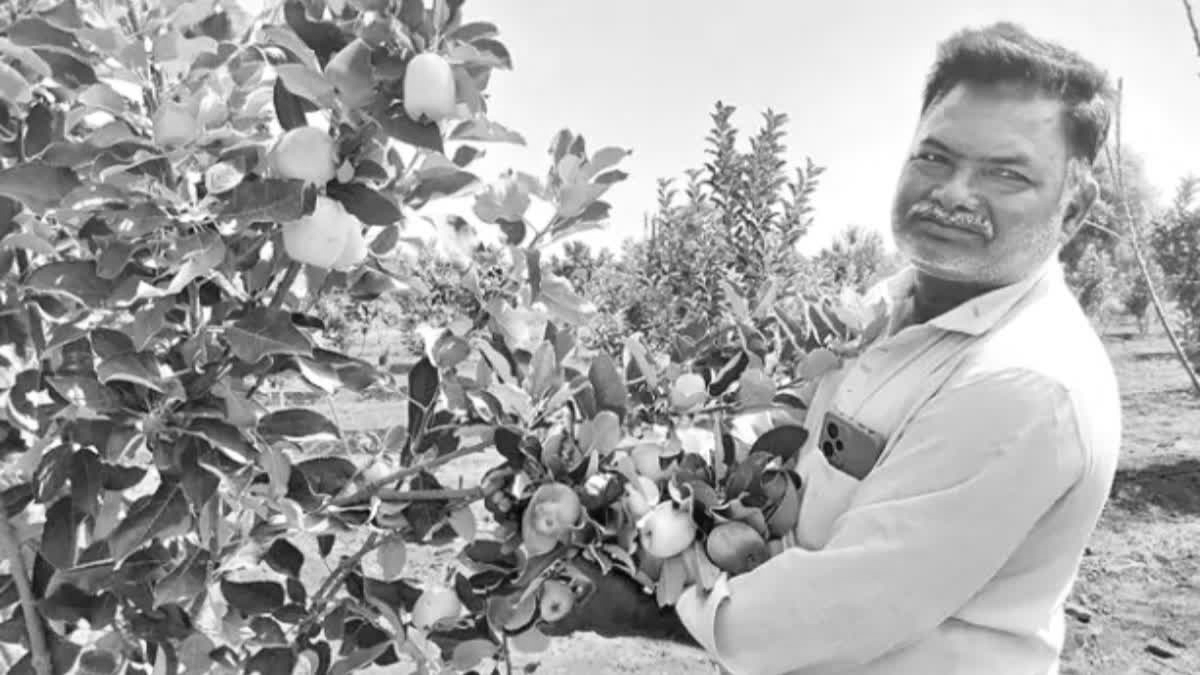
A farmer from Kotanka village in Garledinne mandal , K.V. Ramana Reddy , has successfully initiated experimental apple cultivation on his 2.5-acre land using ‘KLD’ apple variety saplings imported from Israel . He planted 1,500 saplings with an investment of around ₹4.2 lakh , following a spacing pattern of 12x6 feet . Remarkably, this experimental orchard produced about one tonne of yield in its very first harvest .
Early market response to this apple crop has been encouraging. The produce is fetching prices ranging from ₹120 to ₹170 per kg , which is notably higher than the rates received by traditional apple-growing regions such as Himachal Pradesh and Jammu & Kashmir. Despite being of medium size, the apples are witnessing rising demand due to their good taste and quality .
Currently, apple cultivation in Anantapur district has expanded to around 15 acres across Garledinne, Kundurpi, and Peddapappur mandals . The success of such a crop in the drought-prone Rayalaseema region has drawn significant interest from agricultural experts.
According to agricultural analysts, Anantapur apple cultivation has certain unique advantages. While apples from North India enter the market between September and November , Anantapur’s crop ripens around December , creating a distinct off-season market window that enables premium pricing. Additionally, while traditional orchards begin yielding after 7–8 years , this KLD variety starts bearing fruit from the second year itself .
The high-density plantation method is a major strength of this experiment. Unlike conventional systems where only about 250 trees per hectare are planted, this method allows up to 3,700 saplings per acre . This significantly improves land-use efficiency, with an estimated yield potential of 3 to 5 tonnes per acre . At an average price of ₹140 per kg , projected income could range between ₹4.2 lakh and ₹7 lakh per acre .
However, experts also highlight several challenges in this cultivation model. Key concerns include water availability , mite pest attacks , and the lack of technical expertise among farmers in apple cultivation . Therefore, modern water management systems such as drip irrigation are considered essential .
In this context, agricultural experts have recommended that the state government conduct a comprehensive feasibility study , establish demonstration plots , improve irrigation infrastructure , and launch specialised training programmes for pest management . Overall, if this experimental apple cultivation in Anantapur proves sustainable, it could have the potential to transform the agricultural landscape of South India .