

America Votes: Can Democrats Take Back The House And Senate From Republicans?
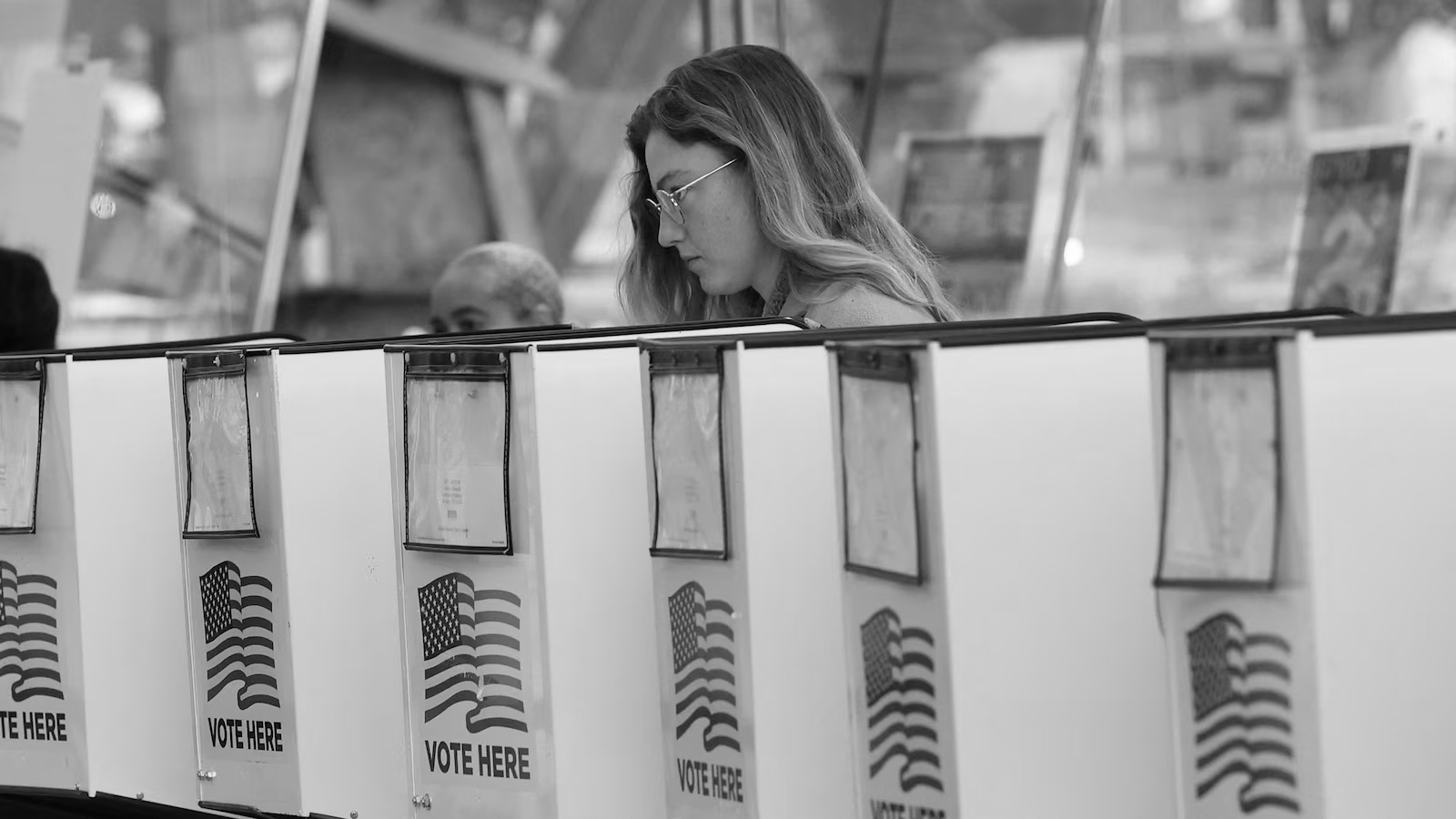
Americans are voting in the 2026 US midterm elections on Tuesday, November 3, in a contest that could reshape the balance of power in Washington. Democrats are attempting to take back the House of Representatives and Senate, while Republicans are fighting to retain control during President Donald Trump’s second term.
Midterms do not decide who occupies the White House. Trump will remain president regardless of the result, but the elections will determine which party controls Congress for the next two years. All 435 House seats are contested every two years because representatives serve two-year terms. Senators serve six-year terms, with roughly one-third of the 100 Senate seats going to voters every two years. This election cycle, 35 Senate seats are being contested, including special elections.
Trump’s final campaign speech on Monday took an unusual turn when he spent around 25 minutes discussing algae and renovation work at the Lincoln Memorial Reflecting Pool in Washington. He blamed former presidents Barack Obama and Joe Biden for the pool’s problems, claiming they had spent more than $144 million trying to repair it. Trump displayed photographs of the algae-covered water before turning to the election and urging supporters to vote Republican.
Attacking Democrats, Trump said, “A party that hates America cannot be allowed to rule over the people who built our country.” He also warned against electing what he called a “jihadist” to the Senate, saying, “We're not looking to have a jihadist be in our Senate.” He acknowledged the difficulties faced by the party of a sitting president in midterm elections but argued that Republicans could win if his 2024 supporters turned out.
The battle for the House is particularly close. Republicans currently hold 218 seats, compared with 214 for Democrats. One independent member, Kevin Kiley of California, generally aligns with Republicans, while two seats are vacant. Democrats need a net gain of four seats to reach the 218-seat majority mark and take control of the chamber.
The Senate currently has 53 Republicans and 47 members in the Democratic-aligned bloc, which includes 45 Democrats and two independents who caucus with them. Democrats need at least 51 seats to take control. Republicans, however, can retain the Senate with 50 seats because Vice-President JD Vance can break a 50-50 tie. Around seven Senate contests have been identified as toss-ups in one forecast. The broadcast cited a model giving Democrats a 76% chance of winning the chamber, though forecasts are estimates rather than guaranteed outcomes.
Money is another major feature of the election. Political advertising expenditure across the 2025-26 election cycle is projected to approach $12 billion, making it the most expensive midterm cycle on record. Television remains a major platform for campaign advertising.
Billionaire Elon Musk has contributed approximately $474 million to federal and state political groups since January 2025, according to an analysis of campaign finance filings by The New York Times. Around $216 million went to his America PAC, $168 million to the Senate Leadership Fund and another $30 million to the Congressional Leadership Fund. The remaining contributions went to other Republican groups and state-level political efforts. A substantial part of the Senate Leadership Fund money was directed towards the Texas Senate contest involving Republican candidate Ken Paxton. Musk's companies, including Tesla, SpaceX and X, have major operations in Texas, a state that has voted Republican in recent presidential elections. His contributions have supported Republican advertising and voter mobilisation efforts.
Early voting also reached record levels. More than 53.27 million Americans had cast ballots by November 1, according to the University of Florida Election Lab, exceeding the approximately 45.9 million early votes recorded before the 2022 midterms. In the 27 states reporting party affiliation, registered Democrats accounted for around 43% of early voters, compared with 31.7% for Republicans; unaffiliated voters made up roughly one-quarter. However, party registration does not reveal how people voted. Democrats have traditionally been more likely to vote early, while more Republican voters have tended to cast ballots on Election Day.
National polling has shown Democrats leading on the generic congressional ballot. A Reuters/Ipsos survey found 52% of likely voters backing or leaning towards Democrats, against 44% for Republicans. Among registered voters, a separate result from the same survey showed a 46%-38% Democratic lead. National polling reflects the broader political mood but does not determine individual House or Senate races.
Trump’s approval rating stood at 32% in the latest Reuters/Ipsos survey, close to the lowest level recorded during his political career. The poll also found that 78% of respondents considered the cost of living a very important or top issue in deciding their vote. Household expenses and economic concerns have become major challenges for Republicans.
The outcome will determine whether Democrats gain control of one or both chambers, giving them greater influence over legislation and congressional oversight, or whether Republicans retain control and continue working with Trump’s administration.