
Ambedkar’s legacy honoured at UN event marking 135th birth anniversary
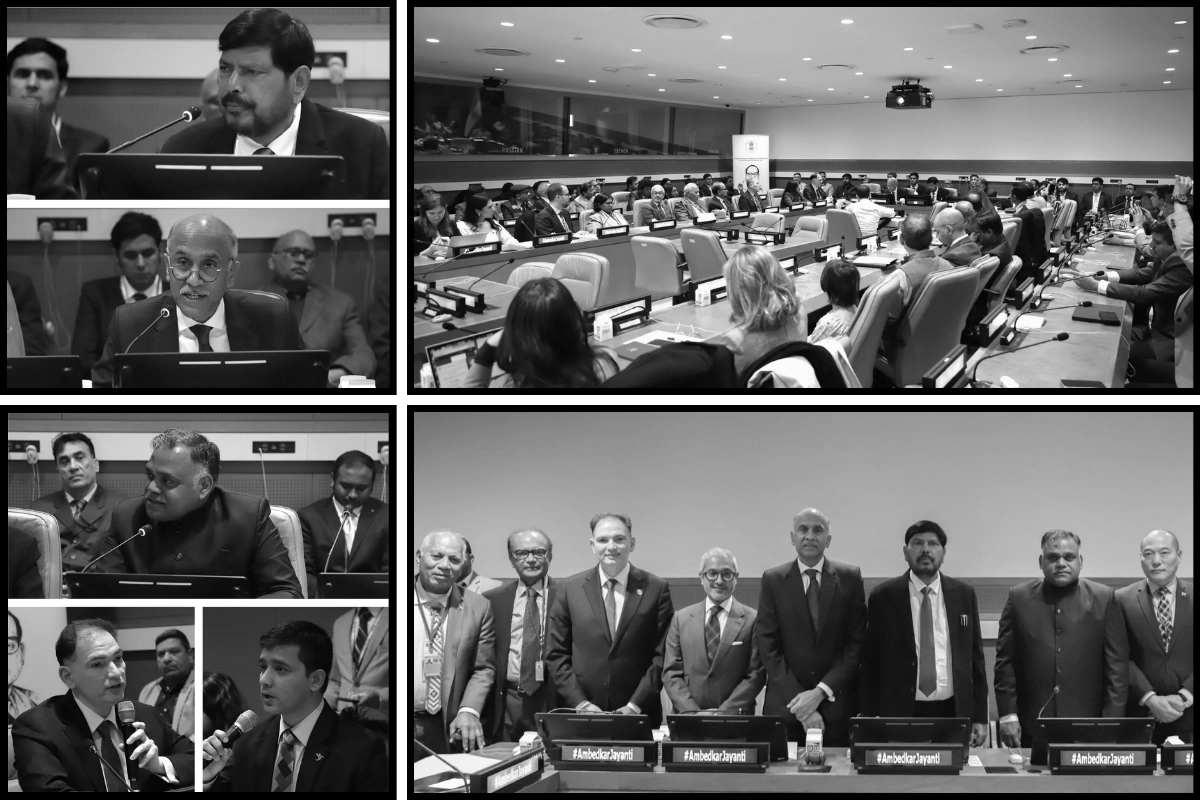
The legacy of B. R. Ambedkar and his advocacy of constitutional morality was honoured at a special event held at the United Nations headquarters in New York to mark his 135th birth anniversary .
The commemorative programme was organised on Tuesday by the Permanent Mission of India to the United Nations under the theme “Dr B R Ambedkar’s Vision of Constitutional Morality and its Relevance for Multilateralism.” Diplomats, members of the academic community and experts from various fields attended the event, reflecting on the continuing global relevance of Ambedkar’s ideas.
In his welcome remarks, India’s Permanent Representative to the UN, Ambassador Harish Parvathaneni, said Ambedkar’s call for cultivating constitutional morality remains particularly significant in the current international climate marked by political fragmentation and persistent conflicts. He described Ambedkar’s emphasis on constitutional morality as a distinctive contribution to democratic thought and said it could help strengthen multilateralism and support reforms in the United Nations system.
Parvathaneni also highlighted the key features of India’s democratic framework and pointed to common principles shared by the Constitution of India and the UN Charter , including their commitment to democracy, equality and international peace .
Delivering the keynote address, senior civil servant and Ambedkar scholar Dr Raja Sekhar Vundru said Ambedkar, who lived through both World Wars and the founding of the United Nations , clearly recognised the importance of multilateral cooperation. He noted that Ambedkar played a crucial role in shaping the central principles of the Indian Constitution, which also reflect the UN Charter’s emphasis on maintaining international peace.
Vundru stressed that Ambedkar highlighted the importance of cultivating constitutional morality and argued that the international community should also strive to develop a form of “international constitutional morality” rooted in multilateralism and the UN Charter.
Guest speaker Dr Santosh Raut of Harvard Divinity School described Ambedkar’s life as a powerful moral journey, noting that he transformed personal suffering into intellectual and ethical strength. Raut said Ambedkar regarded the Constitution as a vehicle for social and economic transformation and emphasised the enduring relevance of his ideas in advancing inclusive governance and global justice.