
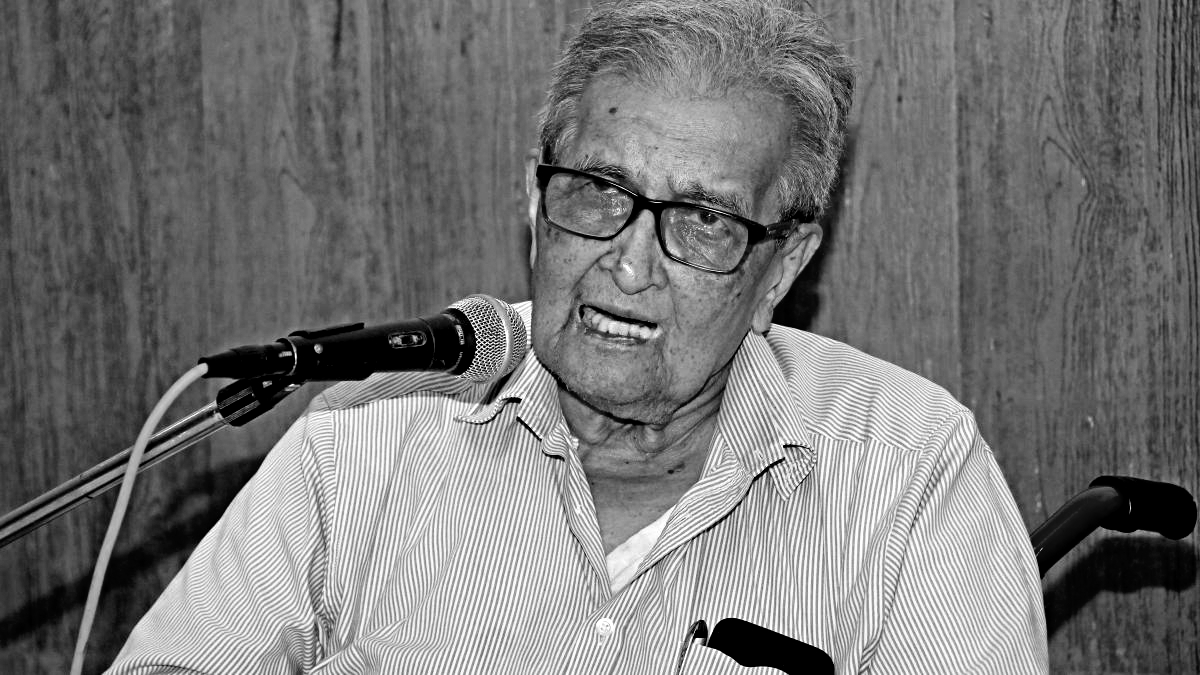
Amartya Sen urges Kerala to lead India in strengthening constitutional secularism
Nobel laureate economist Amartya Sen on Sunday said that while Kerala has achieved remarkable progress in human development , it must now make a decisive contribution to strengthening secularism in India , which he warned is facing serious challenges.
Speaking online at the Kerala government’s three-day “Vision 2031” conference , Sen said he had lost some confidence in the “invulnerability of secularism” in the country and cautioned that its future depends on resisting what he called the “well-organised thrusting of smallness.”
At the same time, he praised Kerala’s historic and modern achievements, particularly in education, healthcare and social cooperation . Recalling debates from the time of Kerala’s formation in 1956, Sen said many had doubted whether a poor state could focus on human development. “Kerala has proved the skeptics wrong,” he said, pointing to gains in life expectancy, literacy, poverty reduction and healthcare outcomes .
Sen highlighted Kerala’s long tradition of openness to the world and women’s empowerment, citing Ibn Battuta’s 14th-century observations on women’s independence and matrilineal inheritance in the region. He also referred to India’s intellectual heritage, noting that ancient achievements, including mathematics, grew through exchange with Greek and Babylonian ideas .
However, Sen said he would be happier if Kerala could now lead the country in safeguarding secular values , which he described as still strong in the state but weakened nationally. “We have to see whether Kerala can make a definitive contribution for India as a whole,” he said.
Kerala government representatives welcomed Sen’s observations, saying they reaffirmed the state’s commitment to inclusive growth and communal harmony . Academics and social thinkers supported his warning, arguing that Kerala’s development has been rooted in tolerance and openness .
Opposition leaders praised Sen’s recognition of Kerala’s progress but urged the government to translate his call for secularism into stronger policy action . Political analysts said his comments would likely sharpen debates on the link between development, democracy and constitutional values in the country.