
Amarajeevi Jaladhara Water Grid Set to Quench Godavari’s Rural Thirst
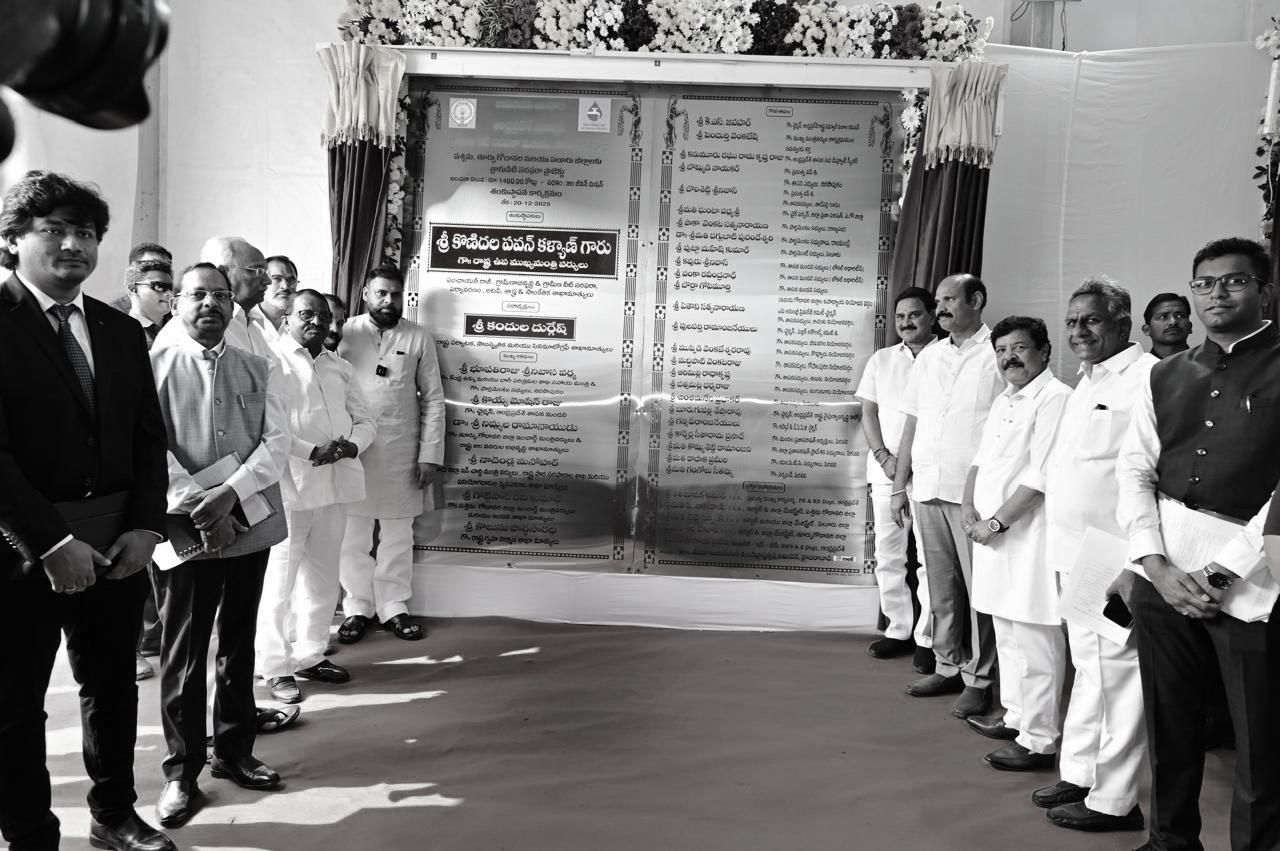
The Andhra Pradesh government on Saturday launched the Amarajeevi Jaladhara water grid project under the Jal Jeevan Mission (JJM) to provide safe and sustainable drinking water to rural households in the Godavari region. Deputy Chief Minister and Minister for Panchayat Raj, Rural Development and Rural Water Supply, Pawan Kalyan, laid the foundation stone for the works at Peravali village in the Nidadavole Assembly constituency of East Godavari district.
Following the foundation-laying ceremony, a public meeting was held at Peravali, which was attended by public representatives and officials from East and West Godavari districts. Addressing the gathering, the Deputy Chief Minister outlined the scope, objectives and long-term vision of the project.
The Amarajeevi Jaladhara projects cover East Godavari, West Godavari, Kakinada, Eluru and Dr B.R. Ambedkar Konaseema districts. Through two major projects in the region, the scheme aims to supply drinking water to about 68 lakh people across 23 Assembly constituencies. These projects form part of a larger state-wide water grid programme, which includes five projects across five undivided districts.
The government has estimated the total cost of all five projects at ₹7,910 crore, while the two Godavari district projects alone account for ₹3,050 crore. According to officials, the infrastructure has been designed to meet drinking water needs for the next 35 years, with a target population of 1.21 crore people. Special focus has been given to coastal areas, particularly to benefit fisherfolk communities living along the coastline of the undivided East and West Godavari districts. The government aims to complete the works by 2027.
The government named the water grid “Amarajeevi Jaladhara” in memory of Potti Sriramulu, who sacrificed his life for the self-respect and identity of the Telugu people. The naming seeks to ensure that his legacy remains closely associated with a public welfare initiative.
Officials pointed out that groundwater contamination in large parts of the Godavari region has forced people to rely on purchased drinking water. The new project seeks to address this issue by shifting to a surface water–based drinking water supply system.
Under the scheme, the government will supply drinking water through a centralised water grid, which includes water treatment plants meeting Bureau of Indian Standards (BIS), bulk transmission pipelines, village-level storage tanks, and household tap connections. The system also includes monitoring and maintenance mechanisms, with local panchayats playing a key role and digital systems used to track water quality and supply.
The Amarajeevi Jaladhara project receives funding under the Jal Jeevan Mission, a centrally sponsored scheme, with the Centre and the State sharing costs equally. The Deputy Chief Minister said the State government had taken steps to secure an extension of the JJM timeline after earlier delays led to underutilisation of funds.
He acknowledged the support of Prime Minister Narendra Modi and the experience of Chief Minister N. Chandrababu Naidu in mobilising large-scale funding for infrastructure development. He also warned that the government would take strict action against any compromise in construction quality, whether in water supply projects or road works.
The Amarajeevi Jaladhara scheme is expected to improve public health, reduce dependence on contaminated groundwater, and ensure equitable access to safe drinking water across rural Andhra Pradesh.