
“All the news that’s fit to print?”: Western media mottos clash with silence on lynching of Hindu man in Bangladesh
The lynching of Dipu Chandra Das, a Hindu man beaten to death and set on fire by a mob in Bangladesh, has drawn attention to what critics describe as selective coverage and uneven outrage by leading Western newspapers. The New York Times , which upholds the motto “All the News That’s Fit to Print,” has not published a prominently placed report or editorial condemning the killing as targeted religious violence. The Washington Post , guided by “Democracy Dies in Darkness,” has issued no standalone coverage illuminating the failure of the state to protect a religious minority or uphold the rule of law. Britain’s The Guardian , whose credo is “Comment is free, but facts are sacred,” has offered neither sustained factual investigation nor moral commentary centred on the lynching.
Even wire services such as Reuters , branded “the world’s news agency,” and the Associated Press , which emphasizes “advancing the power of facts,” limited their reporting to brief, restrained accounts without follow-up or editorial urgency. For critics, this gap between stated principles and editorial action makes the silence itself significant.
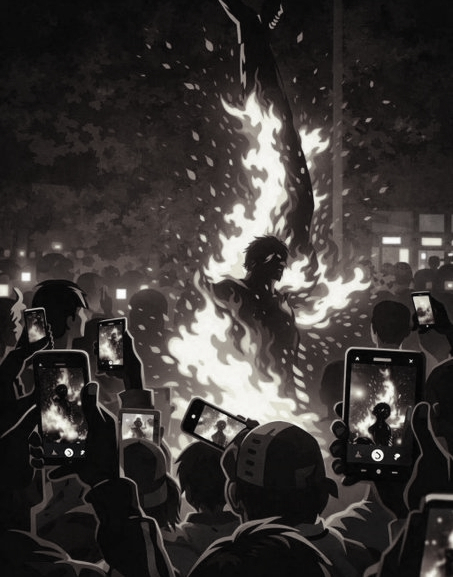
Das, a 25-year-old garment factory worker from Mymensingh, was attacked on December 18 following unverified blasphemy allegations. He was beaten by a mob, his body was set on fire, and later left on a highway. At least 12 people have been arrested, including factory officials accused of handing him over to the mob instead of protecting him. Authorities later confirmed that no evidence supported the blasphemy claim.
Had major Western newspapers given the story the coverage it warranted, analysts argue, the Yunus government in Dhaka would have faced international scrutiny and pressure far earlier. Prominent reporting would have revealed to the world the scale of radicalisation in parts of Bangladesh, particularly hostility toward minorities and anti-India sentiment. The lack of sustained reporting has allowed the story to remain relatively contained , delaying global awareness of how minority communities are increasingly at risk and how public opinion is being mobilised against India.
This contrasts sharply with how Western media have historically treated isolated incidents in India. For example, the 2019 lynching of Tabrez Ansari in Jharkhand triggered extensive international coverage, editorials, and diplomatic commentary. Headlines framed the incident as part of a broader political climate, India’s national leadership was named directly, and international bodies publicly condemned the act, even while investigations were ongoing. Similarly, during Operation Sindoor , Western outlets frequently used the term “militants” rather than “terrorists,” highlighting how language choices and framing influence perception and accountability.
In the Bangladesh case, this editorial restraint has left blasphemy-linked mob violence against a minority community underexposed , while international focus remains limited to generic references to instability. The United Nations, however, did express concern. Secretary-General António Guterres , through his spokesperson, emphasized that all citizens, including minority groups, must feel safe and that the rule of law must apply equally.
Public condemnation has come primarily from US lawmakers of Indian origin . Congressman Raja Krishnamoorthi said he was “appalled” by the targeted mob killing and urged Bangladeshi authorities to ensure accountability and protect religious minorities. New York State Assemblywoman Jenifer Rajkumar described the incident as “deeply disturbing,” citing thousands of attacks on minorities and over 150 temples vandalised in recent months.
The killing has sparked protests in India , including outside the Bangladesh High Commission in New Delhi, where demonstrators warned that failure to arrest all perpetrators could provoke political unrest and threaten the interim government led by Muhammad Yunus. Following the protests, Bangladesh suspended visa services at its New Delhi mission, citing security concerns. Critics argue that early international media coverage could have pressured Yunus to respond decisively, potentially preventing further radicalisation and anti-India sentiment.
For many observers, the issue is no longer a single tragedy, but a test of consistency in global moral and journalistic standards. When newspapers that proclaim commitments to truth, democracy, and factual rigor respond forcefully to isolated incidents in India but remain restrained on a lynching involving blasphemy, mob violence, and the burning of a body in Bangladesh, it underscores unequal thresholds of attention and moral accountability.
The lynching of Dipu Chandra Das has thus become more than a local crime. It exposes the selective application of journalistic principles, highlights the geopolitical consequences of silence, and raises urgent questions about the protection of minorities and the global responsibility to uphold the rule of law.