
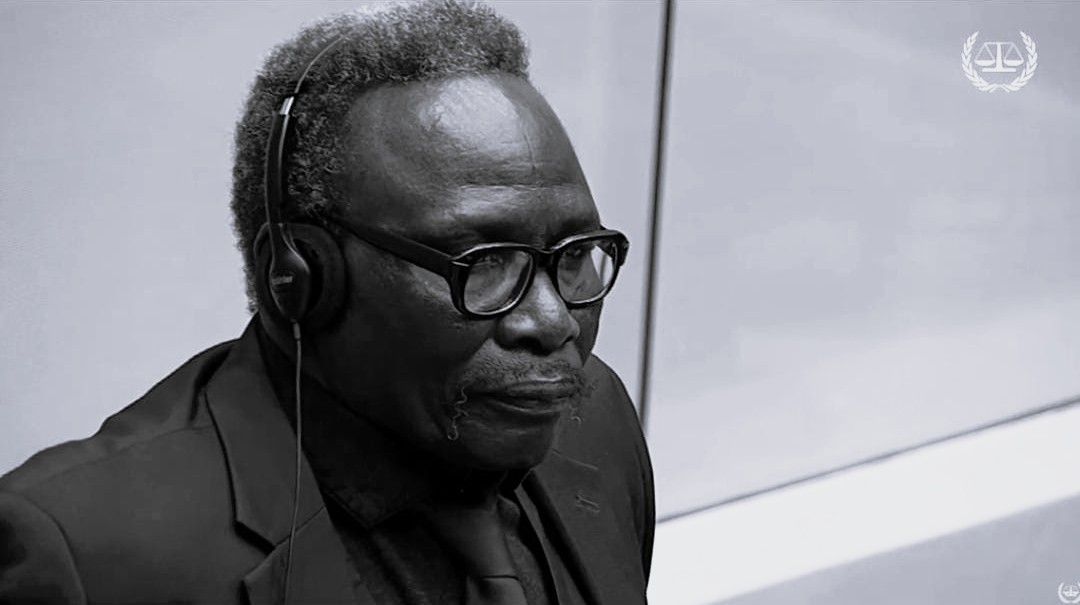
Ali Kushayb, former Darfur militia leader, found guilty, yet ICC criticized for ignoring powerful states
The International Criminal Court (ICC) has convicted Ali Muhammad Ali Abd-Al-Rahman, better known as Ali Kushayb, a former Sudanese militia leader, marking a historic moment as the first Janjaweed commander to be held accountable for atrocities committed during the Darfur conflict more than two decades ago. Kushayb was found guilty of 27 counts of war crimes and crimes against humanity, including rape, murder, and persecution, after the court determined that he had ordered his forces to “wipe out and sweep away” non-Arab communities, leaving no one alive. The conviction comes more than 20 years after the violence began, highlighting both the slow pace of international justice and the long shadow of impunity that has characterized Darfur.
Kushayb had surrendered himself to the ICC in June 2020, a move analysts say was motivated by a combination of avoiding forceful arrest, attempting to influence pre-trial proceedings by demonstrating cooperation, and seizing the opportunity to defend himself against charges. Since then, he has been in the custody of the ICC’s detention center in Scheveningen, The Hague, where sentencing hearings are scheduled to determine his punishment. His case underscores the limitations of international justice: despite the court issuing over 61 arrest warrants since its creation in 2002, only 12 individuals have ever been formally detained, and many remain at large due to lack of cooperation from states or political shielding.
The ICC, established under the Rome Statute, currently has 123 member states worldwide, spanning Africa, Europe, Latin America, and Asia, though notable countries such as the United States, China, India, Israel, and Russia have not ratified the treaty. Critics note that the court has focused disproportionately on African conflicts, including those in the Democratic Republic of Congo, Uganda, Mali, and Sudan, while serious allegations of war crimes and genocide in powerful states remain unaddressed. Examples frequently cited include Israel’s actions in Gaza and the West Bank, China’s mass detention of Uyghurs, Russia’s invasion of Ukraine, and actions taken by U.S. leaders such as George W. Bush in Iraq and Afghanistan. Many observers argue that this selective prosecution reflects the ICC’s entanglement in global power dynamics, leaving questions about its impartiality and relevance unresolved.
The Darfur conflict erupted in 2003 when non-Arab rebels accused the Sudanese government of marginalizing the western region. In response, the government mobilized Arab militias known as the Janjaweed, unleashing a campaign of systematic violence described by human rights groups and the U.S. government as genocide. While Kushayb’s conviction is a milestone, it represents only a fraction of the accountability still pending: former Sudanese President Omar al-Bashir and several other key figures remain fugitives, and investigations into ongoing crimes continue.
This verdict, while historic, highlights the dual reality of the ICC: it serves as a symbolic beacon of justice while simultaneously revealing the court’s structural limitations, perceived political biases, and the challenges of enforcing international law in a world shaped by uneven power dynamics. For Darfur and similar conflicts, the hope for justice is tempered by the recognition that systemic inequities and geopolitical considerations continue to influence which perpetrators are held to account and which evade the reach of international courts. The membership composition of the ICC, while global in number, does little to dispel the criticism that the court’s operations are often influenced by powerful Western states, leaving many major crimes unaddressed and reinforcing perceptions of selective justice.