
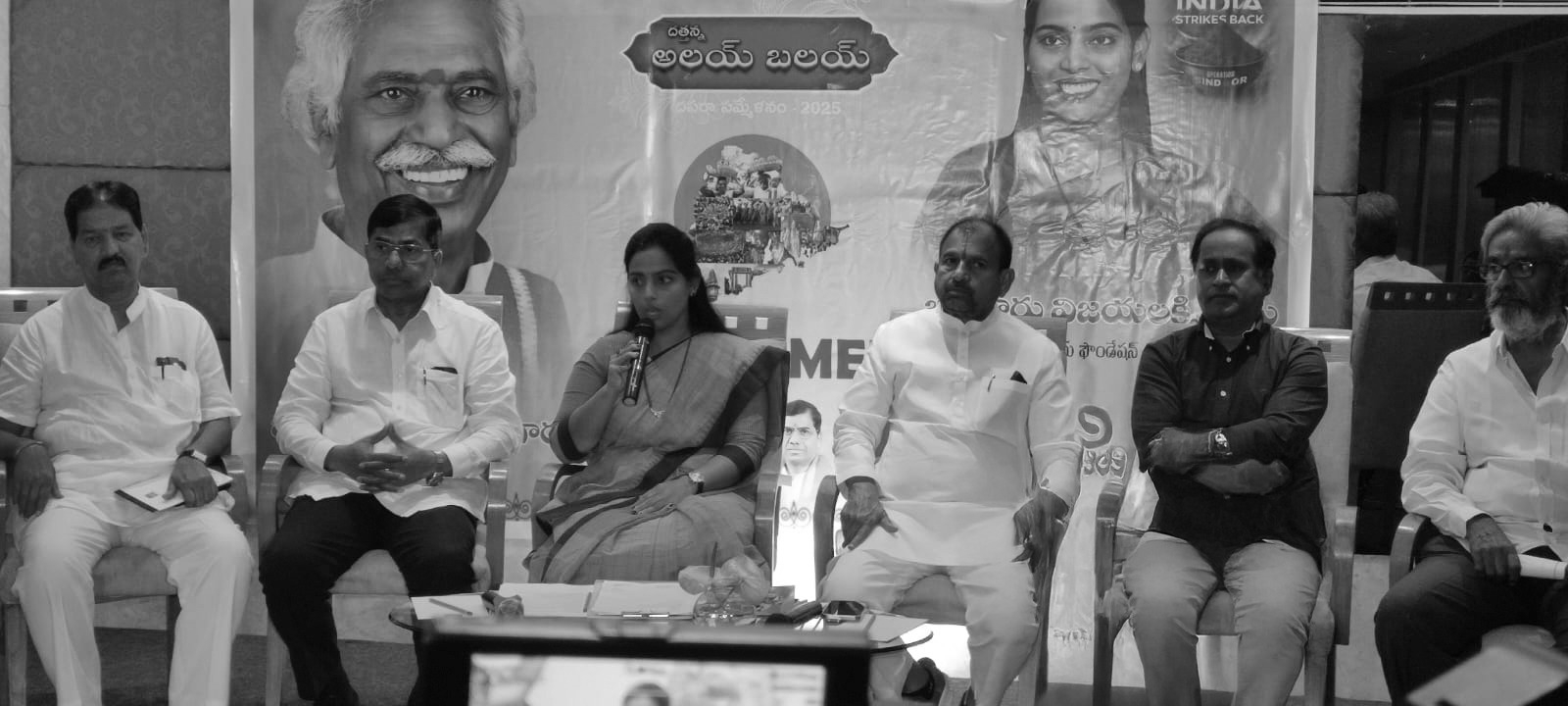
Alai Balai 2025 - Symbol of Telangana’s culture and unity
The Alai Balai festival, the annual Dasara conclave that has become a hallmark celebration of Telangana’s cultural life will be held on October 3 at the Nampally Exhibition Grounds, organisers announced at a press briefing Sunday. The event, now in its 20th year under the Alai Balai Foundation, is expected to draw politicians, cultural figures and thousands of citizens to celebrate Telangana cuisine, music, folk arts and social unity.
How Alai Balai began
Alai Balai was started by veteran leader Bandaru Dattatreya in 2005 as an informal, apolitical “meet-and-greet” during the Navaratri/Dussehra season, a day of hugging, feasting and exchange that organisers say revives Telangana traditions. What began as a small gathering has since expanded into a large public event that showcases regional food, folk performances and crafts. Organisers and multiple reports note that, while Dattatreya frames it as social rather than political, leaders from across party lines have consistently attended.
Role during the Telangana movement
Although Alai Balai was conceived as a cultural forum, several political leaders and commentators say the gatherings played an important informal role during the Telangana agitation helping to keep lines of communication open across political groups and inspiring unity that later fed into the political Joint Action Committee (JAC) that drove the statehood campaign. After Telangana’s formal formation in 2014, the event continued and in many ways grew in prominence: it became a recurring post-Dussehra platform where Chief Ministers, governors, Union ministers, opposition leaders, cultural figures and civil-society actors meet on neutral ground.
The 2024 edition - Who attended
The 2024 Alai Balai at Nampally drew a wide array of dignitaries and public figures. Coverage and archival reports list guests including Telangana Chief Minister A. Revanth Reddy, former Vice-President M. Venkaiah Naidu, Union ministers and senior state leaders alongside cultural performers and film personalities. Media on the ground also highlighted the presence of cross-party leaders, reflecting the event’s long reputation as an apolitical platform for public amity.
At the press briefing chaired by Bandaru Vijayalakshmi (chairperson of the Alai Balai Foundation and daughter of Bandaru Dattatreya), organisers confirmed the October 3 date and the Nampally venue, and said the 2025 edition would mark the festival’s 20th year. They outlined a programme of cultural troupes, traditional Telangana cuisine stalls and felicitation ceremonies including plans to honour officials involved in Operation Sindhoor and to highlight women’s leadership and the theme of Nari Shakti. Vijayalakshmi and the committee reiterated an open invitation to citizens across communities and political affiliations.
Significance - Culture, unity and soft power
Alai Balai’s importance is multi-fold:
• Cultural revival: It has functioned as a practical platform for preserving and popularising Telangana’s folk arts, Bathukamma customs, regional cuisine and handicrafts.
• Tourism and local economy: Large post-Dussehra gatherings boost visitor footfall in Hyderabad during a festival week, help local food vendors and artisans, and generate positive media attention for Telangana’s cultural tourism offer.
• Social recognition: The event’s decision to felicitate security and welfare workers, and to platform tribal and women artistes, demonstrates an attempt to connect cultural celebration with public recognition and welfare narratives.
From a neighbourhood Dasara meet in 2005 to a marquee civic festival, Alai Balai has grown into more than a feast: it is a living showcase of Telangana’s cultural memory, a bridge across political divides and a vehicle that amplifies local artisans and cuisine to a wider audience. As organisers prepare for the 20th edition at Nampally, the conclave’s sustained popularity highlights how cultural festivals can promote tourism, social cohesion and the continuing revival of regional traditions without substituting for formal politics yet still shaping the public life of a state.