
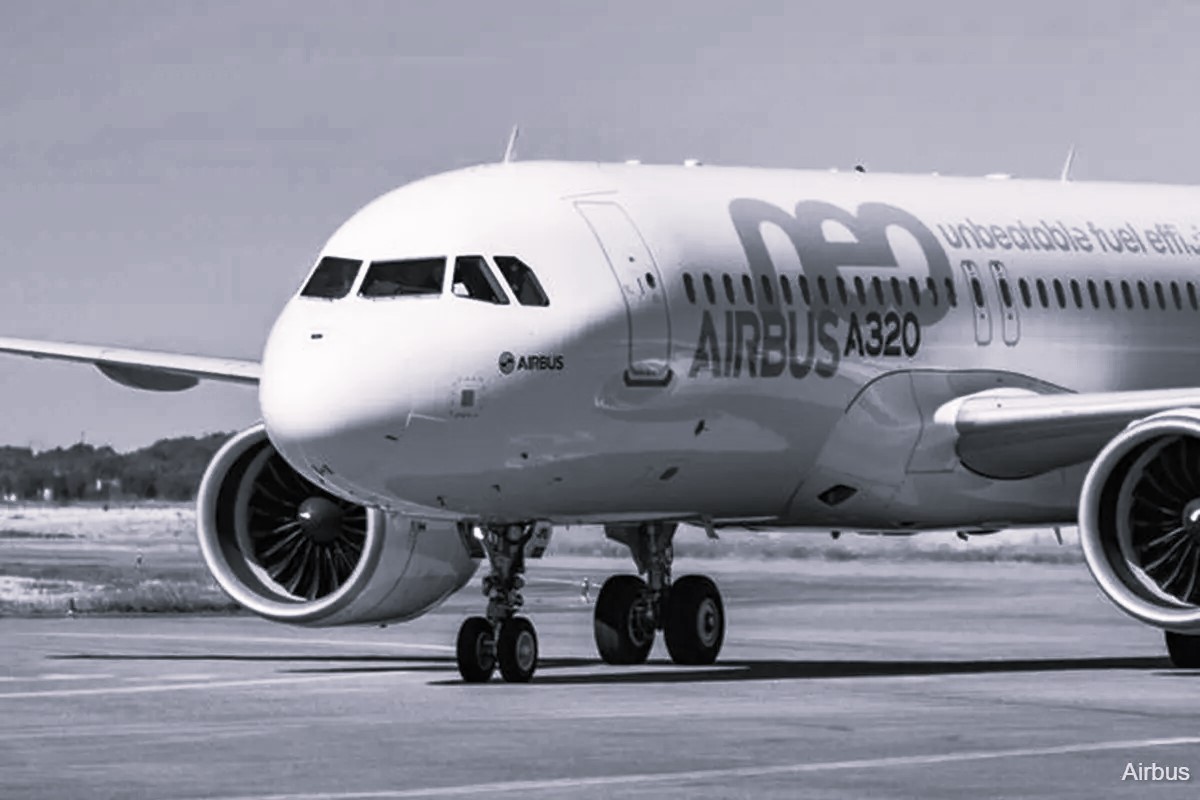
Airbus A320 overtakes Boeing 737 as world’s most-delivered Jet
Europe’s Airbus has officially surpassed its long-time American rival Boeing, as the A320 family of aircraft became the most-delivered jetliner in history. The milestone marks a defining moment in one of aviation’s fiercest rivalries, built over four decades of transatlantic competition.
Airbus’s A320 family reached 12,260 deliveries, overtaking Boeing’s 737, after a new jet was handed over to Flynas, a Saudi Arabian low-cost carrier, late Monday. The figures were confirmed by Cirium, a UK-based aviation data consultancy widely used in the industry. Boeing had held the record for decades before this delivery shifted the balance.
The milestone was achieved by Airbus, a European aerospace consortium headquartered in Toulouse, France, and its customer Flynas, which operates one of the region’s largest all-Airbus fleets. The data was compiled and verified by Rob Morris, an aircraft supply analyst at Cirium.
The record-breaking delivery occurred overnight in Saudi Arabia, bringing Airbus’s total deliveries since the A320’s commercial debut in 1988 to 12,260 units. Boeing’s 737, which first entered service in the 1960s, had previously been the world’s most-delivered commercial jet.
The event represents not just a numerical milestone but a symbolic shift in global aviation leadership. It underlines Airbus’s dominance in the lucrative narrow-body aircraft market, which serves short to medium haul routes the backbone of most airline operations. The A320’s success has been driven by demand from low-cost carriers, which grew rapidly in the 2000s as Airbus seized opportunities left open when Boeing slowed production after the 9/11 downturn.
Airbus’s success stems from a combination of innovation, adaptability, and market timing. When the A320 was launched in 1984, many doubted Airbus’s long-term survival. Yet the company’s decision to introduce fly-by-wire technology computer controlled flight systems revolutionized aircraft design and efficiency. Despite initial resistance from unions and airlines, the technology became standard across modern aviation. Over the decades, Airbus steadily expanded its production capacity beyond Europe, establishing assembly lines in the United States and China to meet rising global demand. Meanwhile, Boeing faced setbacks in recent years, most notably the 737 MAX crisis following two fatal crashes in 2018 and 2019 that halted production and tarnished its brand.
The rivalry between the two manufacturers rooted in differing strategies and transatlantic politics has defined the modern aerospace industry. Both companies, speaking at the ISTAT conference in Prague this week, confirmed that they do not expect to launch entirely new aircraft models until at least the next decade, as they await breakthroughs in engine efficiency and sustainability technologies.
For Airbus, the record is both a validation of decades of persistence and a reminder of the enduring competition that continues to drive innovation in global aviation.