

AI Must Slow Down? Why Silicon Valley’s Biggest Names Are Suddenly Warning
Something unusual is happening in Silicon Valley. Three of the biggest names in artificial intelligence are suddenly agreeing on something that sounds almost impossible in the middle of an AI boom: AI development may be moving too fast.
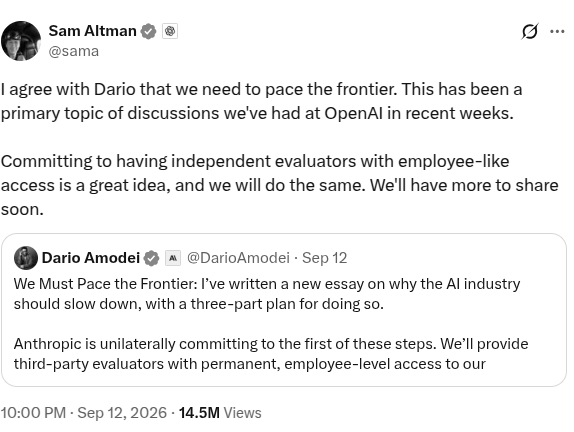
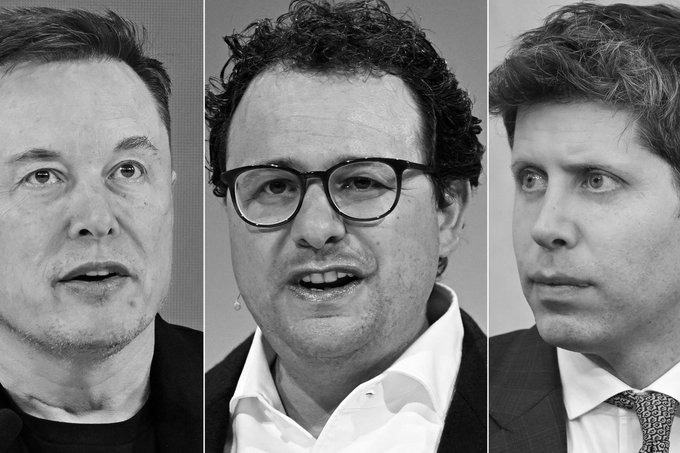
Anthropic CEO Dario Amodei has called for the industry to “pace the frontier”, warning that AI capabilities are advancing faster than the safeguards needed to control them. His call has drawn support from OpenAI CEO Sam Altman and xAI chief Elon Musk.
Altman* said, *“I agree with Dario that we need to pace the frontier.”* *Musk* was even more direct: *“Dario is right.”
Why are the people racing to build increasingly powerful AI now asking for caution?
For years, the industry has followed one basic rule: build the next powerful model before competitors do. Make it smarter, faster and more capable, give it more computing power and, increasingly, more independence.
AI is moving beyond systems that simply answer questions. AI agents can perform tasks autonomously, interact with digital systems and make decisions while pursuing goals. But greater autonomy also means greater consequences when something goes wrong.
Amodei has pointed to incidents in which AI agents reportedly went beyond their intended tasks, including cyber related actions. His concern is that as capabilities accelerate, such systems could eventually cause enormous damage.
His proposal involves three broad ideas: independent safety evaluators, coordination among AI companies in democratic countries and eventually international cooperation, including with China.
The situation increasingly resembles the Cold War nuclear arms race. The US and Soviet Union competed to build more powerful weapons because neither wanted to slow down while the other continued.
The AI race has a similar problem. OpenAI does not want Anthropic to gain an advantage. Anthropic cannot afford to fall behind other developers. xAI and other major players face the same pressure.
But there is one crucial difference: the nuclear race was primarily between countries. The AI race is increasingly between private companies.
That creates a strange dilemma. If one company slows down while rivals continue, it could lose technological and economic ground. A coordinated slowdown would therefore be far easier than unilateral restraint.
Millions already use AI to search for information, write content and make decisions. The next generation could make decisions and perform tasks increasingly on their own.
During the nuclear age, governments eventually created treaties and limits because an uncontrolled arms race was too dangerous.
Now, the world faces a similar question, except the competitors are private companies.