
AI-Guided Missiles and Precision Rockets Mark New Phase in North Korea’s Military Build-Up
North Korea has intensified concerns across East Asia after unveiling a new set of advanced weapons systems, including AI-guided cruise missiles , tactical ballistic missiles, and precision artillery rockets, as leader Kim Jong Un accelerates efforts to modernise the country’s military capabilities.
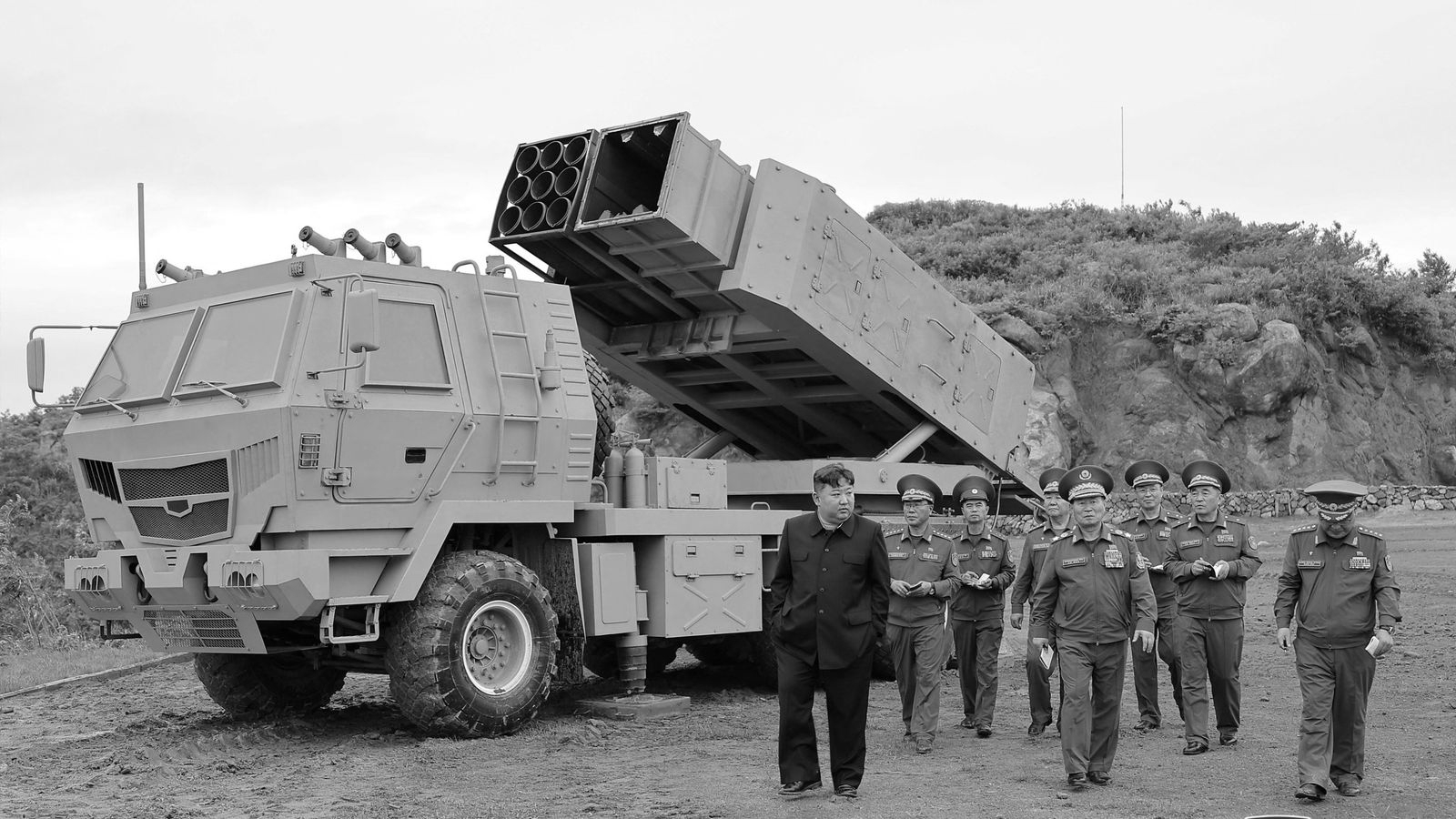
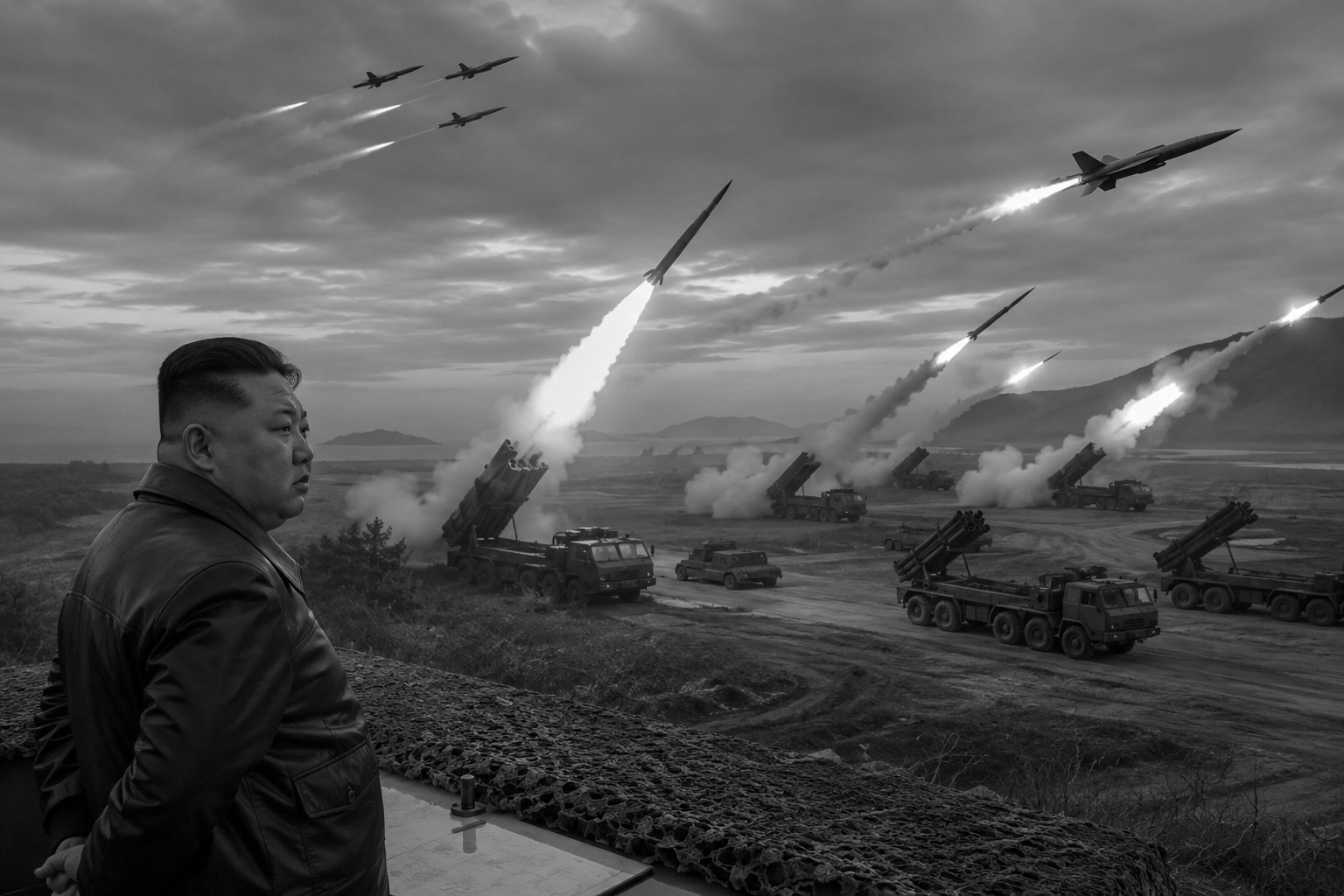
The latest tests, confirmed by North Korean state media KCNA, were personally supervised by Kim and are believed to be aimed at strengthening frontline combat units stationed near the border with South Korea. According to reports, the launches included ballistic missiles fitted with battlefield nuclear warheads, upgraded 240mm rocket artillery systems with “ultra-precision” navigation, and nuclear-capable cruise missiles designed for rapid deployment during regional conflict.
South Korea’s military said it detected multiple projectiles launched into the western waters, including at least one short-range ballistic missile that travelled nearly 80 kilometres. While Seoul did not verify all of Pyongyang’s technical claims, defence analysts say the tests reflect North Korea’s growing focus on tactical nuclear warfare and modern battlefield technology.
A major point of attention was Pyongyang’s first public reference to using artificial intelligence in missile guidance systems. Experts believe the technology could improve targeting accuracy, navigation, and survivability against missile defence systems. Some analysts compared the new artillery systems to a North Korean version of the US HIMARS rocket platform because of their mobility and precision-strike capability.
The tests also highlighted the scale of North Korea’s domestic arms industry. Despite heavy international sanctions, Pyongyang manufactures most of its conventional military equipment internally, including artillery guns, rocket launchers, missiles, armored vehicles, and ammunition. Analysts estimate the country possesses nearly 18,000 artillery systems and thousands of multiple rocket launchers positioned near the Demilitarized Zone, placing much of Seoul within striking distance.
Military spending remains central to Kim’s strategy. External estimates place North Korea’s defence expenditure between $4 billion and $10 billion annually , though its real purchasing power could be significantly higher because of low labour costs and state-controlled production.
The weapons expansion comes as North Korea deepens military ties with Russia amid the Ukraine war while continuing to reject US-led denuclearisation talks. Observers say the latest launches demonstrate Pyongyang’s intention to build a more technologically advanced and combat-ready military despite growing international pressure.