
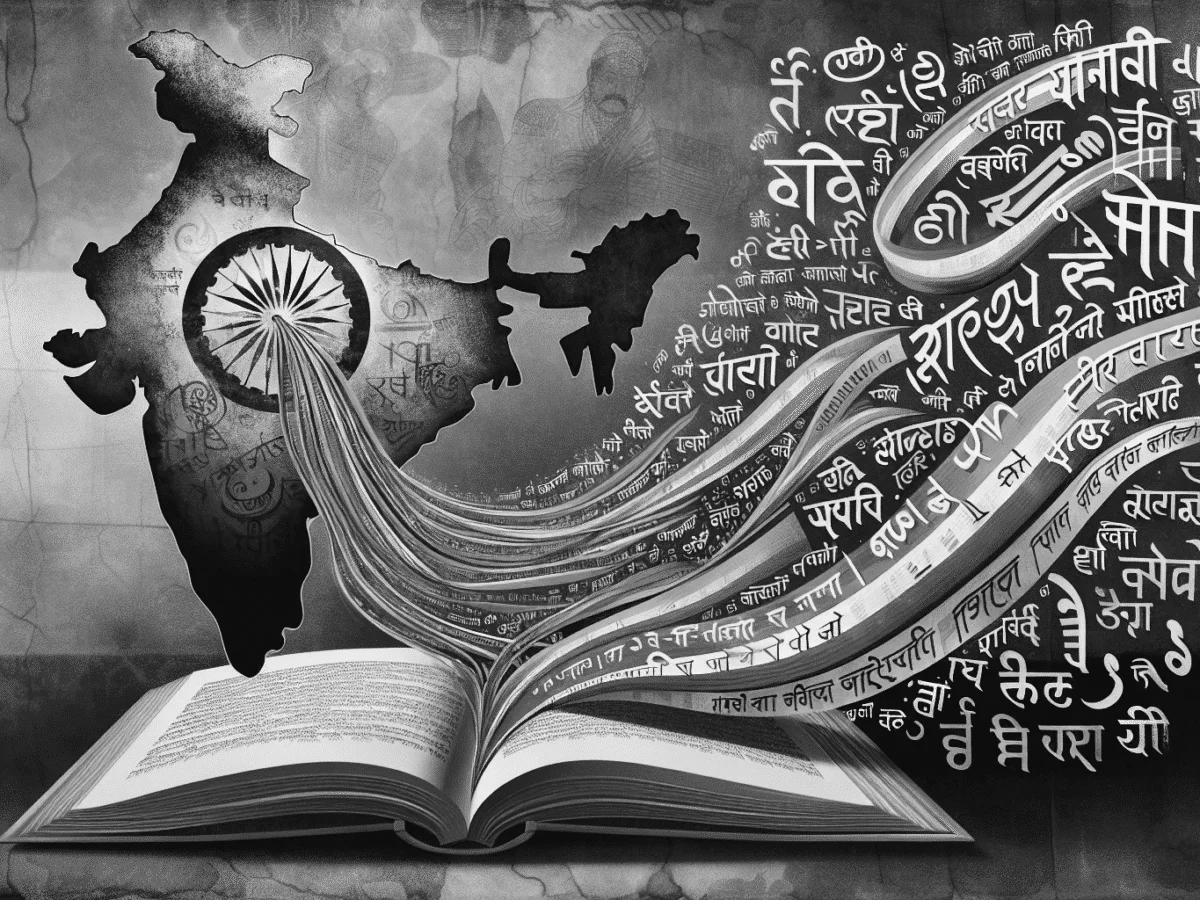
AI gives voice to 22 languages
“A language is not just a mode of communication; it is the soul of a civilization, its culture, its heritage.” - Prime Minister Narendra Modi. India is home to 22 Scheduled Languages and hundreds of tribal and regional dialects, making it one of the most linguistically diverse countries in the world. As digital transformation accelerates, technology is being leveraged to preserve this linguistic heritage while ensuring that digital services are accessible to every citizen, regardless of their mother tongue.
Platforms like Bhashini and BharatGen are at the forefront of this effort, enabling real-time translation, speech recognition, and text-to-speech capabilities across Scheduled and tribal languages. Initiatives such as Adi-Vaani, India’s first AI platform dedicated to tribal languages, support languages like Santali, Bhili, Mundari, and Gondi,many of which have traditionally existed only in oral form.
Preserving languages digitally is a key focus of schemes such as the Scheme for Protection and Preservation of Endangered Languages (SPPEL) , launched in 2013. SPPEL documents and archives languages spoken by fewer than 10,000 people, generating rich text, audio, and video datasets for AI and natural language processing systems. Platforms like Sanchika aggregate dictionaries, primers, storybooks, and multimedia resources, providing essential datasets for training AI models and supporting research, language education, and cultural preservation.
AI is also transforming India’s education landscape. The National Education Policy (NEP) 2020 emphasizes learning in the mother tongue up to Grade 5 and preferably beyond. Platforms like e-KUMBH provide free access to technical books in multiple Indian languages, while the Anuvadini app enables rapid translation of engineering, medical, law, and skill-development textbooks for higher education. With over 5 crore learners on SWAYAM , schools and ed-tech providers can now deliver interactive, multilingual learning materials, bridging comprehension gaps and empowering students to learn in their native language.
The technology behind these transformations is powered by automatic speech recognition (ASR) , text-to-speech (TTS) , neural machine translation (NMT) , natural language understanding (NLU) , and transformer-based models such as IndicBERT and mBART. Extensive datasets from manuscripts, folklore, oral traditions, government records, and educational content ensure that AI systems are accurate, scalable, and inclusive, capable of handling India’s unique linguistic complexity.
Through platforms like Bhashini, BharatGen, and Adi-Vaani, alongside initiatives such as SPPEL and TRI-ECE, India is safeguarding its linguistic diversity while empowering citizens to fully engage with digital services in their native languages. This AI-driven, multilingual approach positions India as a global leader in digital inclusion and linguistic innovation , ensuring that every language remains a living, functional medium of instruction, communication, and cultural expression in the modern era.