
AI and Predictive Analytics redefine Ocean freight planning as global shipping enters data-driven era
As global supply chains grapple with persistent disruptions from geopolitical tensions and climate volatility to capacity shortages and volatile freight rates, artificial intelligence (AI) and predictive analytics are emerging as transformative forces in the logistics and shipping industry. These technologies are rapidly reshaping how ocean freight is planned, monitored, and executed, marking a decisive shift from reactive operations to intelligent, forward-looking supply chain management.
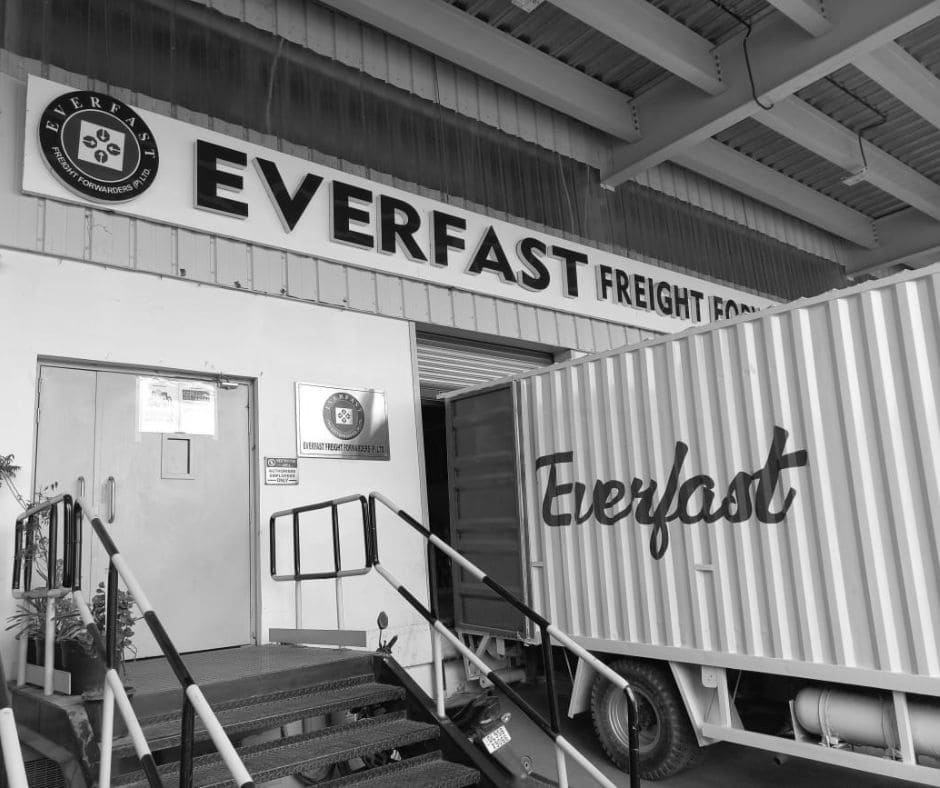
Everfast Freight Forwarders Pvt. Ltd. , a global logistics and supply chain solutions provider with more than three decades of operational experience, has highlighted new insights into how AI-driven technologies are redefining ocean freight reliability and efficiency at a time when traditional planning models are increasingly under strain.
Ocean freight accounts for over 80% of global trade by volume, making it the backbone of international commerce. Yet the sector remains highly vulnerable to disruption, as evidenced by mounting pressures on critical global chokepoints. The Panama Canal continues to face severe capacity constraints due to prolonged drought conditions, while shipping through the Suez Canal has been significantly disrupted by security threats stemming from attacks by Houthi forces in the Red Sea. These challenges compound existing issues such as vessel schedule volatility, port congestion, container imbalances, customs bottlenecks, and documentation delays. In this environment, traditional freight planning methods largely dependent on static data, historical trends, and manual interventions are proving increasingly inadequate for today’s fast-evolving and unpredictable global trade landscape.
The convergence of AI, big data, and real-time analytics is now enabling shipping lines, freight forwarders, and cargo owners to navigate uncertainty with far greater precision. By processing millions of data points across weather systems, vessel movements, port performance, trade flows, and market dynamics, AI-powered platforms are introducing a new era of predictive and adaptive logistics.
Predictive analytics has become a cornerstone of modern ocean freight planning, allowing logistics providers to anticipate challenges before they escalate into costly disruptions.
AI-driven capacity forecasting models analyze market demand, container availability, carrier behavior, and trade lane trends to predict potential capacity constraints. This enables forwarders and shippers to secure bookings earlier, optimize equipment utilization, and avoid last-minute premium costs.
Similarly, machine learning algorithms are transforming freight rate management. By examining historical pricing data, fuel costs, seasonal fluctuations, and macroeconomic indicators, AI systems generate forward-looking rate forecasts, helping businesses identify optimal pricing windows and manage budget volatility more effectively.
Another critical application of AI lies in improving Estimated Time of Arrival (ETA) accuracy and end-to-end operational visibility. By correlating vessel AIS data with weather forecasts, port congestion metrics, historical delay patterns, and real-time disruption signals, AI significantly enhances ETA predictions while continuously monitoring voyage conditions. Advanced route visibility tools can automatically detect disruptions such as adverse weather, labor strikes, or congestion at key ports and proactively recommend alternative routes or transshipment hubs. Together, these capabilities improve supply chain transparency, minimize delays, and allow businesses to plan inventory and production schedules with far greater confidence.
Documentation management along a pain point in international shipping is also undergoing rapid automation. Intelligent systems now validate shipping documents, compliance requirements, and customs filings, reducing manual errors and accelerating cargo clearance. This is particularly critical in regulated sectors such as pharmaceuticals, healthcare, and cold chain logistics, where documentation accuracy and real-time monitoring directly impact cargo integrity.
Proactive risk management is another area seeing significant gains. AI-powered platforms continuously monitor risk indicators, issuing early alerts that allow operations teams to respond swiftly and safeguard cargo, schedules, and customer commitments.
At the same time, customer expectations are evolving rapidly. Shippers now demand real-time transparency and predictive insights, not just status updates. AI-enabled logistics platforms are responding with live vessel tracking, automated notifications, predictive delay alerts, detailed performance analytics, and faster issue resolution raising the overall standard of customer experience in global freight forwarding.
Commenting on the growing role of AI in ocean freight operations, Arun Kumar Rai, Managing Director of Everfast Freight Forwarders Pvt. Ltd., said: “The future of ocean freight planning lies in intelligent, fast, and data-driven decision-making. Implementation of AI will give our teams the ability to anticipate challenges, act faster, and deliver greater reliability to our customers. While technology provides the insights, it is our experienced professionals who interpret the data and implement solutions with precision.”
Beyond individual freight operations, AI has the potential to fundamentally reshape the global shipping industry. Innovations such as autonomous vessels, smart ports, IoT-enabled container tracking, and advanced carbon emissions monitoring are expected to play a defining role over the next decade.