
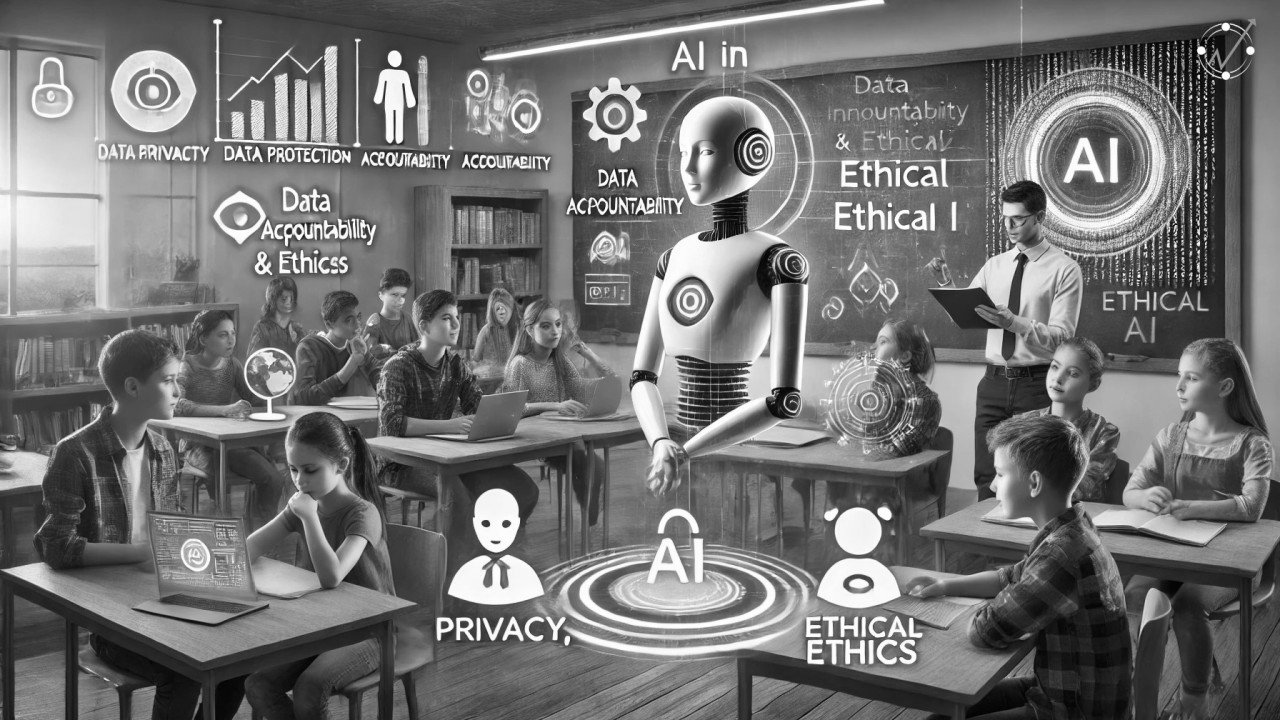
AI adoption in education grows amid concerns over ethics and student data
Artificial Intelligence is rapidly reshaping India’s education ecosystem, promising personalised learning, improved teaching efficiency and expanded access to knowledge. Yet, as schools and policymakers accelerate the adoption of AI-driven tools, concerns around data privacy, academic integrity and student well-being are becoming increasingly prominent. The debate is no longer about whether AI should enter classrooms, but about how it can be governed responsibly.
Educationist Shishir Jaipuria, Chairman of the Seth Anandram Jaipuria Group of Educational Institutions, has described AI as a “double-edged sword” for the education sector. While calling it a watershed moment in human progress, he has cautioned against unethical practices such as AI-enabled cheating in online assessments and the growing risk of student data breaches.
Jaipuria’s remarks mirror a wider national conversation. The Union government has recently intensified deliberations on integrating AI into teaching and learning, with parliamentary-level consultations signalling that artificial intelligence is likely to become a central feature of India’s education framework. Several states have also indicated plans to introduce AI at the school level, underscoring a shift from optional adoption to mainstream integration.
At its best, AI offers powerful educational advantages. Adaptive learning platforms can analyse individual learning patterns, identify gaps in understanding and tailor instruction accordingly. AI tools can also help teachers reduce administrative workload, allowing greater focus on classroom engagement. In areas facing teacher shortages, technology-enabled self-learning has the potential to bridge long-standing access gaps.
However, personalized learning relies heavily on the collection and processing of student data. Academic records, behavioural indicators and, in some cases, biometric information form the backbone of AI-driven education systems. This raises serious privacy concerns, particularly as India’s data protection framework places stricter obligations on institutions to safeguard children’s personal information and ensure informed consent.
Academic integrity has emerged as another major challenge in the age of AI. The misuse of generative AI tools for completing assignments or cheating during online examinations is prompting educators to rethink traditional assessment models. Schools and universities are increasingly moving towards oral exams, in-class evaluations and process-based assessments that emphasise reasoning and critical thinking rather than rote output.
For AI to be used effectively and ethically, teacher preparedness is essential. Educationists stress the need for targeted training and professional development to build digital competencies among educators. Without adequate support, AI risks becoming either underutilised or misapplied, undermining its potential benefits.
The growing use of AI also intersects with broader concerns around student stress and mental health. An excessive focus on grades and competitive performance, when amplified by data-driven monitoring, can intensify pressure on learners. Experts argue that technology must support a more holistic understanding of success, rather than reinforcing narrow academic benchmarks.
As India moves towards deeper integration of AI in education, the challenge lies in balancing innovation with accountability. Artificial intelligence can democratise learning and align education with future workforce needs, but only if accompanied by robust ethical safeguards, strong data protection measures and a human-centric approach. The true test will be whether AI strengthens education without compromising trust, equity and student well-being.