
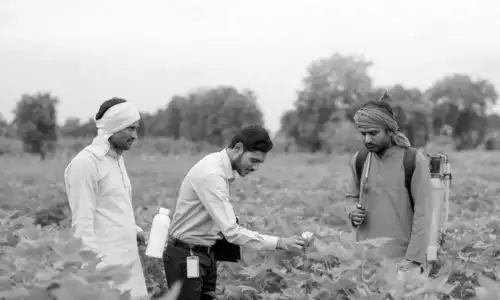
Agricultural education and training in India: Strengthening knowledge for a prosperous farming future
Agriculture continues to serve as the backbone of India’s economy, providing primary livelihood to nearly half of the nation’s population and contributing about 18 per cent to the Gross Domestic Product (GDP). Strengthening human resources through higher education, research, and hands-on training remains central to enhancing productivity, ensuring sustainability, and realising the national vision of “Viksit Krishi aur Samruddh Kisan” (Developed Agriculture and Prosperous Farmers) under “Viksit Bharat”.
The country’s agricultural progress is built on three interlinked pillars: education, research, and extension working together under the guiding principle of “One Nation – One Agriculture – One Team.”
ICAR: The* *a* *pex* *b* *ody for* *a* *gricultural* *r* *esearch and* *e* *ducation
Established in 1929, the Indian Council of Agricultural Research (ICAR) functions under the Department of Agricultural Research and Education (DARE), Ministry of Agriculture and Farmers Welfare, Government of India. ICAR is the apex organisation responsible for coordinating, guiding, and managing agricultural research, higher education, and extension across the country.
The ICAR network currently comprises 113 research institutes, 74 agricultural universities, and 731 Krishi Vigyan Kendras (KVKs), making it one of the largest national agricultural research systems in the world. Through these institutions, ICAR has played a crucial role in major agricultural transformations such as the Green Revolution and continues to lead research in climate-resilient agriculture, livestock improvement, and sustainable natural resource management.
ICAR also ensures quality assurance in agricultural education through initiatives such as the ICAR Model Act (Revised 2023), Minimum Requirements for Establishing Agricultural Colleges, and the National Agricultural Education Accreditation Board (NAEAB), which accredits universities and colleges to maintain academic standards nationwide.
Network of* *a* *gricultural* *u* *niversities
India’s higher agricultural education system is one of the largest in the world, consisting of:
• 63 State Agricultural Universities (SAUs)
• 3 Central Agricultural Universities (CAUs)
• 4 Deemed Universities (Indian Agricultural Research Institute – IARI, New Delhi; National Dairy Research Institute – NDRI, Karnal; Indian Veterinary Research Institute – IVRI, Izatnagar; and Central Institute of Fisheries Education – CIFE, Mumbai)
• 4 Central Universities with agricultural faculties
• 11 Agricultural Technology Application Research Institutes (ATARIs)
While agricultural education primarily comes under the purview of State Governments, ICAR provides guidance and support to ensure uniform standards across the country. The number of ICAR-accredited private agricultural colleges has also increased from five in 2020–21 to twenty-two in 2024–25, reflecting growing private sector participation in the field of agricultural education.
Central* *a* *gricultural* *u* *niversities* *d* *riving* *r* *egional* *g* *rowth
Three Central Agricultural Universities (CAUs) cater to regional agricultural needs and development. Dr. Rajendra Prasad Central Agricultural University (RPCAU), Pusa, Bihar, established in 2016, offers undergraduate, postgraduate, and doctoral programmes in agriculture, horticulture, engineering, fisheries, forestry, and food technology. With campuses in Pusa, Dholi, and Piprakothi, the university manages 18 KVKs across Bihar and aligns its programmes with the National Education Policy (NEP) 2020, introducing short-term diploma and certificate courses to promote employability and entrepreneurship.
Central Agricultural University (CAU), Imphal, established under the Central Agricultural University Act, 1992, serves seven Northeastern states Arunachal Pradesh, Manipur, Meghalaya, Mizoram, Nagaland, Sikkim, and Tripura. It operates 13 constituent colleges offering 10 undergraduate, 48 master’s, and 34 doctoral programmes, with about 3,000 students currently enrolled.
Rani Lakshmi Bai Central Agricultural University (RLBCAU), Jhansi, Uttar Pradesh, set up under DARE, focuses on agronomy, horticulture, veterinary science, and agricultural engineering. It operates campuses in Jhansi (Uttar Pradesh) and Datia (Madhya Pradesh), promoting region-specific agricultural research and education.
Integrating* *t* *echnology: IoT and* *a* *rtificial* *i* *ntelligence in* *a* *griculture
The Government of India is promoting digital and smart agriculture through the use of Internet of Things (IoT), Artificial Intelligence (AI), blockchain, and remote sensing technologies.
Under the National Mission on Interdisciplinary Cyber-Physical Systems (NM-ICPS), 25 Technology Innovation Hubs (TIHs) have been established, including those at:
• Indian Institute of Technology (IIT) Ropar, focusing on water and agriculture-based IoT systems,
• IIT Bombay, with a hub on the Internet of Everything, and
• IIT Kharagpur, leading the Artificial Intelligence for Interdisciplinary Cyber-Physical Systems (AI4ICPS) hub.
Additionally, the Ministry of Electronics and Information Technology (MeitY) has set up Centres of Excellence (CoEs) on IoT in Bengaluru, Gurugram, Gandhinagar, and Visakhapatnam, with the Visakhapatnam CoE focusing specifically on agriculture.
The National e-Governance Plan for Agriculture (NeGPA) also promotes state-level digital initiatives using AI, IoT, and data analytics. Through the Rashtriya Krishi Vikas Yojana (RKVY), the Innovation and Agri-Entrepreneurship Development Programme supports start-ups and incubators in agriculture and allied sectors, encouraging innovation and rural employment.
Training and* *s* *killing for* *f* *armers and* *r* *ural* *y* *outh
Skill development and farmer training are crucial components of India’s agricultural transformation. Various initiatives are being implemented to enhance technical capacity, entrepreneurship, and on-farm innovation:
• Krishi Vigyan Kendras (KVKs) trained 58.02 lakh farmers between 2021–22 and 2023–24, and 18.56 lakh farmers during 2024–25 (up to January).
• Agricultural Technology Management Agency (ATMA) trained 1.27 crore farmers from 2021 to 2025.
• Skill Training of Rural Youth (STRY) programme has trained over 51,000 rural youth in short-term vocational courses.
• The Sub-Mission on Agricultural Mechanisation (SMAM) conducted over 57,000 trainings on the use of farm machinery and custom hiring centres.
• Under the Soil Health Card Scheme, more than 25 crore cards have been issued, accompanied by 93,000 training programmes and 6.8 lakh field demonstrations.
• Over 10,000 Farmer Producer Organisations (FPOs) have been formed to improve collective marketing, value addition, and training in digital agriculture.
Future* *c* *hallenges and* *o* *pportunities
India’s agricultural education and training system faces the need to modernise curricula, strengthen infrastructure, and attract youth towards agriculture while preparing professionals for climate-resilient and sustainable farming. Addressing funding constraints and bridging the digital divide between rural and urban learners are also key challenges.
At the same time, significant opportunities lie ahead. The rapid expansion of digital agriculture driven by AI and IoT, implementation of NEP 2020, growth of agri-startups under RKVY, and international collaboration through public–private partnerships (PPPs) can accelerate innovation and inclusion. Increasing participation of women and youth in agricultural education and entrepreneurship further strengthens the sector’s future potential.
With sustained investment in technology, education, and inclusivity, India is well on its way to achieving the vision of a knowledge-driven, technology-enabled, and globally competitive agricultural sector, ensuring a truly “Viksit Krishi aur Samruddh Kisan.”