
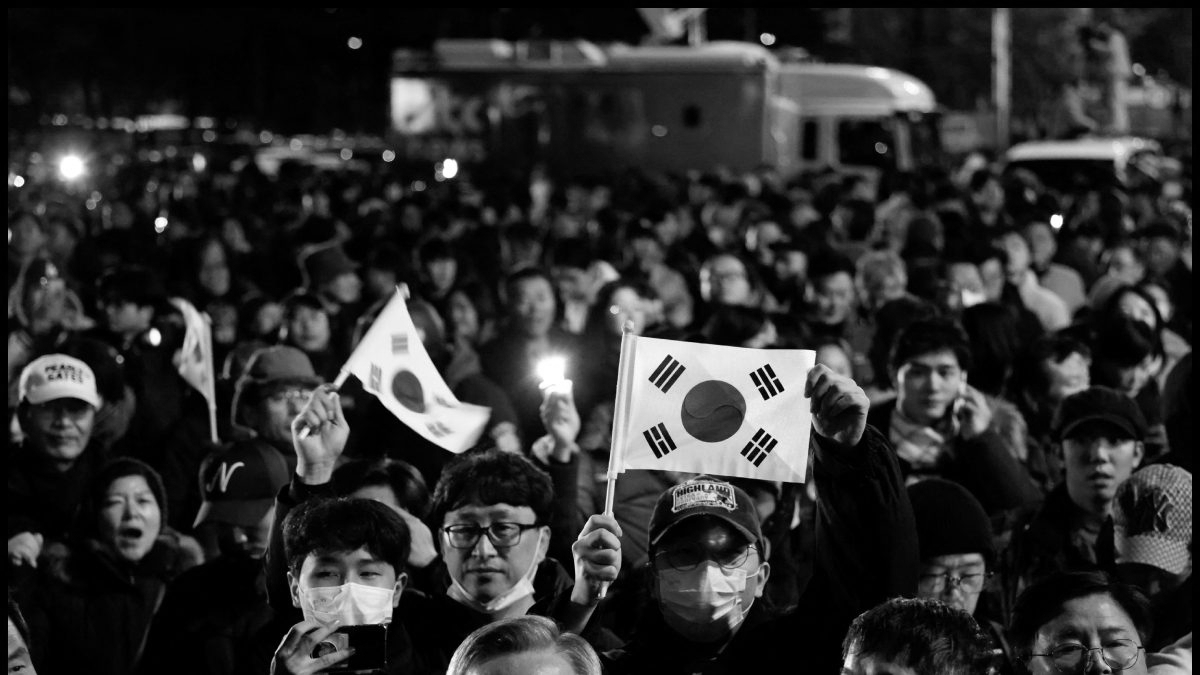
After Yoon crisis, South Korea legislates special panels for rebellion cases
South Korea’s National Assembly on Tuesday passed legislation mandating the creation of specialised judicial panels in Seoul’s district and high courts to handle cases involving rebellion, treason and foreign subversion, following political controversy over the pace of former President Yoon Suk Yeol ’s criminal trial.
The bill, which is expected to be signed into law by President Lee Jae Myung , requires the Seoul Central District Court and the Seoul High Court to establish at least two dedicated three-judge panels for such cases. Judges serving on these panels will be selected by the judges’ council at each court, a provision lawmakers say is intended to safeguard judicial independence.
The legislation was approved by a vote of 175-2 , with two abstentions, after most lawmakers from the conservative People Power Party (PPP) boycotted the session. The vote was delayed by a 24-hour filibuster led by PPP floor leader Jang Dong-hyuk , who argued that the bill remained unconstitutional despite multiple revisions and accused the liberal Democratic Party of attempting to influence judicial outcomes.
The PPP said it boycotted the vote in protest against what it described as political interference in judicial independence. Conservative lawmakers contend the legislation was driven by frustration over former President Yoon Suk Yeol’s rebellion trial and undermines the long-standing principle of randomly assigning judges. Despite amendments excluding ongoing cases, they argue the law pressures courts to shape judicial benches for politically sensitive trials, potentially violating the separation of powers and setting a precedent for legislative influence over judicial outcomes.
The final version of the law falls short of what Democrats initially sought. Lawmakers amended the wording to ensure the measure does not apply to ongoing trials, following criticism that the original draft risked undermining the principle of random judge assignment and infringing on judicial independence. As a result, the law will not affect Yoon’s current rebellion trial, which is underway at the Seoul Central District Court.
The move comes against the backdrop of one of the most serious political and legal crises in South Korea’s recent history. Yoon, a staunch conservative, was removed from office in April after declaring martial law in December 2024, a move he said was necessary to suppress what he described as “anti-state” liberal forces blocking his agenda. The declaration lasted only hours before being overturned by lawmakers, but it triggered a sweeping criminal investigation.
Yoon was first arrested earlier this year and briefly released after a court approved his detention cancellation, allowing him to stand trial without custody. He was re-arrested in July as investigators expanded their probe into what prosecutors have described as a failed attempt to seize power. He now faces multiple charges, including rebellion, an offence punishable by life imprisonment or the death penalty under South Korean law.
The handling of Yoon’s case has drawn repeated criticism from the Democratic Party, which has accused the presiding judge, Jee Kui-youn , of unnecessarily delaying proceedings by spacing out hearings. Liberals have also questioned the longstanding practice of randomly assigning judges in cases of exceptional national importance, arguing that rebellion cases require specialised judicial expertise.
Tensions intensified after courts rejected investigators’ requests for arrest warrants against several figures close to Yoon, including former Prime Minister Han Duck-soo and senior PPP lawmaker Choo Kyung-ho . Prosecutors had accused Han of aiding Yoon’s martial law declaration and Choo of obstructing lawmakers from participating in the vote that ultimately nullified the decree.
Conservative leaders have condemned the new law as an overreach by the legislature and have urged President Lee to veto it, warning that it sets a dangerous precedent for political interference in the judiciary. The Democratic Party, however, maintains the legislation is necessary to ensure efficiency and consistency in handling crimes that threaten constitutional order.
Once signed, the law will take effect immediately. While it will not influence Yoon’s ongoing trial where a verdict is expected in early 2026 it would apply if the case proceeds to the Seoul High Court, where it would be heard by one of the newly established specialised panels.