
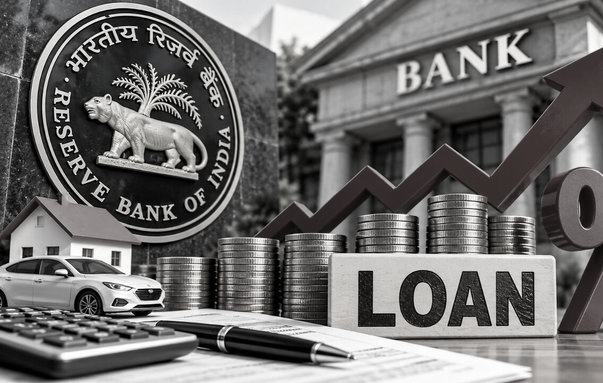
After RBI Rate Hike, Several Banks Raise Lending Rates, Borrowers Brace For Higher EMIs
The Reserve Bank of India’s latest rate hike has quickly moved from a policy announcement to a household concern, with several major banks raising lending rates and signalling that the era of steadily cheaper borrowing may be over, at least for now.
The RBI on Wednesday raised the repo rate by 25 basis points to 5.50 per cent, its first increase in nearly four years, as inflationary pressures, expensive crude oil and a weakening rupee complicated the economic outlook. More importantly, the six-member Monetary Policy Committee shifted its stance to “calibrated tightening”, leaving the door open to further increases if price pressures persist.
Banks have wasted little time in transmitting the increase. Punjab National Bank raised its repo-linked lending rate from 8.10 per cent to 8.35 per cent, while Indian Bank moved its rate from 7.95 per cent to 8.20 per cent. Bank of Baroda raised its repo-based lending rate to 8.15 per cent, while Bank of India and Indian Overseas Bank moved their rates to 8.35 per cent. Tamilnad Mercantile Bank also raised its rate to 8.50 per cent, with other lenders expected to follow.
For households, the immediate impact will be felt most by borrowers with floating-rate, repo-linked loans. Home, vehicle and personal-loan customers could face higher EMIs or longer repayment periods when their loans reset. Those with fixed-rate loans will not be affected in the same way, while MCLR-linked loans may see a slower transmission.
The timing is significant. The RBI has raised its FY27 inflation forecast to 5.2 per cent, while September inflation is expected to have accelerated. Crude oil above $100 a barrel and continued pressure on the rupee could further complicate the inflation outlook.
Yet the central bank has not abandoned growth. It has raised its FY27 GDP growth forecast to 7.1 per cent from 6.7 per cent, suggesting it believes the economy can withstand tighter financial conditions.
For consumers, therefore, the bigger concern is not this 25-basis-point hike alone, but what comes next. If inflation remains stubborn, another increase could push borrowing costs higher, making homes, cars and other big-ticket purchases more expensive. The message is clear: cheaper money is no longer the direction of travel.