
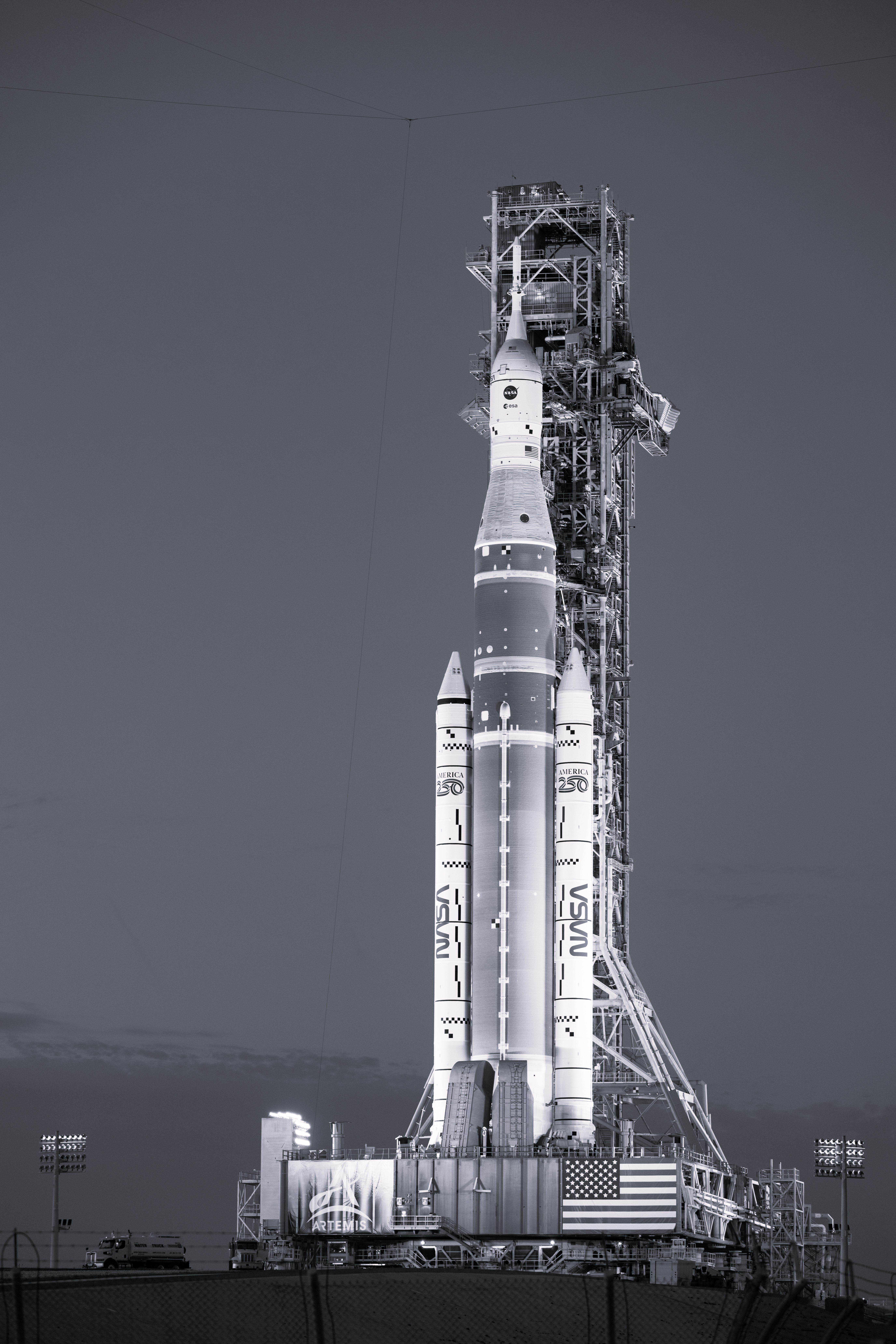
After five decades NASA astronauts to orbit the Moon as Artemis II is set for launch
NASA has rolled its powerful new Space Launch System (SLS) rocket to the launch pad as preparations intensify for Artemis II , the first crewed lunar fly-around in more than 50 years.
At 6:42 p.m. EST on Saturday, Jan 17 , the 322-foot rocket, stacked with the Orion spacecraft, reached Launch Pad 39B at the Kennedy Space Center in Florida after a nearly 12-hour crawl from the Vehicle Assembly Building (VAB). The movement, carried out at a maximum speed of 0.82 mph using crawler-transporter 2, was witnessed by thousands of NASA workers and families.
The Artemis II mission will carry four astronauts on a roughly 10-day journey around the Moon and back . The crew includes NASA astronauts Reid Wiseman (Commander), Victor Glover (Pilot), Christina Koch (Mission Specialist) , and Canadian Space Agency astronaut Jeremy Hansen (Mission Specialist) . While the astronauts will not land on the Moon, this mission is a critical test of systems, procedures, and crew operations ahead of future lunar landings under the Artemis programme.
Before launch, NASA will conduct a wet dress rehearsal , a crucial pre-flight check involving loading cryogenic propellants , simulating a full countdown, and safely draining fuel. This is scheduled no later than Feb 2, 2026 . Engineers will verify all systems from engines to life support function correctly , and may roll back the rocket to the VAB if additional work is needed.
Technical teams also ensured that the crew access arm is correctly positioned, providing astronauts and closeout crews safe boarding access on launch day. Other safety checks include engine performance tests, navigation and communication verification, and rehearsal of emergency abort procedures using Orion’s Launch Abort System .
Artemis II represents the first human journey beyond low-Earth orbit since 1972 and marks a key step toward NASA’s broader goal of returning humans to the Moon and eventually reaching Mars. The mission will test Orion’s life-support systems, navigation, and communication in lunar space, laying the groundwork for Artemis III , which plans to land astronauts including the first woman on the Moon. These efforts will ultimately help establish a sustainable lunar presence , providing critical experience for long-duration missions to Mars.
NASA is targeting a short launch window in February , with delays pushing the mission to March if required. Upon a successful flight, Artemis II will demonstrate that humans can safely orbit the Moon and return , setting the stage for a new era of exploration.