
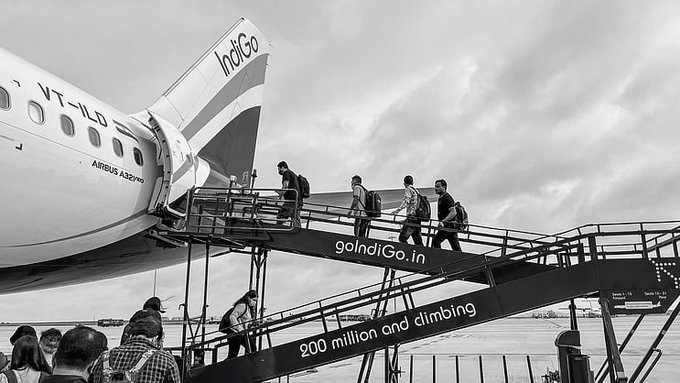
After Dominating India, IndiGo Sets Its Sights on Becoming a Global Aviation Powerhouse
As IndiGo prepares to celebrate its 20th anniversary on August 4, India's largest airline is charting its most ambitious course yet, transforming itself from a domestic aviation leader into a major international player. Backed by an aggressive fleet expansion, a growing overseas network and a long-term vision to position India as a global aviation hub, the airline is looking far beyond its home market.
IndiGo Managing Director and co-founder Rahul Bhatia said the airline's next phase of growth will focus on connecting millions of Indians and the global Indian diaspora with destinations around the world. While acknowledging that IndiGo is still primarily a domestic carrier, Bhatia said the company is preparing for a "longer leap of flying" through the induction of Airbus A321 XLR aircraft and the arrival of Airbus A350 wide-body jets from 2028.
The airline's strategy goes beyond simply adding international destinations. IndiGo wants to bring back a significant share of overseas traffic currently routed through Gulf aviation hubs. According to Bhatia, Indian carriers should capture the economic value generated by Indian travellers instead of allowing it to flow overseas.
Looking ahead, the airline also envisions carrying passengers between foreign countries via India, strengthening the country's position as a preferred transit hub linking Europe, Asia, Africa and the Middle East under its Vision 2030 roadmap.
Despite its global ambitions, IndiGo insists that its domestic network will remain the backbone of its operations. The carrier currently commands over 66 per cent of India's domestic aviation market, operates more than 440 aircraft, serves over 140 destinations, and flew more than 123 million passengers in FY26.
Its expansion is supported by one of the world's largest aircraft order books, with over 900 aircraft on order, including long-haul A350s and long-range A321 XLRs. The airline has also introduced premium offerings like IndiGoStretch, expanded its cargo business, and built a loyalty programme, IndiGo BluChip, which has already enrolled more than 13 million members.
A major leadership transition also marks this milestone. Former International Air Transport Association (IATA) chief Willie Walsh will take over as IndiGo's CEO on August 3. Bhatia believes Walsh's extensive operational experience across both low-cost and full-service airlines will help steer IndiGo through its next chapter of international growth while preserving the company's strong culture.
Even with its global aspirations, IndiGo says it will remain committed to its founding principles of low fares, operational efficiency and cost leadership, which have driven its remarkable rise over the past two decades. The airline is also keeping an eye on next-generation aircraft technologies to improve fuel efficiency and reduce emissions as it plans growth well into the next decade.
From starting operations in 2006 with just a handful of aircraft to becoming India's undisputed aviation leader, IndiGo now hopes its next 20 years will see it evolve into a carrier that not only connects India to the world but also connects the world through India.