
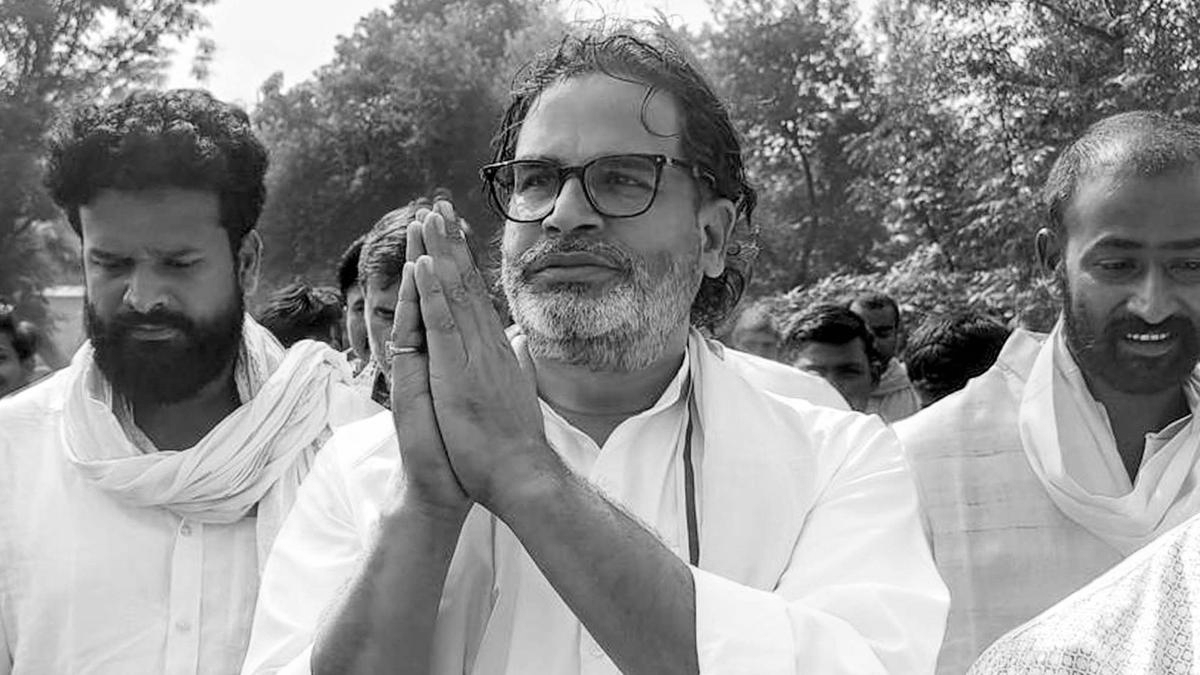
After crushing defeat, Jan Suraaj claims NDA ‘purchased votes’ through cash scheme
A day after drawing a complete blank in the Bihar Assembly elections, Prashant Kishor’s Jan Suraaj has attempted to explain its defeat by accusing the ruling NDA of “buying votes” through large-scale cash transfers to women while notably refraining from blaming Electronic Voting Machines (EVMs), a common post-defeat refrain among several political parties.
Despite a high-voltage campaign and repeated messaging on unemployment, migration and lack of industrial growth, Jan Suraaj failed to win even a single seat. Speaking to reporters on Saturday, party president Uday Singh said the result was disappointing but insisted the party was not demoralised.
In what appeared to be an attempt to rationalise the wipeout, Singh claimed that the NDA’s sweeping victory was significantly aided by the ₹10,000 cash transfer under the Mukhyamantri Mahila Rojgar Yojana, amounting to around ₹40,000 crore. “This was nothing but bribing voters. The government purchased votes, and transfers continued even after the model code of conduct came into force,” he alleged.
The party also admitted that it failed to secure support from Muslim voters and argued that the mandate reflected a public unwillingness to return the RJD to power. Singh further said Jan Suraaj would now “wait and watch” how the government fulfils its promise to transfer an additional ₹2 lakh to women.
While levelling several allegations against the ruling alliance, Singh did not join the long list of leaders who usually blame EVM tampering when faced with a crushing defeat. Instead, he asserted that the NDA’s vote share did not surpass 50 per cent, despite the scale of its victory.
Asked about the political future of Prashant Kishor who had famously vowed to quit politics if JD(U) crossed 25 seats Singh deflected the question, saying only Kishor could answer it. The JD(U), in fact, won 85 seats.
The NDA, powered by a strong BJP–JD(U) performance with nearly 85 per cent strike rates in their respective seats, crossed the 200-seat mark in the 243-member Assembly, delivering a decisive blow to the Mahagathbandhan.