
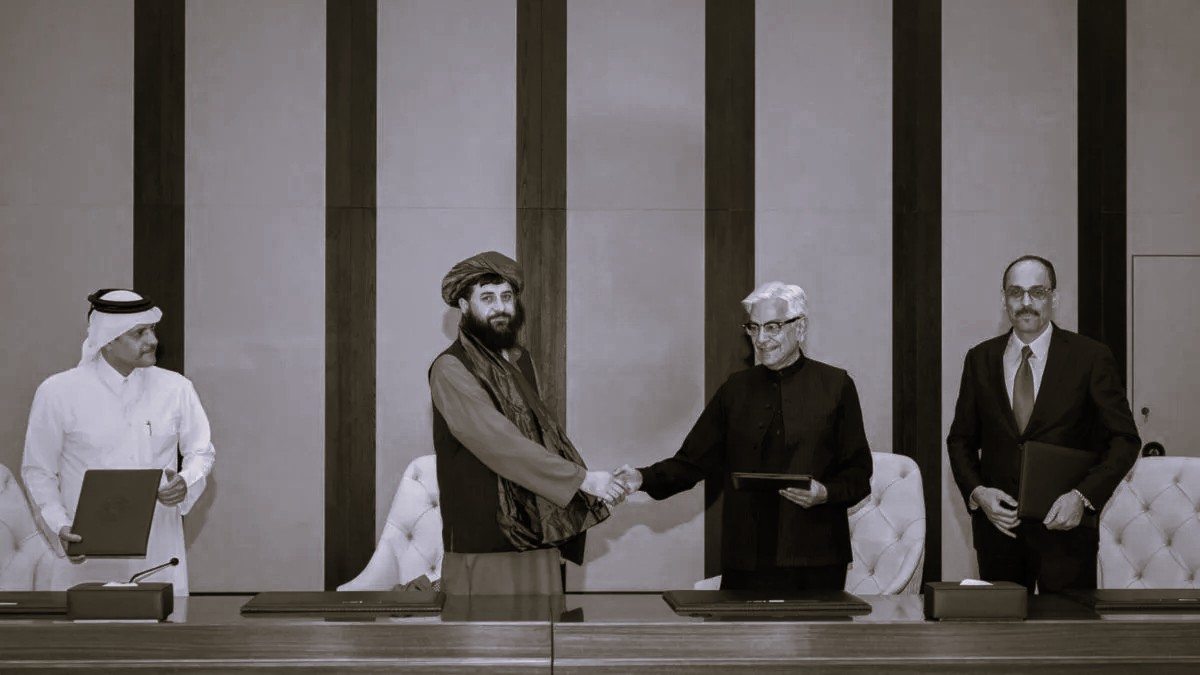
Afghanistan-Pakistan peace talks collapse again, both sides warn of rising tensions
The second round of peace talks between Afghanistan and Pakistan in Istanbul has collapsed once again, raising fears of renewed violence along the border.
According to Pakistan’s Federal Minister of Information and Broadcasting, Ataullah Tarar, the discussions failed because the Afghan side did not provide “concrete assurances” on Islamabad’s main demand - taking decisive action against terrorist groups operating from Afghan soil.
Tarar said on X (formerly Twitter) that the Afghan delegation “resorted to blame games, deflection, and ruses” instead of offering clear commitments. He emphasized that protecting Pakistani citizens remains the government’s top priority and vowed that Pakistan would use “all available resources” to destroy terrorist networks and their supporters. “We will continue to take all possible measures necessary to protect our people from the menace of terrorism,” Tarar stated, as quoted by The Express Tribune.
He also thanked Qatar, Turkiye, and other countries that helped mediate the talks, saying, “We thank the Governments of Qatar and Turkiye, and other friendly states, for their support and sincere efforts to bring about a peaceful solution.”
Pakistan’s accusations
Pakistani officials told The Express Tribune that the Afghan Taliban delegation adopted a “defensive and uncooperative” stance during the four-day meeting. They claimed the Afghan side frequently avoided direct questions and used a “provocative tone,” which frustrated both the Pakistani team and international mediators.
According to Tolo News, the Pakistani delegation eventually walked out after Kabul rejected several of Islamabad’s final demands. Disagreements reportedly centered on concluding clauses and accusations of “undiplomatic behavior” from both sides.
Tarar further alleged that despite earlier written commitments under the Doha Agreement, the Taliban government had failed to take meaningful action against terrorist groups. “The Afghan side gave no assurances and kept deviating from the main issue,” Tarar said. “Instead of accepting responsibility, they resorted to blame games.”
Afghanistan’s response
Kabul, however, has blamed Pakistan for the failure. Afghan media reported that officials in Kabul accused the Pakistani delegation of showing a “lack of coordination” and “not presenting clear arguments.” They claimed that Pakistani representatives repeatedly “left the negotiating table,” preventing progress.
The Afghan side also reiterated that it would not allow Afghan territory to be used against Pakistan, but demanded that Islamabad stop airspace violations and prevent U.S. drone operations - conditions Pakistan reportedly refused to accept.
Fear of renewed violence
The breakdown of the Istanbul talks follows the collapse of the first round of negotiations in Qatar earlier this month, despite an agreement for an “immediate ceasefire.” With both sides now trading blame, analysts fear that cross-border clashes and militant attacks could increase in the coming days.
Both Pakistan and Afghanistan have hinted that they are prepared to take military or defensive measures if tensions continue to rise, signaling that peace between the two neighbors remains a distant goal.