
Afghanistan accuses Pakistan of Deadly Air Strikes, Vows retaliation as Cross-Border tensions deepen
Afghanistan’s Taliban administration on Tuesday accused Pakistan of launching overnight air strikes in Kunar province that killed nine children and a woman, escalating an already volatile situation along the Afghan-Pakistan border. The Taliban warned that the alleged attack would be met with a response, hinting at a possible shift from diplomatic friction to direct confrontation.
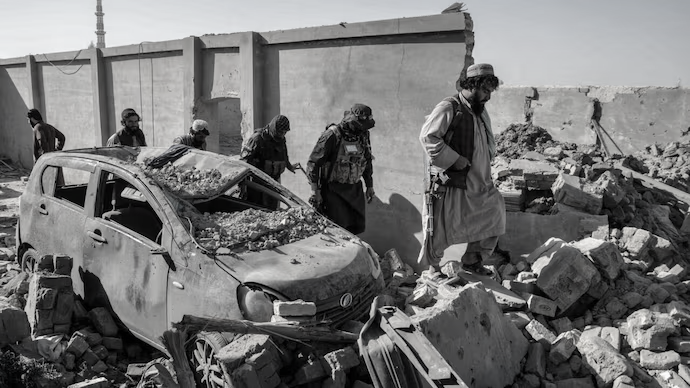
According to Afghan officials, the strikes targeted residential areas in Asadabad, destroying homes and sparking panic among local communities. Images from the site showed families searching rubble for belongings as damaged buildings stood in ruins. Taliban spokespersons denounced the strikes as a grave breach of Afghan sovereignty, stating that “the killing of innocent women and children will not go unanswered.”
Pakistan has not yet commented officially, but the reported air strikes come after several recent militant attacks in Pakistan’s Khyber Pakhtunkhwa and Balochistan provinces. Islamabad has increasingly claimed that insurgent groups linked to Tehreek-e-Taliban Pakistan (TTP) and Islamic State Khorasan Province (ISKP) are operating from Afghan soil, using the porous border as a staging ground for attacks.
This incident marks a dangerous escalation in the long-running conflict between the two countries, which already involves border clashes, shelling, airspace violations, and accusations of harboring militant groups. Diplomatic ties have deteriorated sharply, and trade routes across key border crossings like Torkham and Chaman have been temporarily shut down multiple times this year due to military tensions and retaliatory actions.
Security analysts warn that the situation appears to be moving beyond isolated border incidents toward a broader confrontation, with both countries showing signs of increased military readiness. Afghanistan has reinforced security posts along the Durand Line, while Pakistan has reportedly increased aerial surveillance and troop presence in border districts near Nangarhar, Kunar, and Paktika.
There are also regional implications. The Afghan-Pakistan border is sensitive due to competing influences of major powers, including China, Iran, and the United States. Heightened military activity in this zone risks destabilizing trade corridors, refugee movements, and counterterrorism cooperation.
The conflict appears to be evolving from accusations over militant safe havens to direct military actions, increasing the potential for reprisals. With Afghanistan openly vowing retaliation and Pakistan focused on eliminating cross-border militant threats, the trajectory of the conflict is shifting towards heightened militarization and diminishing room for diplomatic resolution.
If diplomacy remains absent, experts fear the tensions could deepen into recurring armed engagements, further destabilizing the region already affected by extremism, economic hardship, and strained international relations. According to a security analysis by SATP, between August 2021 and October 2025, Pakistani air strikes inside Afghanistan have killed between 210 and 230 civilians.