
Aerosol-Water vapour interactions key to understanding Climate and Monsoon behaviour
New research has highlighted the combined role of aerosols and water vapour in influencing climate change, underscoring that reliable climate projections must account for the interaction between the two. The study finds that these interactions significantly affect regional atmospheric behaviour and play a crucial role in shaping the Indian summer monsoon.
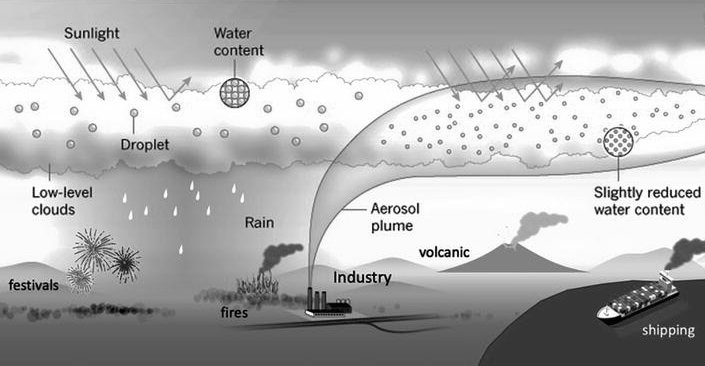
Aerosols tiny particles suspended in the air from sources such as vehicle emissions, industrial pollution, dust, and biomass burning and water vapour both influence how the Earth absorbs and releases energy. Together, they regulate the planet’s radiation balance by scattering and absorbing incoming sunlight and outgoing heat. This balance determines surface temperatures, weather patterns, and long-term climate stability.
The Indo-Gangetic Plain (IGP), one of the world’s most densely populated regions, is also a global hotspot of aerosol pollution. It experiences large variations in aerosol concentration and atmospheric moisture throughout the year, making it difficult to accurately assess how these factors influence regional climate and monsoon behaviour.
To address this uncertainty, researchers from the Aryabhatta Research Institute of Observational Sciences (ARIES), Nainital, and the Indian Institute of Astrophysics (IIA), Bengaluru both autonomous institutes under the Department of Science and Technology (DST), Government of India collaborated with scientists from the University of Western Macedonia in Greece and Soka University in Japan. The team examined how aerosol levels affect the radiative impact of water vapour over the IGP.
Led by Dr. Umesh Chandra Dumka of ARIES and Dr. Shantikumar S. Ningombam of IIA, the researchers analysed data from six AERONET (Aerosol Robotic Network) observation sites across the IGP. They combined these observations with advanced radiative transfer simulations using the SBDART model to estimate how energy moves through the atmosphere under different aerosol conditions.
The study, published in the journal Atmospheric Research , found that water vapour contributes far more to atmospheric heating than aerosols. However, its warming effect is strongly influenced by the presence of aerosols. In cleaner air, water vapour produces a much stronger warming effect both at the Earth’s surface and within the atmosphere. When aerosol pollution increases, this effect weakens near the surface but becomes more pronounced at the top of the atmosphere.
In simple terms, water vapour acts like a powerful blanket that traps heat in the atmosphere. Aerosols, depending on their type, can either reflect sunlight back into space or absorb heat. When both are present, they interact in complex ways, sometimes reducing surface warming while altering atmospheric heating patterns. These changes can affect cloud formation, rainfall distribution, and the strength of monsoon winds.
The researchers also found that the impact of water vapour varies with solar position and the heat-absorbing properties of aerosols, highlighting how seasonal and pollution-related changes can reshape regional climate dynamics.
By clearly demonstrating how aerosols modify the warming influence of water vapour, the study improves scientific understanding of climate processes over the Indo-Gangetic Plain. The findings stress the need to include both factors in climate models to better predict future climate change, extreme weather events, and monsoon variability.
As policymakers and scientists work to address climate risks, such studies provide vital insights into how air pollution and atmospheric moisture together influence the environment reinforcing the importance of reducing aerosol pollution while refining climate prediction systems for a warming world.