
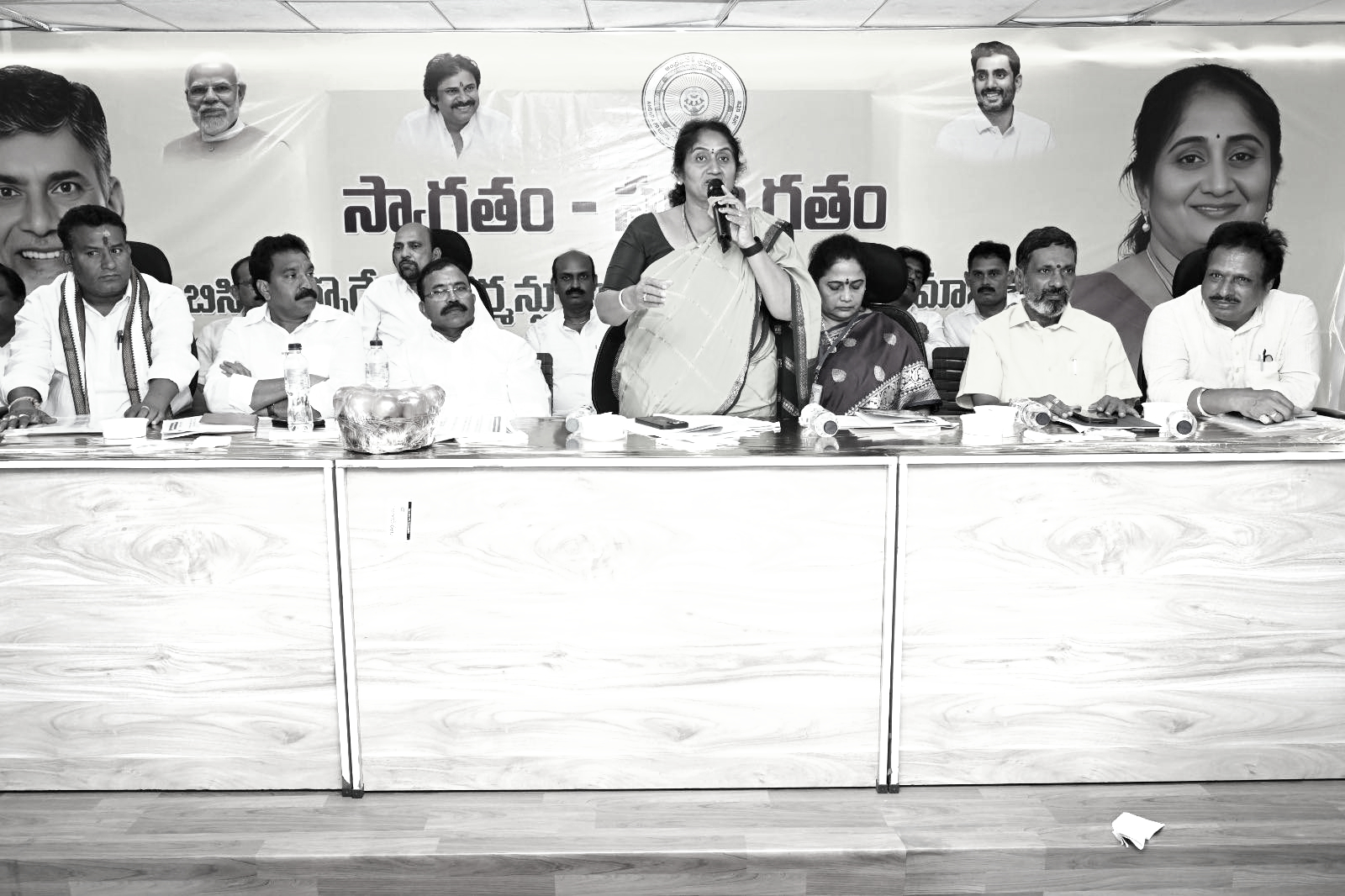
Adarana 3.0 to empower caste and craft workers with modern equipment
The Andhra Pradesh government has launched Adarana 3.0, a welfare initiative aimed at empowering members of Backward Classes (BCs) engaged in traditional occupations, with an allocation of ₹1,000 crore from the allocated within Andhra Pradesh’s 2024–25 state budget. The scheme is being implemented by the Department of BC Welfare, Economically Weaker Sections (EWS) Welfare, Handlooms, and Textiles, headed by Minister S. Savitha.
The programme has been designed to provide modern tools and equipment to skilled workers and artisans belonging to BC communities, enabling them to sustain their traditional livelihoods and improve income levels. It is being viewed as one of the largest state-level welfare interventions for artisans in recent years.
Continuation of Legacy Scheme
Adarana 3.0 is a continuation of the earlier Adarana schemes introduced by the Telugu Desam Party (TDP) government. The first phase of Adarana was launched in 1999 under then Chief Minister N. Chandrababu Naidu to provide tool modernization assistance to BC artisans. At that time, around ₹50 crore had been sanctioned, with the government offering 50% subsidy on the cost of modern tools, while beneficiaries contributed the remaining amount through loans and personal investment.
The scheme was revived in 2018 as Adarana 2.0, again under the Naidu-led TDP government, with an expanded budget of ₹750 crore. The second phase targeted nearly four lakh artisans from 90 traditional occupations and enhanced the subsidy component to 90%, making the beneficiary contribution nominal. Around 2.8 lakh beneficiaries were reported to have received tool kits before the scheme slowed down following the change of government in 2019.
The latest version, Adarana 3.0, has been announced as part of the NDA-led government’s renewed focus on BC empowerment. Officials said the scheme would cover 56 BC corporations and extend support across diverse trades such as carpentry, pottery, tailoring, fishing, goldsmithing, weaving, and barbering.
Enhanced Focus on Modernization
Under Adarana 3.0, modernized tools, machinery, and digital equipment suitable to each trade will be supplied. Officials from the BC Welfare Department stated that occupational surveys had been completed to identify the tools and technology required for each community.
The scheme’s design aims to ensure “permanent employment and skill modernization” by linking traditional vocations with present-day market needs. Training and support services are also proposed to be integrated to help beneficiaries adopt mechanized and digital tools effectively.
Implementation is being carried out through district-level BC corporations in coordination with local self-help groups and cooperative societies. Priority is being given to artisans below the poverty line and young entrepreneurs who wish to continue their ancestral occupations.
Social and Economic Context
Backward Classes constitute a major demographic segment in Andhra Pradesh, accounting for approximately 48% of the State’s population, according to government data. At the national level, BCs (also referred to as Other Backward Classes or OBCs) represent about 41% of India’s population, as per estimates from the Mandal Commission and subsequent reports.
The Southern states of Andhra Pradesh, Tamil Nadu, and Karnataka have exceptionally high concentrations of Backward Classes (BC) communities relative to most other parts of India.
Based on available data:
Tamil Nadu has an estimated BC population of around 76.1% (including Backward Classes, Most Backward Classes, and Denotified Communities).
Karnataka's recent surveys indicate a BC population of around 70% (with an official Mandal Commission estimate around 55.5%).
Andhra Pradesh (including Telangana at the time of the data) had a Mandal Commission estimate of 50.4%, which is also among the highest in the country.
These figures are significantly higher than the national average OBC population of approximately 44% and make the concentration in these three states among the highest in the nation.
Given this demographic weight, successive governments in the State have prioritized BC welfare through dedicated departments and corporations.
Fiscal and Political Perspective
Compared to Adarana 2.0, which had a budget of ₹750 crore, Adarana 3.0 is the highest 1000 Crores the latest phase represents an increase of nearly 33% in funding.
Economists and policy experts have observed that the expansion of the Adarana scheme aligns with broader efforts to revive micro-enterprises and traditional skill-based sectors in rural areas. The scheme’s emphasis on self-reliance and tool modernization is being seen as an attempt to integrate traditional occupations with the formal economy.
However, political observers have pointed out that welfare schemes targeting large social groups often carry electoral implications. The government has described Adarana 3.0 as a development-oriented initiative.
Officials, however, have maintained that the initiative is “a continuation of a long-standing welfare policy”, not a political announcement. The Chief Minister’s Office has emphasized that the scheme “is aimed at restoring dignity to traditional professions and ensuring that no artisan is left behind due to lack of modern tools.”
Implementation and Monitoring
The scheme is being implemented under the direct supervision of the Andhra Pradesh State Backward Classes Cooperative Finance Corporation (APSBCFC). Each district has been instructed to create beneficiary databases and conduct verification before distribution.
Monitoring mechanisms are also being put in place to prevent duplication and ensure that equipment reaches genuine artisans. Regular field reports and progress reviews have been mandated at the mandal and district levels.
The government has also indicated that additional funding may be considered based on the progress of implementation during the current fiscal year.
Broader National Context
Schemes similar to Adarana have been introduced in other states under different names. Tamil Nadu’s “Kalaignar Magalir Urimai Thogai”, Karnataka’s “Kaigarika Vikasa Yojane”, and Gujarat’s “Manav Kalyan Yojana” provide tool kits and subsidies to artisans belonging to OBC or traditional occupational communities. However, Andhra Pradesh’s Adarana is among the few that have continued across multiple governments, evolving from 1999 to 2025 as a consistent livelihood-support model.
With Adarana 3.0, the Andhra Pradesh government has attempted to blend welfare with modernization. Whether it becomes a tool for socio-economic transformation or remains limited to political symbolism will depend largely on how effectively the ₹1,000 crore corpus is utilized at the grassroots level.
For millions of BC artisans across the State, the scheme represents both a continuation of legacy and a promise of modernization.