
Actress assault case: Survivor says equality before law not a reality after verdict
The December 2025 verdict in the 2017 Kerala actress sexual assault case, delivered after court proceedings held on Sunday, has once again brought the spotlight on questions of justice, equality before law and the challenges of prosecuting crimes involving power and influence. While the Ernakulam Principal Sessions Court convicted six accused and sentenced them to 20 years of rigorous imprisonment, the acquittal of Malayalam actor Dileep, who was accused of conspiring in the crime, has left the survivor and the public grappling with a sense of incompleteness.
For the survivor, the verdict did not come as a surprise. In her first public response after the judgment, she said that years of legal struggle had led her to the painful realisation that not every citizen in India is treated equally before the law. At the same time, she acknowledged a small measure of relief in the conviction of six accused after nearly nine years of waiting, calling it a ray of light at the end of a long and painful journey.
The assault took place on February 17, 2017, when the actress was abducted in her car and sexually assaulted for nearly two hours. The crime, which was allegedly recorded by the prime accused Pulsar Suni with the assistance of others, shocked Kerala and triggered unprecedented public discussions on sexual violence, survivor dignity and accountability within the film industry.
As the investigation progressed, it expanded beyond the physical perpetrators to examine an alleged conspiracy behind the crime. Actor Dileep was arrested in July 2017 on accusations that he had planned the assault, charges he consistently denied. What followed was one of the longest and most closely watched criminal trials in the state’s history.
Over the years, the trial was marked by repeated controversy. A memory card said to contain the recorded assault became a focal point of dispute after allegations emerged that it had been illegally accessed while in court custody. Questions surrounding chain of custody, forensic integrity and procedural lapses led to multiple petitions and sustained public scrutiny.
The case also witnessed the resignation of two special public prosecutors at different stages of the trial. According to the survivor, both expressed concerns about the fairness of proceedings and described the court atmosphere as hostile to the prosecution, further deepening doubts in the public mind, though these claims were never conclusively established in court.
The survivor repeatedly approached the High Court and later the Supreme Court seeking transfer of the case from the same judge, citing loss of faith in the trial process. All such requests were rejected, allowing the proceedings to continue in the same court. She later said that as early as 2020 she sensed irregularities in the way the case was being handled, particularly in relation to one accused.
On December 8, 2025, the trial court delivered its long-awaited verdict. Six accused were found guilty of abduction, gang rape and related offences, while Dileep was acquitted after the court held that the prosecution had failed to establish the conspiracy charge against him beyond reasonable doubt. The judgment drew a sharp legal distinction between proving the commission of the crime and proving who allegedly orchestrated it.
A few days later, the court sentenced the six convicts to 20 years of rigorous imprisonment, the statutory minimum prescribed under the law, along with fines and compensation to the survivor. While the sentence brought a degree of accountability for the crime itself, it also triggered debate over whether the punishment was adequate given the gravity of the offence.
In her post-verdict statement, the survivor alleged that her fundamental rights were not adequately protected during the trial and said the judgment reflected how human judgment can influence judicial outcomes. She clarified that her criticism was not aimed at the judiciary as a whole and acknowledged that not all courts function in the same manner.
She also rejected claims that the prime accused was her personal driver, calling the allegation completely false and urging people to stop spreading fabricated narratives that questioned her credibility. Addressing those who had dismissed her pain as a lie or branded the case fabricated, she said she hoped they were at peace with themselves.
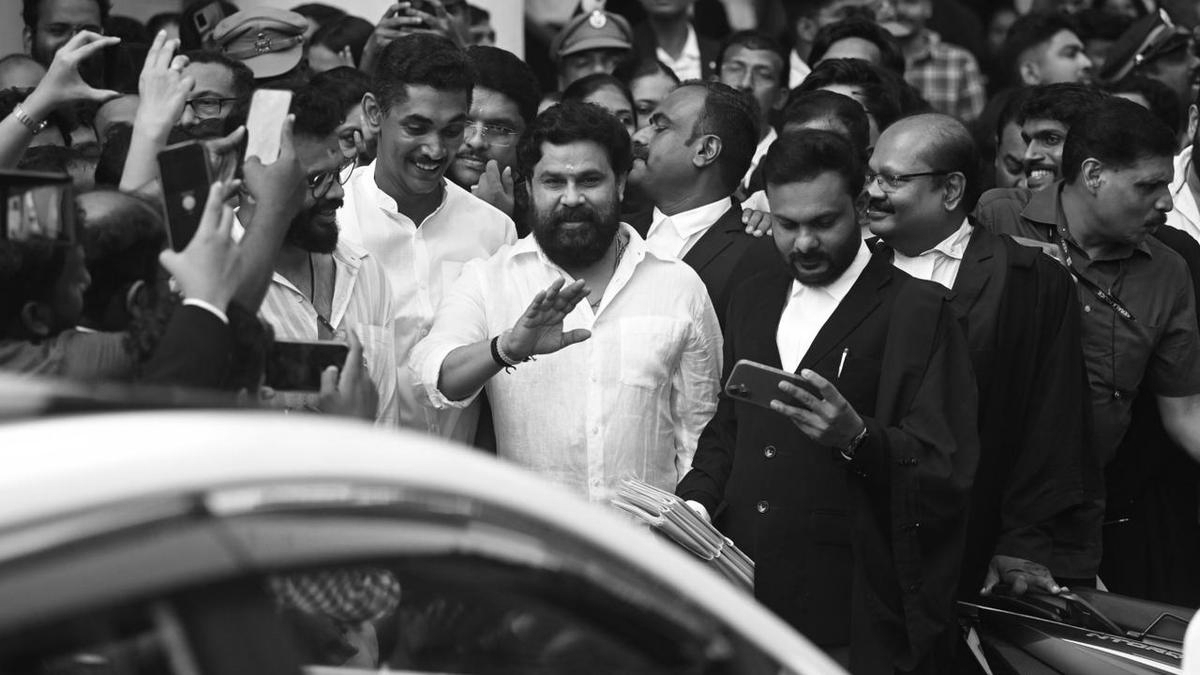
Actor Manju Warrier reiterated her support for the survivor, stating that justice would remain incomplete until everyone involved in planning and enabling the crime was held accountable. Her comments gained renewed attention after Dileep, speaking at the court premises following his acquittal, alleged that there was a conspiracy to implicate him and criticised Warrier for her earlier statements.
Legal experts and women’s rights groups have since noted that the verdict highlights the difficulty of proving conspiracy charges, particularly in cases reliant on circumstantial and digital evidence. While courts are bound by the principle that guilt must be established beyond reasonable doubt, the outcome has intensified public concern over whether the justice system can effectively address crimes involving entrenched power structures.
The State government has indicated that it is considering an appeal against Dileep’s acquittal, which would move the case to the High Court for appellate scrutiny. At the same time, the convicted accused are expected to challenge both their conviction and sentence, ensuring that the legal battle is far from over.
Nearly nine years after the crime that altered her life, the survivor’s struggle continues to resonate far beyond the courtroom. The case stands as a stark reminder of both the possibilities and the limitations of the criminal justice system in delivering not just punishment, but a sense of equal justice and closure.