
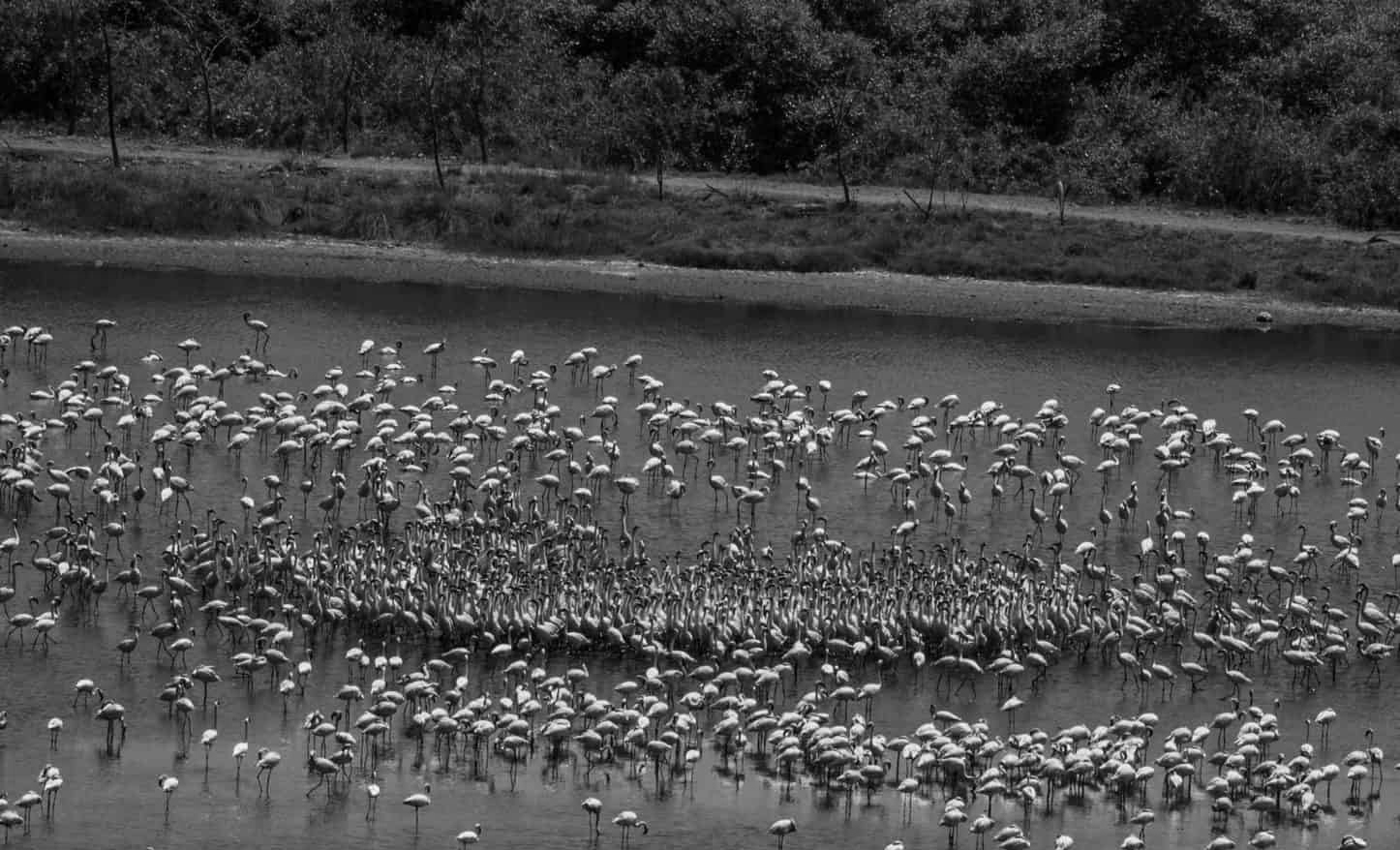
Activists warn toxic wetlands threatening flamingo habitats in Navi Mumbai
Climate activists have sounded a “wetland emergency” in Navi Mumbai after water tests revealed that three important flamingo habitats have turned toxic, raising concerns about migratory birds and the broader decline of wetlands across India.
Environmental groups have flagged the deteriorating condition of the DPS, NRI and T S Chanakya lakes in Nerul, which serve as satellite wetlands for the Thane Creek Flamingo Sanctuary (TCFS) , a Ramsar-designated site that hosts thousands of flamingos every winter. The flamingo season normally runs from November to May, with peak sightings between January and March, but activists say the flamingos have not arrived this season , signalling serious ecological disturbance.
Water sample tests commissioned by the NatConnect Foundation show the ecosystem is “under severe stress” . According to B N Kumar, director of NatConnect Foundation , four key indicators - TDS, pH, BOD and COD levels - point to highly concentrated, stagnant water instead of natural tidal flushing.
Blocked tidal channels and development activities have reduced water circulation, effectively turning the wetlands into polluted basins. A 14-hectare wetland near T S Chanakya , once an important feeding ground, has also deteriorated due to restricted tidal flow and administrative inaction.
Activists blame governance failure , alleging that the City and Industrial Development Corporation (CIDCO) and regulators such as the Maharashtra Coastal Zone Management Authority have failed to protect the wetlands.
Flamingos depend on algae and microscopic organisms that thrive in balanced saline water. As pollution rises, this food chain collapses, forcing birds to abandon feeding grounds - a sign the ecosystem may have crossed a critical ecological threshold .
Experts say the crisis reflects a wider trend. India lies on the Central Asian Flyway , used by about 370 migratory bird species , most of which depend on wetlands. Habitat loss and degradation have caused widespread population declines, with some wetlands recording sharp drops in migratory bird sightings in recent years.
Environmentalists warn flamingos are “the canary in our ecosystem’s coal mine,” urging urgent government intervention to protect wetlands, biodiversity and groundwater resources.