
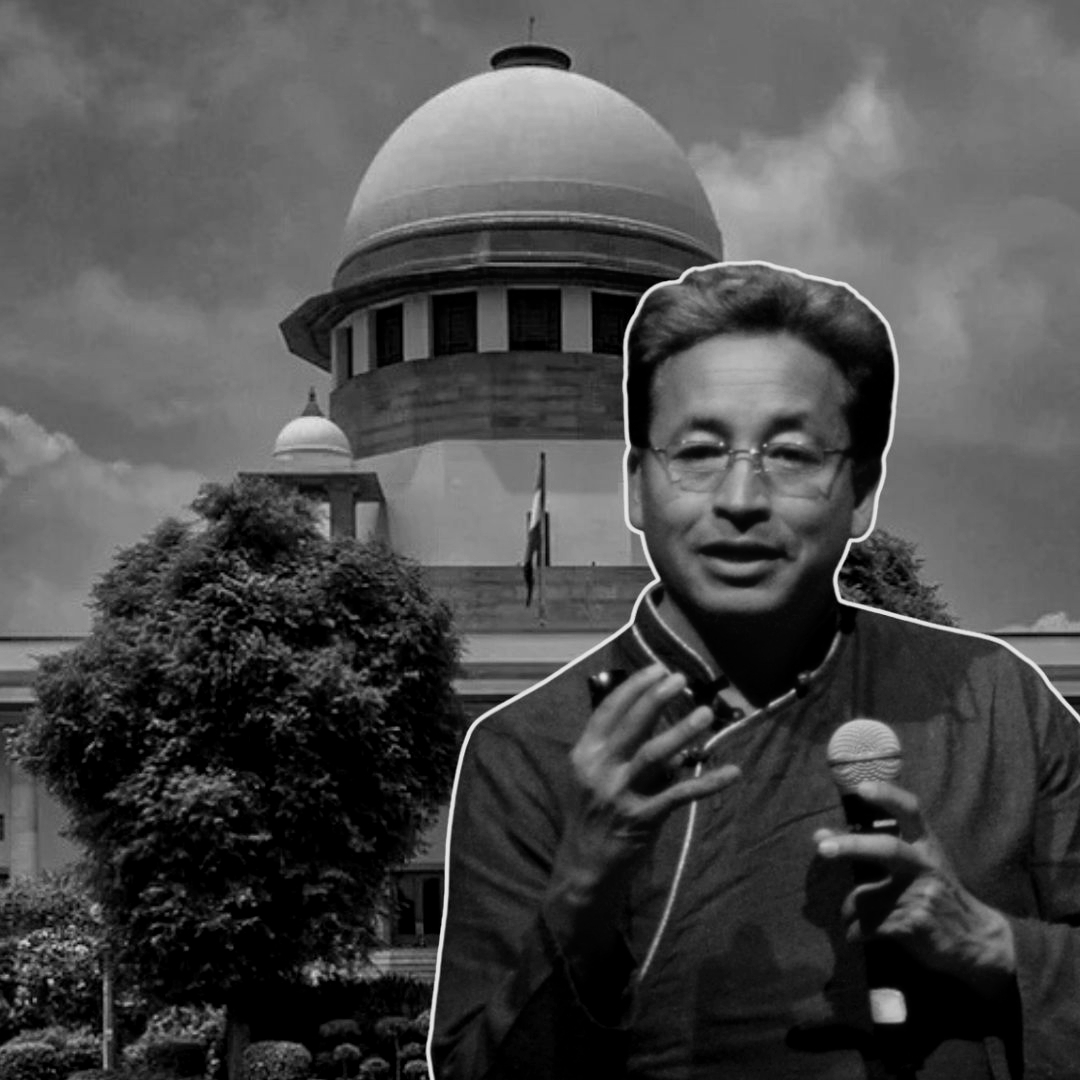
Activist Sonam Wangchuk’s ‘Unlawful’ detention under NSA reaches Supreme Court
The Supreme Court is scheduled to hear on Monday a petition filed by climate activist Sonam Wangchuk’s wife, challenging his detention under the stringent National Security Act (NSA) and alleging that the action is illegal, arbitrary, and violative of his fundamental rights.
According to the Supreme Court’s cause list for November 24, the matter will be taken up by a bench of Justices Aravind Kumar and N V Anjaria. The top court had earlier, on October 29, sought responses from the Centre and the Ladakh administration on the amended plea moved by Wangchuk’s wife, Gitanjali J Angmo.
Wangchuk, a prominent Ladakh-based environmentalist and education reformer, was detained on September 26 under the NSA two days after violent protests seeking statehood and Sixth Schedule status for Ladakh left four people dead and 90 injured. Authorities accused him of inciting the unrest, a charge strongly contested in the petition.
The amended plea argues that the detention order is based on “stale FIRs, vague imputations, and speculative assertions” with no proximate or live connection to any legitimate grounds for invoking the NSA. It states that such “arbitrary exercise of preventive powers amounts to a gross abuse of authority” and violates constitutional liberties and due process.
Calling the government’s action “wholly preposterous”, the petition highlights Wangchuk’s decades-long contributions to grassroots education, innovation, and environmental conservation at state, national and international levels. It argues that, despite this record, he was suddenly targeted just months ahead of the elections and during the final stages of dialogue between the Apex Body of Leh (ABL), the Kargil Democratic Alliance (KDA) and the Ministry of Home Affairs.
The plea notes that, in the weeks leading up to his detention, Wangchuk was served notices related to land lease cancellation, FCRA cancellation, a CBI inquiry, and summons from the Income Tax Department. These actions, it claims, taken in “close temporal proximity”, indicate that the detention was not driven by genuine concerns for public order or national security but was instead “a calculated attempt to silence a respected citizen” for exercising his democratic right to dissent.
Refuting allegations of his involvement in the September 24 violence in Leh, the plea states that Wangchuk condemned the clashes on his social media platforms, calling the incident “the saddest day of his life” and warning that violence would undermine Ladakh’s five-year-long peaceful struggle or “tapasya”.
The petition also challenges procedural lapses, saying complete grounds of detention were supplied to Wangchuk only after a delay of 28 days, violating Section 8 of the NSA, which mandates that such grounds be communicated within five days, and in exceptional cases, within ten days.
Under the National Security Act, the Centre and state governments may detain individuals to prevent actions deemed prejudicial to the defence of India, with a maximum detention period of 12 months, unless revoked earlier.
The Supreme Court’s hearing on Monday will determine the next steps in the high-profile case that has sparked national debate over preventive detention and the right to dissent.