
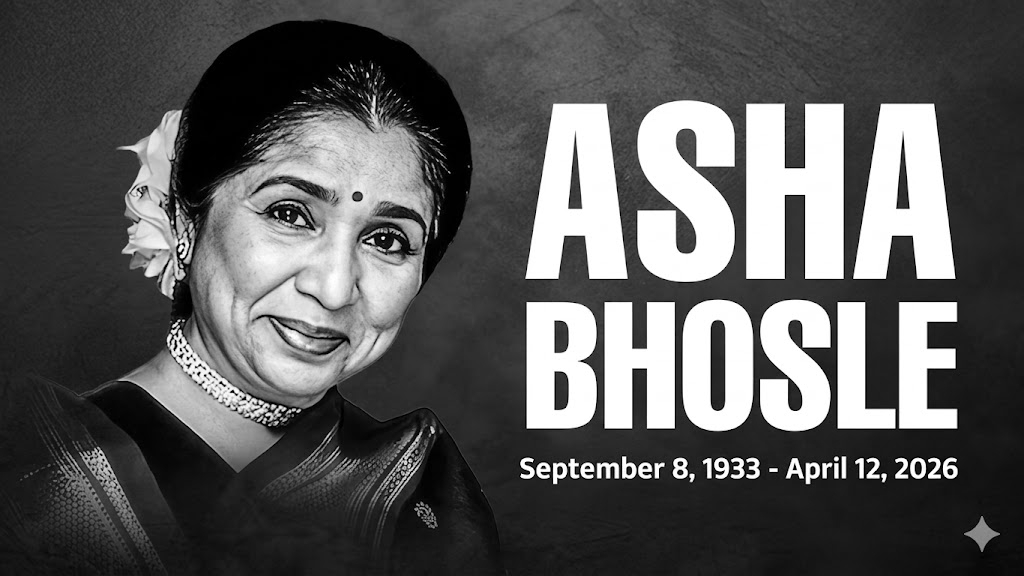
“Abhi na jao chhod kar, dil abhi bhara nahi”: Singing legend Asha Bhosle dies at 92, India’s melody falls silent
"Abhi na jao chhod kar, ke dil abhi bhara nahi" , Don't leave yet, for my heart is still not full. Today, those words have turned into a nation's lament. India lost the incomparable Asha Bhosle on Sunday, April 12, 2026, when the legendary playback singer breathed her last at Mumbai's Breach Candy Hospital , succumbing to multi organ failure and cardiac arrest at the age of 92 . A chest infection and extreme exhaustion had brought her to the hospital the previous evening, and the world woke up to a silence it had never quite prepared for.
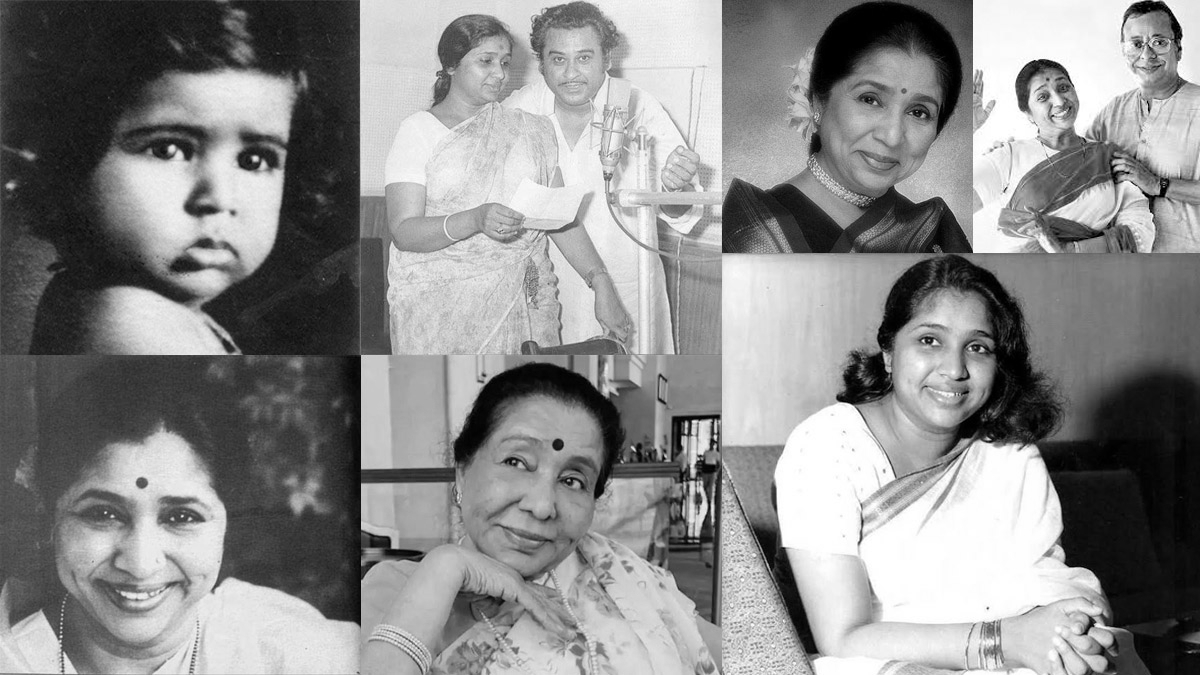
Born Asha Mangeshkar on September 8, 1933, in Sangli, Maharashtra, she was the daughter of classical singer and actor Dinanath Mangeshkar . After her father's early death, the family, including her elder sister, the late Lata Mangeshkar , moved to Bombay, where young Asha would begin carving a legacy unlike any other. She eloped at 16 with Ganpatrao Bhosle , facing family opposition, and raised three children: Hemant, Anand, and Varsha . Her recording career began in 1948, and while she initially worked in the considerable shadow of Lata, Asha's fierce individuality, her refusal to be boxed in, and her electrifying range soon made her a phenomenon entirely her own.
What set Bhosle apart was her extraordinary range and willingness to experiment. While Lata often embodied the pure, ethereal heroine, Asha became the voice of the bold, seductive, and modern woman, from cabaret numbers and Western inspired disco tracks to soulful ghazals and folk infused regional songs. Her breakthrough came through collaborations with music director O. P. Nayyar , who helped shape her signature style. Songs like Piya Tu Ab To Aaja from Caravan showcased her sensuous energy, while Dum Maaro Dum from Hare Rama Hare Krishna captured the psychedelic youth spirit of the era. Over a career spanning more than seven decades, she recorded over 12,000 songs in multiple Indian languages , lending her voice to screen icons from Meena Kumari, Madhubala, Zeenat Aman, Kajol, Urmila Matondkar , and South Indian legends like Padmini and Vyjayanthimala .
Her partnership with the iconic composer R. D. Burman , whom she later married, was one of the most creative and emotionally defining unions in Indian music. Together they gave India some of its most enduring songs, and Asha's voice became inseparable from the soul of his compositions. Her ghazals in Umrao Jaan , including Dil Cheez Kya Hai and In Aankhon Ki Masti Ke , earned her her first National Film Award, and she later won another for Mera Kuchh Saamaan from Ijaazat. Even across decades, she stayed relevant with songs like Tanha Tanha , Rangeela Re , Radha Kaise Na Jale , and Kambakht Ishq , speaking to new generations with effortless ease.
Among her many accolades were two National Film Awards , seven Filmfare Awards , and eighteen Maharashtra State Film Awards . She received the Dadasaheb Phalke Award in 2000 and the Padma Vibhushan in 2008. Her reach went far beyond India. The band Cornershop celebrated her in "Brimful of Asha," later remixed by Fatboy Slim into a global hit, while The Black Eyed Peas sampled her work in "Don't Phunk With My Heart." In 2026, she appeared on the Gorillaz album The Mountain , marking a final global musical moment. Beyond music, she also built her culinary brand with Asha's restaurants in Dubai and the United Kingdom.
The grief that followed her passing was immediate and profound. Prime Minister Narendra Modi called her voice one that enriched India's cultural heritage, carrying "timeless brilliance." President Droupadi Murmu called it an irreparable loss. Chief ministers and artists across the country echoed similar sorrow, with leaders describing her as a bridge between generations of music.
From the film world, tributes poured in. A. R. Rahman called her presence eternal. Shah Rukh Khan described her as one of the pillars of Indian cinema. Karan Johar said she defined generations. Shankar Mahadevan said her music would never perish. Jr NTR called her voice the heartbeat of Indian cinema. Actor Vivek Oberoi echoed her immortal line: Abhi na jao chhod kar, ke dil abhi bhara nahi.
The Maharashtra government announced she would be cremated with full state honours at Shivaji Park, Mumbai , a farewell worthy of a national treasure. Her mortal remains were kept at her residence in Lower Parel so that countless admirers could pay their final respects.
Asha Bhosle was 92, but her voice was ageless, it belonged to the shy teenager in a cinema hall, the lover at midnight, the reveller at a wedding, the child listening to radio on a rainy afternoon. She carried India's joy and sorrow, its mischief and longing. Life gave her heartbreaks, yet she sang on, always with fire, always with grace. And now, as the country mourns, her own words return with unbearable tenderness, abhi na jao chhod kar . But she has gone. And the heart is not full. It never will be.