
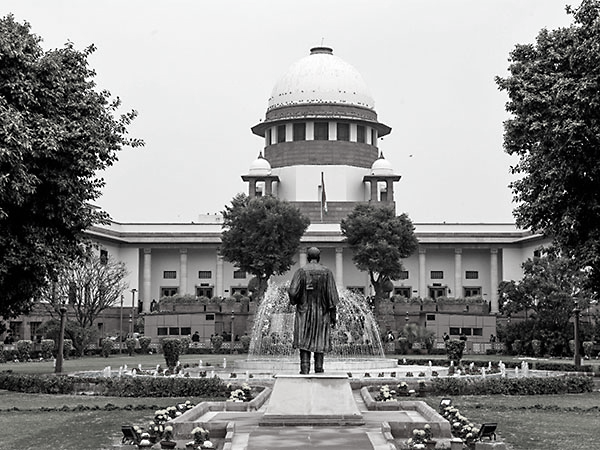
A year after Supreme Court Nod, Why are high courts still not using Ad-Hoc Judges?
Nearly a year after the Supreme Court cleared the way for appointing ad-hoc judges to reduce the crushing backlog of criminal cases, not a single High Court in the country has acted on the provision raising serious questions about institutional will and accountability within the judicial system.
In January 2025, alarmed by more than 18 lakh pending criminal cases , the Supreme Court explicitly permitted High Courts to appoint retired judges as ad-hoc judges under Article 224A of the Constitution . The court not only reaffirmed the constitutional mechanism but also relaxed earlier conditions , simplified the process, and capped appointments at a modest two to five judges per High Court , not exceeding 10 per cent of sanctioned strength . The mandate was clear: use experienced retired judges to clear long-pending criminal appeals.
Yet, almost twelve months later, the Union Law Ministry has not received a single recommendation from any of the 25 High Courts .
This inaction is striking because the process itself is neither new nor cumbersome. High Court collegiums only need to recommend suitable retired judges, after which the proposal moves through the Law Ministry to the Supreme Court Collegium for final approval. Unlike regular judicial appointments, ad-hoc judges do not even require a formal warrant of appointment—only presidential consent.
The silence from High Courts raises uncomfortable questions. Is there resistance within the judiciary to involving retired judges? Are collegiums unwilling to acknowledge the severity of pendency? Or is the burden of delay being quietly passed on to undertrial prisoners and victims awaiting justice?
The Supreme Court had envisioned ad-hoc judges sitting alongside sitting judges to exclusively hear old criminal appeals cases where delays often mean prolonged incarceration, fading evidence, and eroded public trust. By choosing not to invoke Article 224A, High Courts appear to be letting a constitutional safety valve remain unused.
At a time when access to timely justice is increasingly under strain, the failure to implement a ready-made solution endorsed and clarified by the apex court turns this development into more than just an administrative lapse. It reflects a deeper disconnect between judicial intent at the top and execution on the ground, with the cost ultimately borne by citizens waiting endlessly for verdicts.