
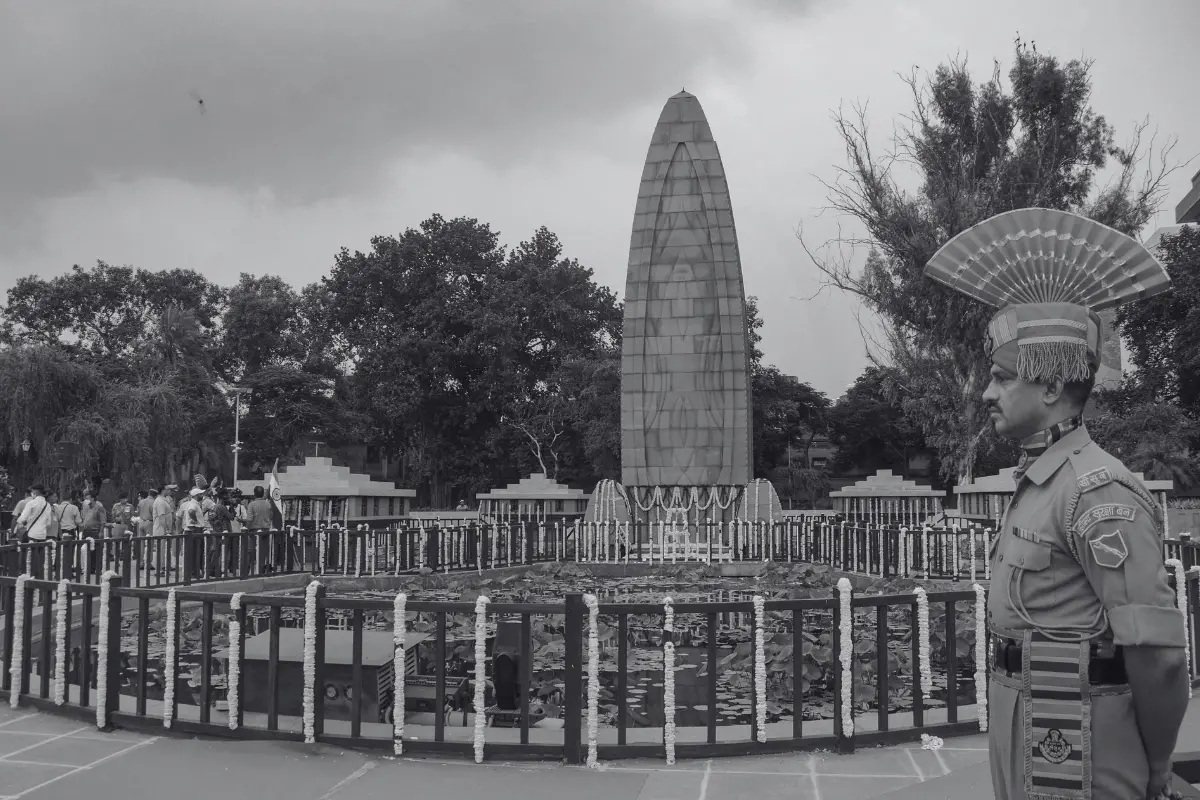
A sacred scar of history: India honours Jallianwala Bagh martyrs, 107 years on
On a warm spring morning that began as a celebration, India on Monday bowed its head in solemn remembrance of one of the most horrifying acts of colonial brutality ever committed on its soil. April 13, 2026, marks the 107th anniversary of the Jallianwala Bagh massacre , a wound that time has never fully closed, and a flame the nation refuses to let die.
Prime Minister Narendra Modi led the national tribute, honoring the martyrs and invoking the indomitable spirit of sacrifice and resilience . Writing on X, he said their courage remains a lasting inspiration to uphold liberty, justice, and dignity , also sharing a Sanskrit verse from the Rigveda calling for unity, prosperity, and resistance to destructive forces. President Droupadi Murmu paid homage to the immortal freedom fighters , adding that the nation will always remain grateful to them . Defence Minister Rajnath Singh described the massacre as a turning point that awakened the national conscience . Across India, students gathered at memorials, including Chandra Shekhar Azad Park, to offer their respects.
To understand the weight of April 13, one must return to that Baisakhi afternoon in 1919 at Jallianwala Bagh. Thousands had gathered in the enclosed garden, many rural villagers unaware that martial law had been declared that morning . Others had assembled to peacefully protest the oppressive Rowlatt Act and the arrest of leaders Saifuddin Kitchlew and Satyapal.
Without warning or escape, Colonel Reginald Dyer ordered troops to open fire on the unarmed crowd. More than 1,650 rounds were fired in just 10 to 15 minutes , trapping people inside the narrow entrance with no way out. Many leapt into the well on the grounds; records note 120 bodies recovered from it alone . British records reported 379 deaths, while Indian estimates placed the toll at over a thousand, with the true number likely far higher.
The massacre became a defining rupture in India’s freedom struggle , pushing Mahatma Gandhi toward a more uncompromising movement for independence. A young Bhagat Singh walked miles to witness the aftermath, deeply shaken by what he saw. Udham Singh, wounded during the massacre, carried the pain for decades before assassinating Lieutenant Governor Michael O'Dwyer in London in 1940 as retribution.
Today, the eternal flame inscribed with “Vande Mataram” burns at the memorial, while bullet marks still scar the walls of the garden, silent witnesses to history’s violence.
One hundred and seven years later, Jallianwala Bagh remains more than a memorial . It stands as a mirror to history, reminding every generation that freedom is never given, power without accountability is dangerous , and the sacrifice of the innocent demands a nation worthy of their memory.