
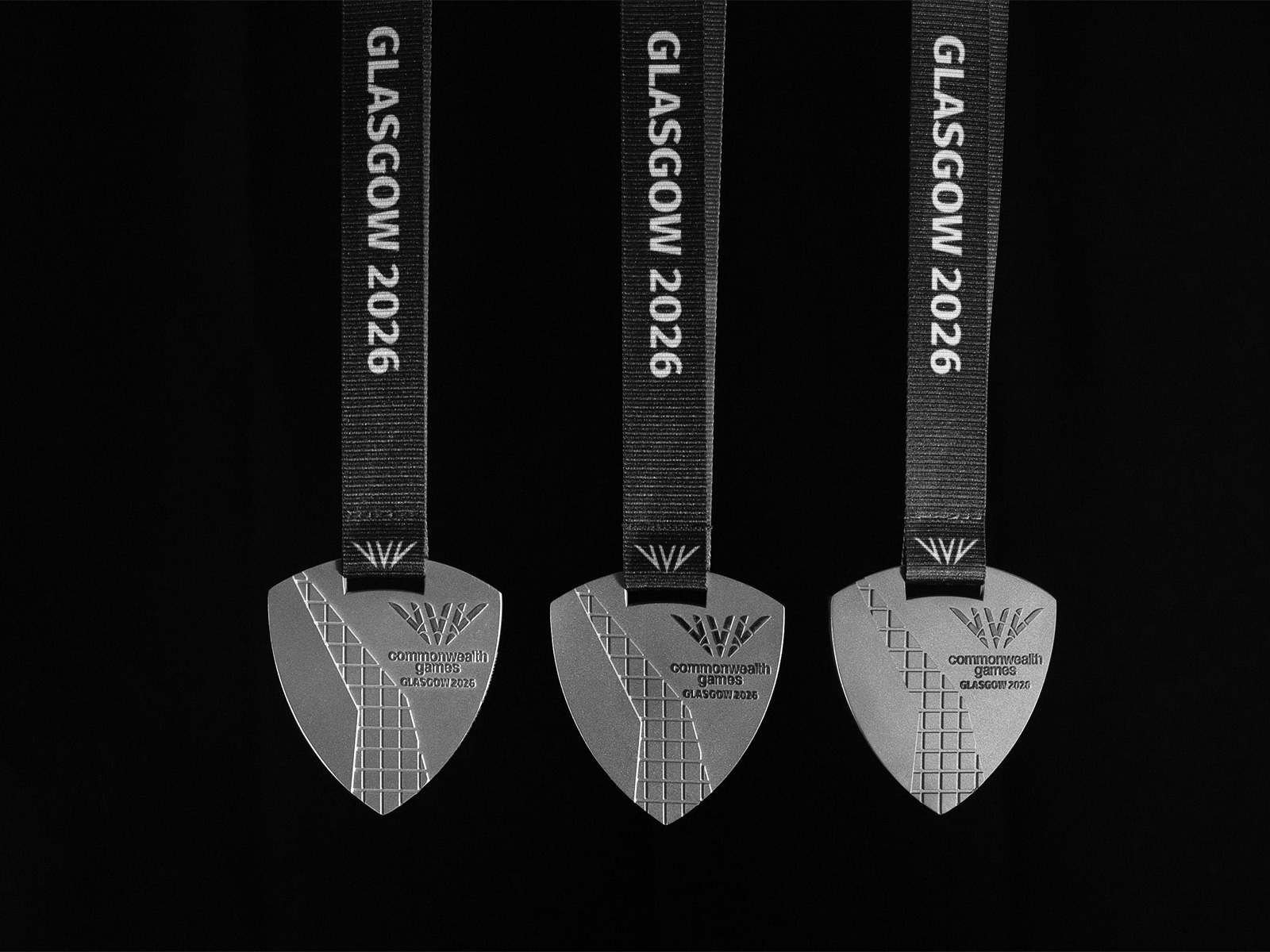
A Medal That Can Be Read by Touch: Glasgow 2026's Braille Medals Create Commonwealth Games History
Every Commonwealth Games leaves behind memories of remarkable performances, but Glasgow 2026 is set to create history even before the first medal ceremony. For the first time in the event's history, the medals have been designed with Braille and tactile features, allowing visually impaired athletes to experience their achievement not just by sight, but through touch.
The groundbreaking initiative reflects Glasgow's strong commitment to accessibility and inclusion, themes that run throughout the 2026 Games. The edition will feature a record 47 gold medals across six Para sports, making it the biggest Para programme in Commonwealth Games history. In total, 215 gold medals will be awarded across 10 sports and six Para sports.
Breaking away from the traditional circular design, the medals take the shape of a Reuleaux triangle, inspired by Glasgow's historic coat of arms. Their intricate surface carries patterns influenced by the iconic Finnieston Crane, a tribute to the city's rich shipbuilding heritage, while a textured finish inspired by Scottish tartan celebrates the nation's cultural identity. Three distinct levels on the medal symbolise the podium steps that athletes dream of standing on.
The medal was created by award-winning designer Militsa Milenkova, a Bulgaria-born artist in residence at the Glasgow School of Art, whose design was selected from entries submitted by students in the institution's Silversmithing and Jewellery programme.
Milenkova said she wanted the medal to capture Glasgow's identity while making inclusion something athletes could literally feel. She drew inspiration from the city's coat of arms, the Finnieston Crane and Scotland's tartan before incorporating Braille for the first time in Commonwealth Games history.
More than a prize for sporting excellence, the Glasgow 2026 medal represents a powerful message that victory should be experienced by every champion, regardless of ability. By combining innovative design, local heritage and accessibility, the host city has transformed a symbol of success into one of equality and inclusion.