
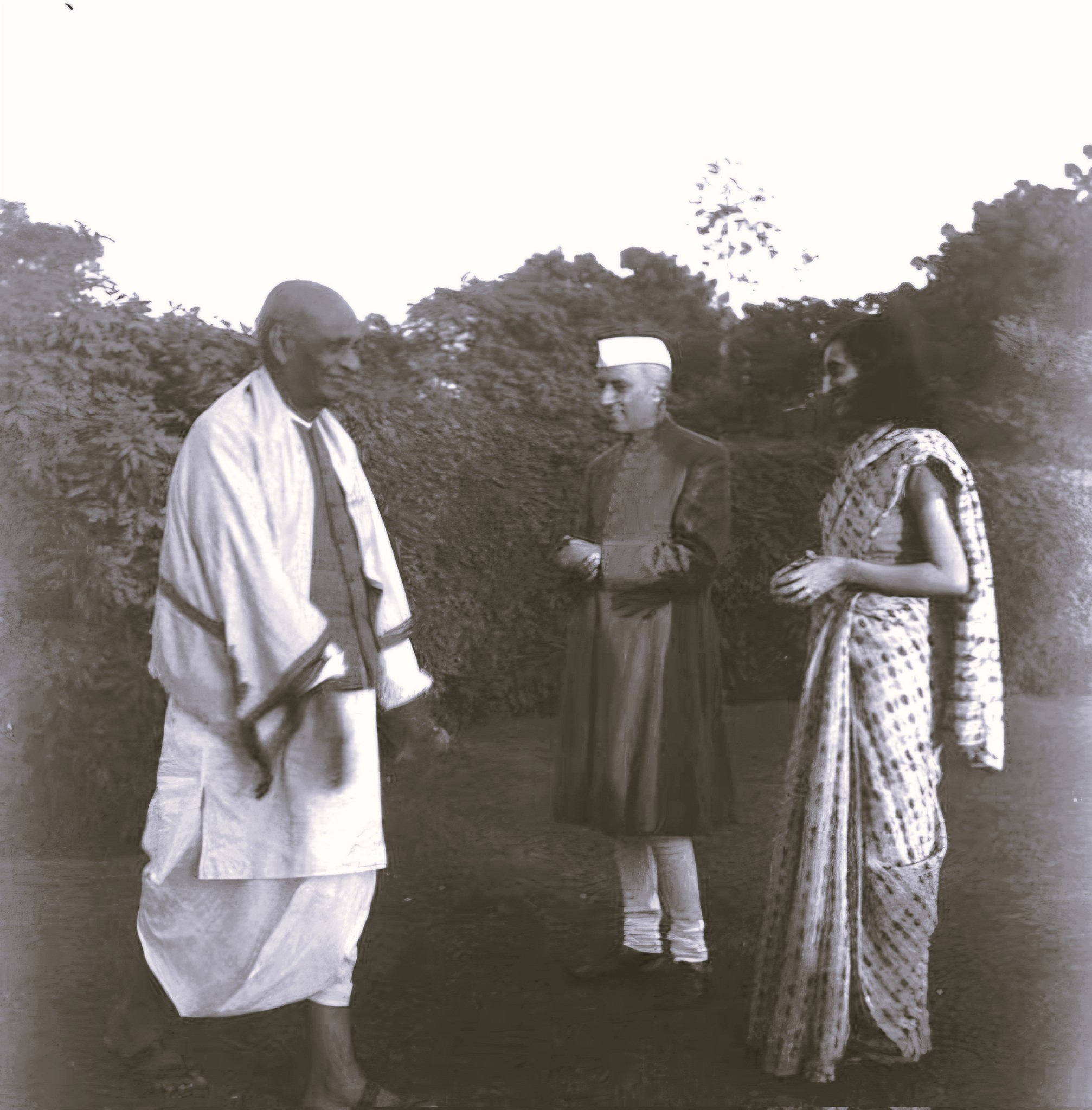
A Leader Honoured, Another Sidelined
I still remember that day October 31, 1984 with a child’s confusion and an adult’s clarity in hindsight. I was in my 4th standard, a boarder at St. Ann’s Public School, Pulivendula, when the news broke that Prime Minister Indira Gandhi had been assassinated. Within hours, waves of people surged through the town, shouting, weeping, and breaking the glass panes of classrooms as if the sound could make sense of their anger or grief.
I was far from home and did not fully understand what had happened. Later, I learnt that my father hadn’t eaten for three days. His silence and sorrow mirrored that of an entire nation not for politics, but for the loss of a leader who had come to symbolize India’s strength, dignity, and defiance.
Two leaders, Two fates
Forty-one years later, October 31 has become a study in contrasts a day when one leader is celebrated with parades, coins, and crores in spending, while another is quietly reduced to social media mentions and selective memory.
At Ekta Nagar in Gujarat, Prime Minister Narendra Modi led the grand 150th birth anniversary celebrations of Sardar Vallabhbhai Patel the Iron Man who welded India’s 560 princely states into one nation. There were marches, unity oaths, aerial shows, and ₹1,219 crore worth of new projects inaugurated in his name.
But not one of the top leaders who honoured Patel, not the Prime Minister, not Andhra Pradesh Chief Minister N. Chandrababu Naidu, not Deputy Chief Minister Pawan Kalyan, nor even actor Chiranjeevi who led the “Run for Unity” in Telangana uttered a single word for Indira Gandhi on her death anniversary. No public condolence, no tweet, no remembrance.
The day that was once solemn for an entire generation has now become politically inconvenient.
Rewriting legacy
Patel, whose realism built India’s unity, has been repurposed into an easy symbol of nationalism. His image today is projected in bronze and stone stripped of the political convictions that once defined him. Few quote his warning to the RSS in 1948 that its divisive ideology posed “a clear threat to the existence of the State.”
Instead, Patel’s name has been recast as the unclaimed flag of a new nationalist one that celebrates his statue while quietly ignoring his secular spirit.
Indira Gandhi, meanwhile, remains frozen between adoration and condemnation. Her record is both remarkable and controversial from nationalizing banks, abolishing privy purses, and driving the Green Revolution, to winning the 1971 war and imposing the Emergency. She also ended bonded labour through landmark legislation, liberating millions from hereditary servitude and reinforcing her belief that political independence must mean social and economic freedom too.
Her legacy is uncomfortable because it resists easy classification. Authoritarian yet visionary, flawed yet formidable. But politics today thrives on simplicity, not complexity. In that simplicity, the Iron Lady has been quietly erased.
A Nation of Convenient Heroes
It is easier to build statues than to face history. Easier to spend ₹1,200 crore on Patel’s commemoration than to emulate his inclusiveness. Easier to quote him as a symbol of unity than to practice the unity he envisioned.
We are a nation that reveres power but fears nuance. We remember leaders who fit the narrative of the day and forget those who challenge it. Patel and Indira both embodied strength, courage, and conviction but one has been sculpted into marble, and the other left in silence.
Memory and Amnesia
That afternoon in 1984, as the broken classroom glass crunched underfoot, I didn’t yet understand grief. Only years later did I grasp its meaning when I learned of my father’s three days of fasting. For him, Indira Gandhi was not a politician but the face of a resilient India, a leader who dared to decide, to act, and to bear the cost of both.
Today, as the nation celebrates Patel and sidesteps Indira, we are not just choosing between two leaders we are choosing which truths to remember and which to bury.
Beyond statues and silences
If Sardar Patel built India’s unity, Indira Gandhi built its resolve. Both made history; both made mistakes. To honour one while ignoring the other is not nationalism it is selective remembrance dressed as tribute.
True unity lies not in parades or postage stamps, but in acknowledging every leader who shaped this republic — the Iron Man who forged its map and the Iron Lady who gave it its spine.