
A Call for Peace Amidst Streams of Tears
A look at world history reveals that human civilization is filled with tragic tales of bloodshed, wars, and divisions. Everywhere on the world map be it the streets of Ukraine, the borders of West Asia, or the regions of Africa echoing with cries of hunger, one finds turmoil, hardship, and tears. Our collective life goal is one: tranquility. However, in today's world, we are in a situation where we must yearn even for basic peace. For a citizen to have the right to live, for a child to have the chance to smile, and for a mother to have the fortune to sleep without fear, global peace is not merely a slogan- it is the vital source necessary for the existence and survival of every individual.
History of World Freedom Day
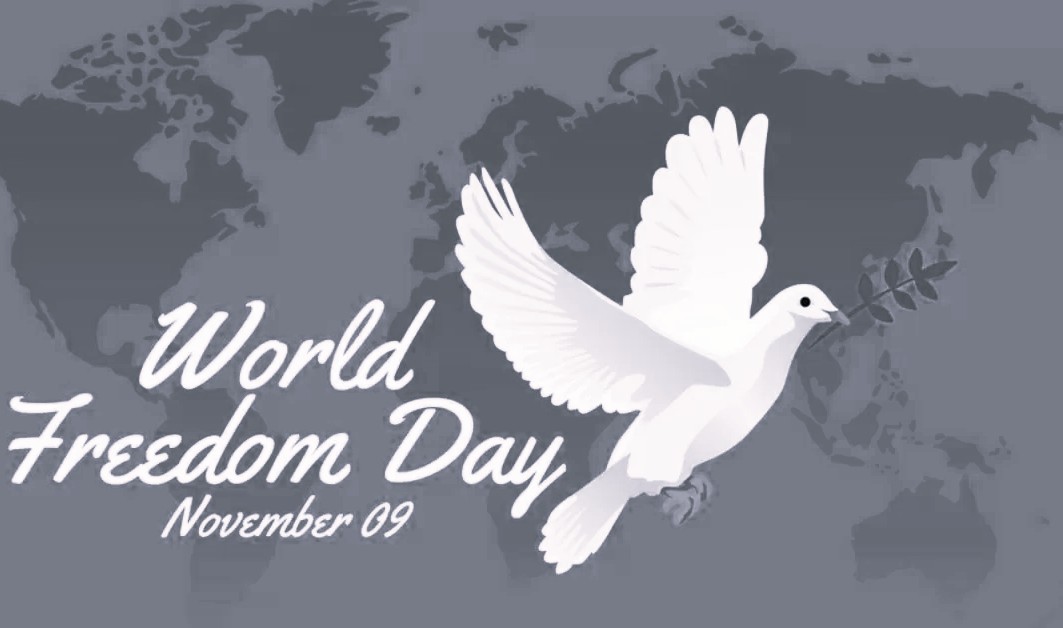
World Freedom Day, celebrated on November 9th, commemorates a crucial milestone on the path toward freedom and democracy. Specifically, it marks the anniversary of the fall of the Berlin Wall in 1989. This event remains a powerful symbol of unity and liberation in the context of Cold War politics and the struggles against oppression. Former US President Ronald Reagan, British Prime Minister Margaret Thatcher, and Pope John Paul II played a significant role, and they should be remembered on World Freedom Day.
World Freedom Day encourages reflection on the value of freedom. It supports worldwide efforts to secure freedom for those who are still struggling under authoritarian regimes. World Freedom Day, celebrated annually on November 9th, was established to commemorate the fall of the Berlin Wall in 1989. It happened at night, and people in Berlin woke up to realize they couldn't cross to the other side of the city, even if they had family or a job there. Later, following a united struggle by the people, the western and eastern sides of the country were reunited. This issue is not unique to that one country. Even in the present day, all nations face and resolve similar experiences.
This doesn't mean freedom is not under threat today. Around the world, there are authoritarian leaders who attempt to use other forms of power to change financial sectors, threaten violence, or gain control over various regions. That is why World Freedom Day is so important. We must raise awareness about the various ongoing issues worldwide and fight for those who are most in need.
Establishment of World Freedom Day
To commemorate the fall of the Berlin Wall, then-US President George W. Bush formally proclaimed World Freedom Day in 2001. This day not only honors the courage of those who fought for their freedom behind the Iron Curtain but also recalls the ongoing struggles for democracy and human rights across the globe. This observance is essential for reflecting on the sacrifices necessary for freedom and for supporting those who are still being oppressed.
Freedom Day: Observances
World Freedom Day is observed worldwide, particularly in the United States, Europe, and regions struggling with limited freedoms. In 2024, the observance holds special significance as the world renews its focus on protecting and promoting democratic values. The time has come for all nations to observe this day. Here's how this day is celebrated:
• Educational Programs and Public Awareness Campaigns: Schools, universities, and cultural institutions organize programs to educate younger generations about the importance of peace. Documentaries, panel discussions, and workshops narrate the sacrifices of those who fought for freedom and the importance of vigilance in protecting democratic principles.
• Commemorative Ceremonies: The history of those who fought for freedom and independence is remembered. Tributes are paid at their memorials.
• Freedom Rallies and Public Gatherings: Throughout the world, assemblies and rallies are held to celebrate the importance of freedom and unity. Citizens unite in solidarity to support regions under authoritarian control and to raise awareness about ongoing human rights violations.
World Freedom Day is not just about remembering the past. It is a call to protect freedom wherever it is in danger. As the world faces new challenges, such as restrictions on political and economic freedom, and changes to democratic processes through technology, this World Freedom Day helps instill the resilience, unity, and courage necessary to protect freedom for future generations.
Key takeaways from the spirit of World Freedom Day
This day is not just about commemorating a historical event; it highlights the following aspects regarding the value of freedom in today's world:
• The Continuous Struggle: In many parts of the world, people are still under oppression and authoritarian rule. This day serves as a platform for global solidarity with those fighting for democracy and human rights.
• Symbol of Authoritarianism: The Berlin Wall symbolized authoritarian rule, political division, the break-up of families, and the lack of freedom of expression. This day recalls the necessity to bravely tear down any kind of "walls" that hinder freedom and imprison citizens.
• The Power of Unity and Peaceful Change: In 1989, East German citizens, without resorting to violence, spurred the government to change through protests and public pressure. This proved that peaceful protest and civilian unity can change the course of history and create a free future. India also proved that independence can be achieved through peaceful struggle.
• Freedom of Expression: World Freedom Day emphasizes the importance of protecting the freedom of speech, freedom of the press, and the right to freely access information. Freedom of expression is vital for the current generation to move forward in global progress.
The necessity of Global Peace in the present day
Peace is more necessary now than ever before in today's complex world for the following main reasons:
• Protection of Human Values: Wars and conflicts cause millions of innocent people, especially women and children, to lose their lives or become refugees. Only with peace can human rights, dignity, and security be protected.
• Nuclear Threat: In the modern age, some countries possess devastating nuclear weapons. Even a small skirmish could lead to a nuclear war, potentially ending all of humanity.
• Economic Stability: Wars and unrest disrupt regional and international trade. This leads to inflation, food shortages, and poverty. Only peace can lay the foundation for sustainable economic development.
• Environmental Protection: Natural resources and forests are destroyed during conflict. Peaceful cooperation is crucial for nations to work together to tackle global issues like climate change.
Current developments
These are the concerning current developments that pose a severe threat to global peace:
• Regional Conflicts and International Terrorism: Regional conflicts like the Ukraine-Russia war and the crises in West Asia are damaging the global supply chain. Similarly, cyber attacks and international terrorism pose a challenge to peace and security. Political, religious, and ethnic divisions are increasing not only between countries but also within them. These internal divisions weaken democratic systems.
• Arms Race: Major powers and developing countries alike are increasing their defense budgets and competing in the manufacture of modern weapons. This heightens distrust and increases the risk of conflict.
• Digital Disruption: Misinformation, fake news, and hate speech on social media are increasing hatred in society, disrupting peace. Cyber attacks constantly threaten all nations.
Precautions to be taken
To achieve and maintain global peace, the following actions are mandatory at the individual, national, and international levels:
Actions to be Taken at the Individual Level:
• Cultivating Tolerance and Understanding: Developing respect for the religions, cultures, and opinions of others, and abandoning hatred and bias.
• Practicing Non-Violence: Finding solutions through discussion instead of arguments and violence, even in small matters.
• Preventing the Spread of Hate Propaganda: Refraining from forwarding or believing false information (Fake News) received on social media.
Actions to be Taken at the National Level:
• Changes in the Education System: Mandatory teaching about peace, civic responsibility, and human rights in school education.
• Conflict Resolution: Resolving border issues and internal conflicts through dialogue and mediation instead of wars.
• Social Justice: Ensuring equal opportunities and social justice for all citizens in the country, thereby reducing the inequalities that cause internal unrest.
Actions to be taken at the international level:
• Strengthening the United Nations: Strengthening international organizations like the UN and ensuring all countries abide by their peacekeeping rules.
• Disarmament: Implementing stringent international agreements to reduce and control nuclear, biological, and chemical weapons.
• Cooperation and Aid: Providing financial and humanitarian aid to poor and war-torn regions to reduce inequalities and support development.
The tree of global peace will only grow if the seed of peace is sown in the human heart. The one thing we learned from the fall of the Berlin Wall is that no wall is permanent. Wars and injustices are created by humans themselves. The power to remove them also lies within human thought.
This earth is our common home. If the fire of unrest ignites here, its heat will reach all of us. Therefore, global peace is not just the responsibility of political leaders. It is the personal responsibility of you, me, and everyone around us. Our small actions, our kindness, tolerance, and love are the real investment for a peaceful world tomorrow.
"If tomorrow is to be better and more peaceful than the past, let us fly the 'Dove of Peace' in our hearts today!"