
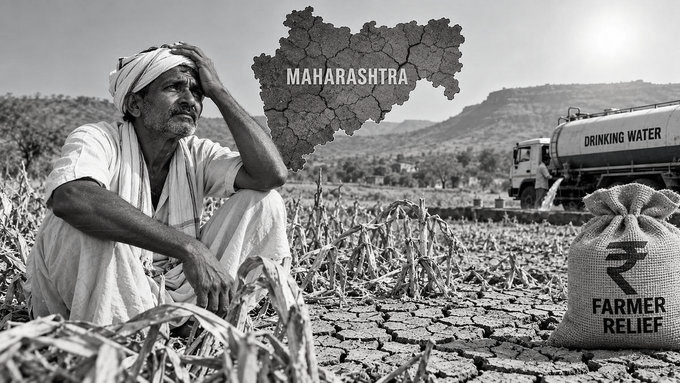
85% of Maharashtra Declared Drought-Hit, ₹5,000 Diwali Aid for Farmers as Water Crisis Deepens
Maharashtra’s farmers have been battered by two opposite weather disasters in successive years. In 2025, floods damaged crops across nearly 68.7 lakh hectares; in 2026, drought has spread to 305 of the state’s 358 talukas. Yet the immediate relief announced this time is ₹5,000 per farmer, prompting criticism that assistance falls short of the scale of losses.
Last year, excessive rain affected 29 districts and 273 talukas, destroying crops and washing away fertile soil. Chief Minister Devendra Fadnavis announced a ₹31,628-crore relief package for more than 60 lakh farmers, including crop-loss compensation, additional support for rabi sowing and funds to repair damaged farmland and infrastructure. However, the headline package was not equivalent to cash paid directly to every farmer. In December 2025, the Centre reported that ₹563.14 crore had been sanctioned for affected farmers in Chhatrapati Sambhajinagar district, with additional assistance for rabi seeds and inputs.
This year, the crisis has reversed. Following rainfall shortages, the government added 40 talukas to the drought-hit list, taking the total from 265 to 305 - more than 85% of Maharashtra’s talukas. Fadnavis announced ₹5,000 in advance assistance before Diwali, saying the state would not wait for the full central assessment process. Further compensation is expected after crop-loss assessments.
The government has extended 12 drought-relief concessions, including crop-loan restructuring, land-revenue relief, educational fee exemptions and electricity-related assistance. Cooperative banks and credit societies have been warned against coercive loan recovery. Agricultural pumps up to 7.5 horsepower receive free electricity under state policy, while additional farmers have been processed for scheduled debt-relief payments.
But the emergency is no longer confined to fields. Groundwater levels in Marathwada have fallen below three metres, prompting plans for early deployment of GPS-tracked tankers. Nearly 16,000 illegal water connections have been disconnected to protect drinking supplies. Fodder availability varies widely by region, raising concerns over livestock as the drought deepens.
The Opposition has demanded substantially higher compensation. NCP (SP) leader Anil Deshmukh sought ₹1 lakh per hectare, while Ajit Navale of the All India Kisan Sabha called the ₹5,000 payment inadequate.