
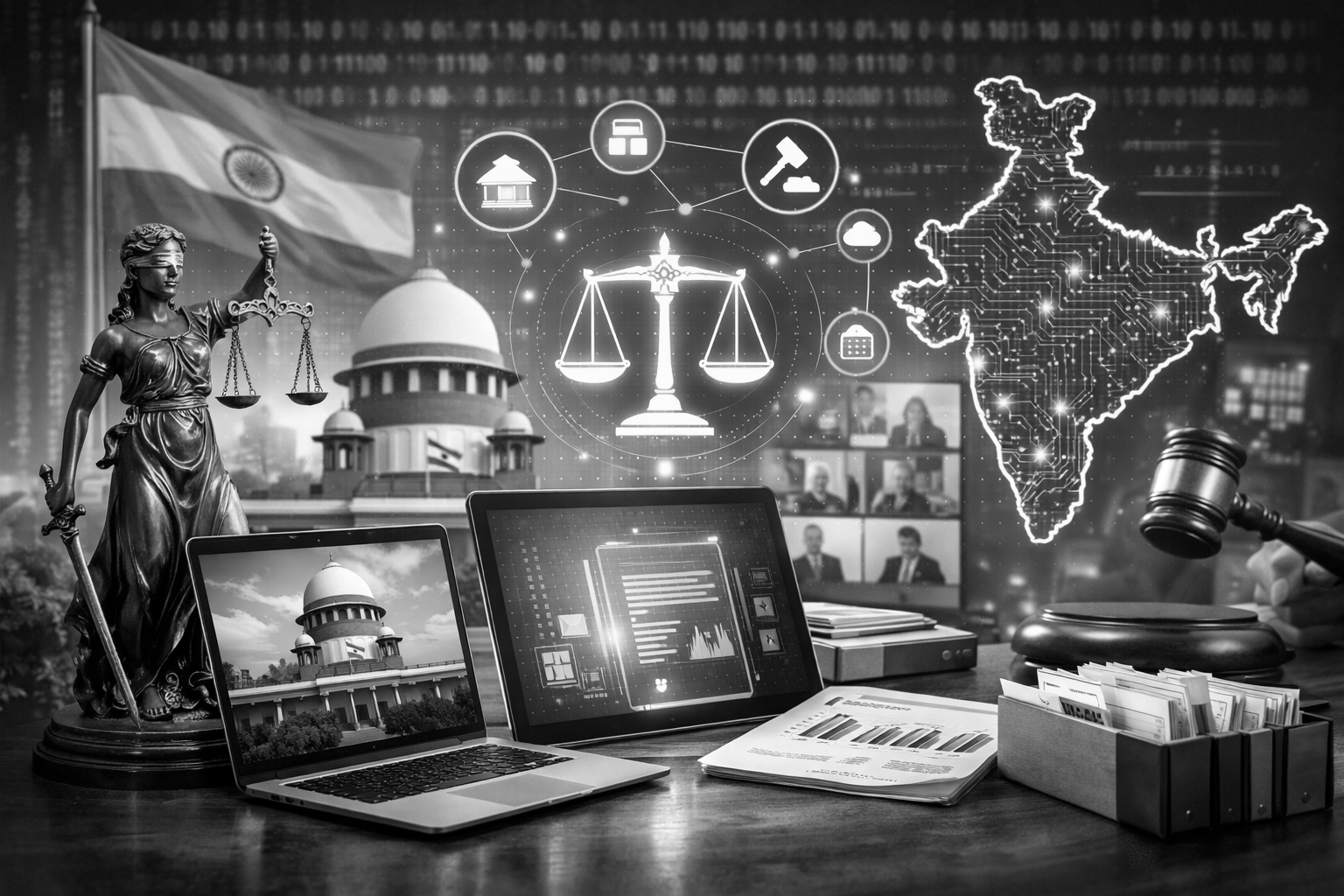
₹7,210-Crore eCourts Phase III Plan Powers India’s Judicial Transformation
New Delhi is set to host a landmark national conference on Judicial Process Re-Engineering and Digital Transformation on April 11 and 12, signalling a decisive push to modernise India’s justice delivery system. Organised by the Supreme Court’s eCommittee in collaboration with the Department of Justice, the event comes at a critical moment when courts are grappling with mounting case backlogs and increasing demand for faster, transparent justice.
More than a discussion on technology, the conference aims to fundamentally rethink how courts function. The focus is on process re-engineering —redesigning judicial workflows to eliminate delays, improve efficiency, and enhance citizen access. This marks a shift from basic digitisation to a deeper transformation of the judicial ecosystem.
Chief Justice of India Justice Surya Kant will inaugurate the conference, alongside Supreme Court judge Justice Vikram Nath , who chairs the eCommittee. Union Ministers Arjun Ram Meghwal and Jitin Prasada will also participate, reflecting strong coordination between the judiciary and the government.
At the centre of this transformation is the eCourts Mission Mode Project Phase III , backed by a significant outlay of ₹7,210 crore for 2023–2027. The initiative aims to create a paperless, data-driven, and fully integrated court system . Key digital launches expected at the conference include a Single Sign-On (SSO) portal , electronic delivery of summons via email , integration of eCourts with ePrison systems , and an upgraded eCourts Services mobile app (Version 4.0) .
The conference will also bring together judges from the Supreme Court and High Courts, along with officials from the Ministry of Home Affairs, National Crime Records Bureau, and National Informatics Centre. Their participation highlights a broader push toward an integrated criminal justice system , where courts, police, and prisons operate seamlessly through digital platforms.
If implemented effectively, these reforms could significantly reduce delays, cut litigation costs, and improve transparency. However, challenges such as the digital divide, data security, and capacity building remain key concerns.
As India advances its digital governance agenda, this conference could mark a turning point paving the way for a smarter, faster, and more accessible judiciary .