
63 NCR Cities Put on Clean-Air Mission as Bhupender Yadav Calls for Grassroots Action
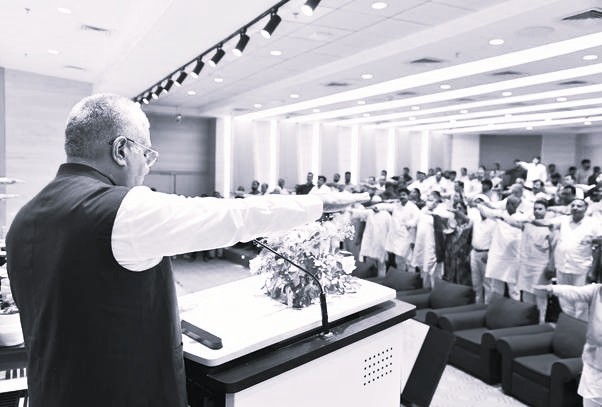
Union Environment Minister Bhupender Yadav has called for a scientific and data-driven approach to air-pollution control to be implemented at the grassroots level, stressing that mayors and local representatives must play a central role in translating clean-air action plans into effective measures on the ground. Yadav made the remarks at a dialogue involving mayors and representatives from 63 cities across the National Capital Region (NCR), the first such large-scale engagement by the Environment Ministry with elected local representatives on air pollution.
Yadav said urban local bodies must understand their powers and responsibilities in air-pollution control and solid-waste management. He urged public representatives to take the first positive steps towards creating successful and replicable local models that can be adopted by other cities. He also called on mayors and local representatives to lead by example and mobilise citizens to prevent avoidable pollution.
The minister stressed the need to increase green cover, particularly by planting local and drought-resistant grass species along roads, to help control dust pollution. He also called for greater public participation in effective cleaning, preventing plastic use and biomass burning, and checking pollution from non-conforming industries and vehicles. Yadav administered a Clean Air Pledge to the representatives and urged them to work with citizens to improve air-quality management.
The push comes ahead of the September 2026-March 2027 pollution season, with NCR states preparing coordinated action plans targeting major sources including road dust, construction, municipal waste, industries, vehicles, diesel generators and biomass burning. The emphasis on local bodies reflects the growing recognition that pollution control cannot depend solely on emergency measures after air quality deteriorates.
There has been progress under the National Clean Air Programme (NCAP), which covers 130 cities. In 2025-26, 108 cities recorded lower PM10 concentrations than in 2017-18. Among them, 72 cities achieved reductions of more than 20%, while 26 recorded reductions exceeding 40%. However, only 14 cities met the national PM10 standard, underlining the gap between declining pollution levels and achieving genuinely clean air.
The Swachh Vayu Sarvekshan 2026 also highlighted the importance of municipal action. Lucknow topped the million-plus category with 198 points, with measures including mechanised road sweeping, improved waste management and the use of electric vehicles. Its annual PM10 concentration nevertheless remained above the national standard, falling from about 250 µg/m³ in 2017-18 to around 135-137 µg/m³ in 2025-26.
For the NCR, where pollution comes from multiple and changing sources, the challenge is increasingly shifting from seasonal emergency response to year-round prevention. Yadav's message places municipal governments at the heart of that transition, with the effectiveness of the strategy ultimately depending on cleaner roads, better waste management, reduced dust and burning, stronger enforcement and sustained citizen participation.