
5 Lakh Tonne Animal Feed Ingredient Quota Cleared as Feed Demand Surges
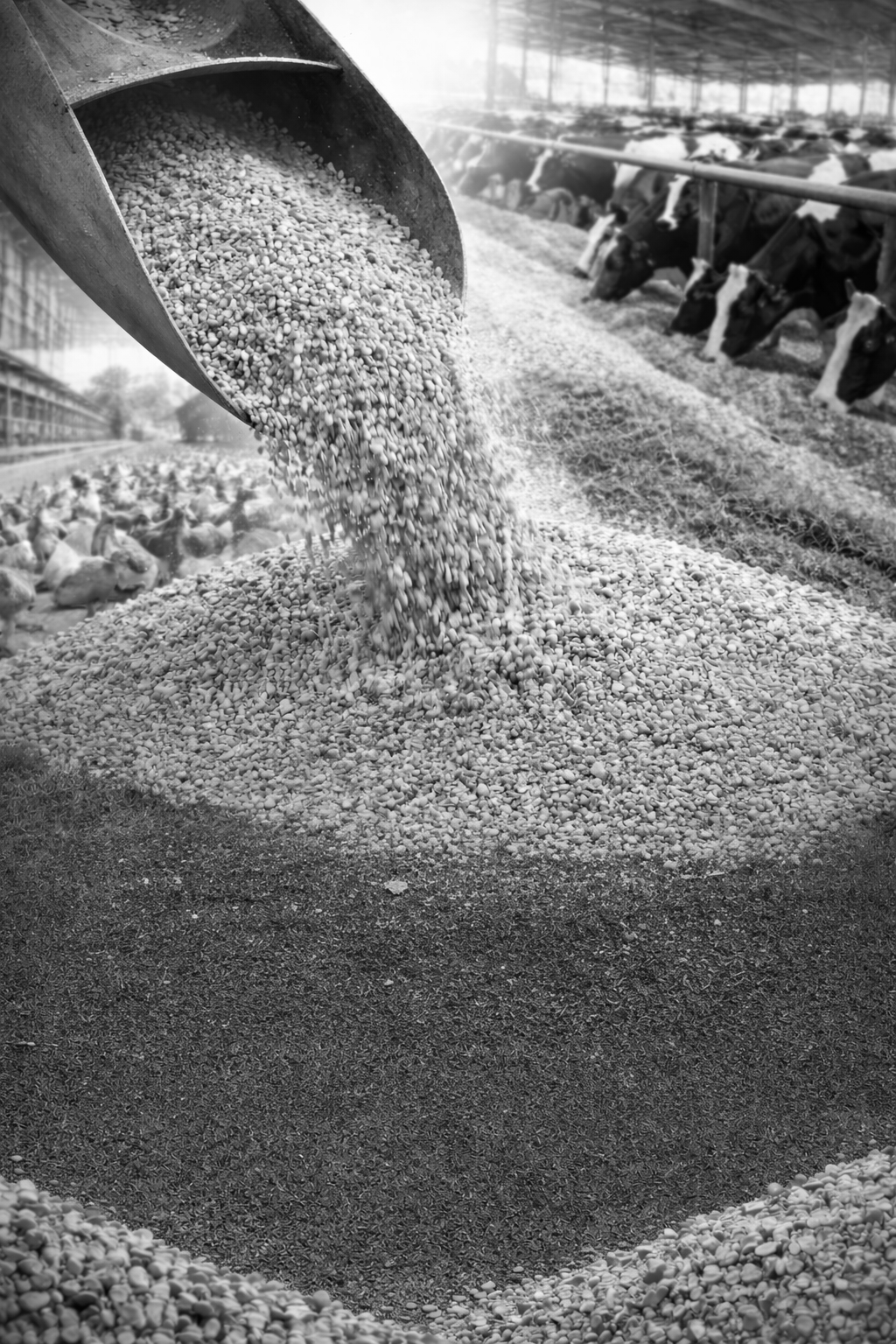
India has cleared a quota-based duty concession for 5 lakh tonnes of DDGS (Dried Distillers’ Grains with Solubles) imports from the United States under the initial phase of a bilateral trade arrangement, a move officials describe as a measured stabilisation step rather than a market opening. The permitted quantity equals roughly 1% of India’s total animal-feed consumption estimated at about 500 lakh tonnes and is intended to supplement domestic supply amid rising demand for feed used in poultry, dairy, aquaculture and livestock sectors. Authorities argue that the limited quota ensures food-grain security is not compromised while helping the feed industry manage price volatility.
DDGS is a high-protein by-product of ethanol production , primarily derived from corn, and is widely used globally as a partial substitute for corn and soybean meal in feed formulations. By allowing controlled access to DDGS, the government expects to reduce pressure on domestic corn and soybean markets , thereby preventing diversion of food crops away from human consumption. Officials say this will contribute to feed cost stability , which is critical because feed constitutes the largest expense for poultry and dairy producers. Stable feed prices, in turn, help moderate retail prices of essentials such as milk, eggs, chicken and fish , linking the decision directly to food inflation management .
India’s demand for animal protein has been expanding rapidly due to population growth , rising incomes and urbanisation, which are reshaping dietary patterns. Current annual feed demand includes roughly 200 lakh tonnes of corn , 65 lakh tonnes of wheat , and 62 lakh tonnes of soybean meal , together forming nearly two-thirds of total feed use. However, domestic production faces constraints including limited arable land, climate variability and productivity gaps. Analysts project that feed demand could outpace domestic supply by the early 2030s, making strategic imports a practical buffer during periods of tight supply.
The country has previously resorted to imports when domestic prices spiked including significant soybean meal purchases in 2021 and already sources smaller volumes of feed ingredients and grains from multiple nations. In this context, the DDGS quota is positioned as a diversification tool rather than dependency on a single origin. Government sources emphasise that the arrangement remains tightly capped and will be reviewed based on its impact on domestic markets, livestock growth and consumer prices.
Still, the decision has sparked debate among farm groups and policy observers. Concerns include the potential presence of genetically modified material in imported DDGS, the need for strict quality checks to prevent contamination, and the risk that import benefits might not fully pass through to farmers if supply chains are inefficient. Experts recommend robust testing protocols , clear labelling standards , and transparent monitoring of price transmission to ensure the policy achieves its stated goals. Industry specialists also highlight the need for guidance on optimal inclusion rates in feed rations so that nutritional performance is maintained while realising cost savings.
Overall, policymakers frame the step as a low-risk, targeted intervention designed to balance trade, farm economics and consumer interests. By keeping volumes small and focusing on price stabilisation, the government aims to support livestock producers, maintain affordability of protein foods, and ease stress on domestic grain markets a delicate equation at the heart of India’s evolving food-security strategy.