
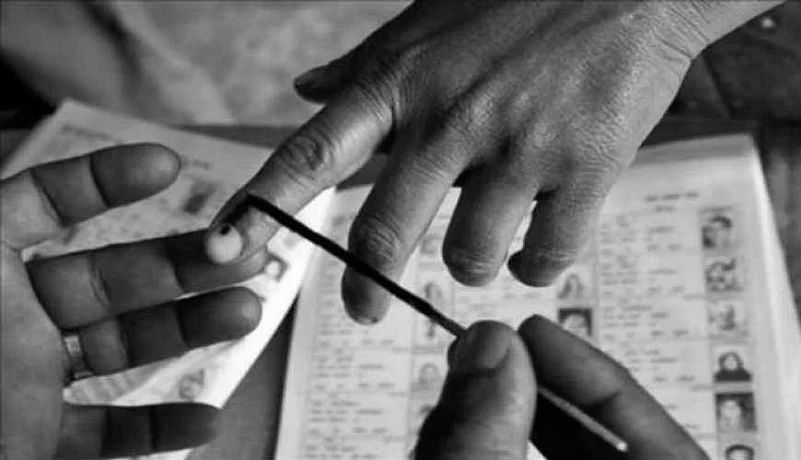
45,000 Names Deleted in Bhabanipur, TMC Orders Verification
The large-scale deletion of voters’ names from the draft electoral rolls in West Bengal under the Special Intensive Revision (SIR) exercise has raised serious political and constitutional questions, going beyond routine administrative correction and into the core of democratic participation. The issue has assumed particular significance in Bhabanipur, the Assembly constituency of Chief Minister Mamata Banerjee, where nearly 45,000 voters about 21.7 per cent of the electorate have been struck off from the draft rolls.
In the 2021 Bhabanipur by-election, Mamata Banerjee registered a sweeping victory, polling around 85,000 votes and defeating the BJP’s Priyanka Tibrewal by a margin of nearly 59,000 votes. Against this backdrop, the scale of deletions revealed in the draft rolls is not a marginal adjustment. Numerically, it is large enough to potentially reshape the political arithmetic of what has long been considered one of the Trinamool Congress’s safest urban seats.
It would, however, be simplistic to assume that all deleted voters were supporters of the ruling party. Electoral rolls are living documents, and deletions can legitimately occur due to death, permanent migration or duplication. The concern lies not merely in the fact of deletions, but in their proportion and pattern. In Bhabanipur, removals appear concentrated in specific wards, including minority-dominated and migrant-heavy areas, while several rural and semi-urban constituencies elsewhere in the state have recorded relatively fewer deletions.
This uneven impact has sharpened political suspicion and raised questions about whether urban, mobile and marginalised populations are being disproportionately affected by the revision process. Importantly, deletion from the draft roll does not amount to permanent disenfranchisement. The law provides for a claims and objections period during which voters can seek restoration. The immediate political contest, therefore, is not over votes already cast, but over voters’ continued existence on the electoral rolls.
The Trinamool Congress has responded by activating its booth-level party machinery to identify affected voters and assist them with documentation and hearings. This distinction is legally significant. While political parties are entitled to help voters navigate the process, they have no authority to direct or influence Booth Level Officers, who function under the Election Commission and are insulated from political control. Any blurring of this boundary risks inviting institutional scrutiny.
For Mamata Banerjee, the challenge is both political and symbolic. Bhabanipur is not merely another constituency; it is a demonstration of her political dominance in urban Bengal. Her response is therefore expected to unfold on multiple fronts, beginning with organisational mobilisation aimed at maximising restoration during the claims and objections phase. At this stage, the exercise resembles an administrative rescue effort more than a conventional election campaign.
Parallel to this is the narrative strategy. If restoration proves slow or selective, the ruling party is likely to frame the issue as one of democratic rights rather than partisan loss, arguing that voters particularly migrants and minorities are being rendered invisible through procedural mechanisms. This approach mirrors Mamata Banerjee’s past political playbook, where institutional challenges are framed as broader threats to constitutional rights.
Institutional escalation, if it occurs, is likely to be calibrated rather than confrontational. The chief minister has historically preferred formal representations, demands for transparency and selective legal pressure over direct early attacks on constitutional bodies. Court intervention, should it come, is expected to be targeted, focusing on disproportionality and due process rather than a sweeping challenge to the revision itself.
The political consequences of the exercise will ultimately depend on how many deleted names are restored. If most voters return to the rolls, the episode may end up strengthening the Trinamool Congress’s mobilisation narrative while leaving the electoral balance largely intact. Partial restoration could narrow margins and turn Bhabanipur from a fortress into a competitive battleground. A scenario in which large-scale exclusions persist would force a strategic recalibration, shifting the emphasis from numerical dominance to turnout maximisation among remaining voters.
The implications extend beyond Bhabanipur alone. Across south Kolkata, several high-profile constituencies together have recorded over two lakh deletions. In urban seats where margins are often decided by turnout rather than swing, even modest changes to the voter base can have outsized political consequences.
At its core, the unfolding tussle is not just about who wins the next election, but about how democracies manage electoral roll verification without undermining voter confidence. Electoral revisions are necessary for integrity, but they must be transparent, even-handed and sensitive to social realities. As West Bengal moves towards the 2026 Assembly elections, the Bhabanipur episode underscores a central truth of modern politics: some of the most decisive battles are now fought not at polling booths, but on the pages of the voter list itself.