
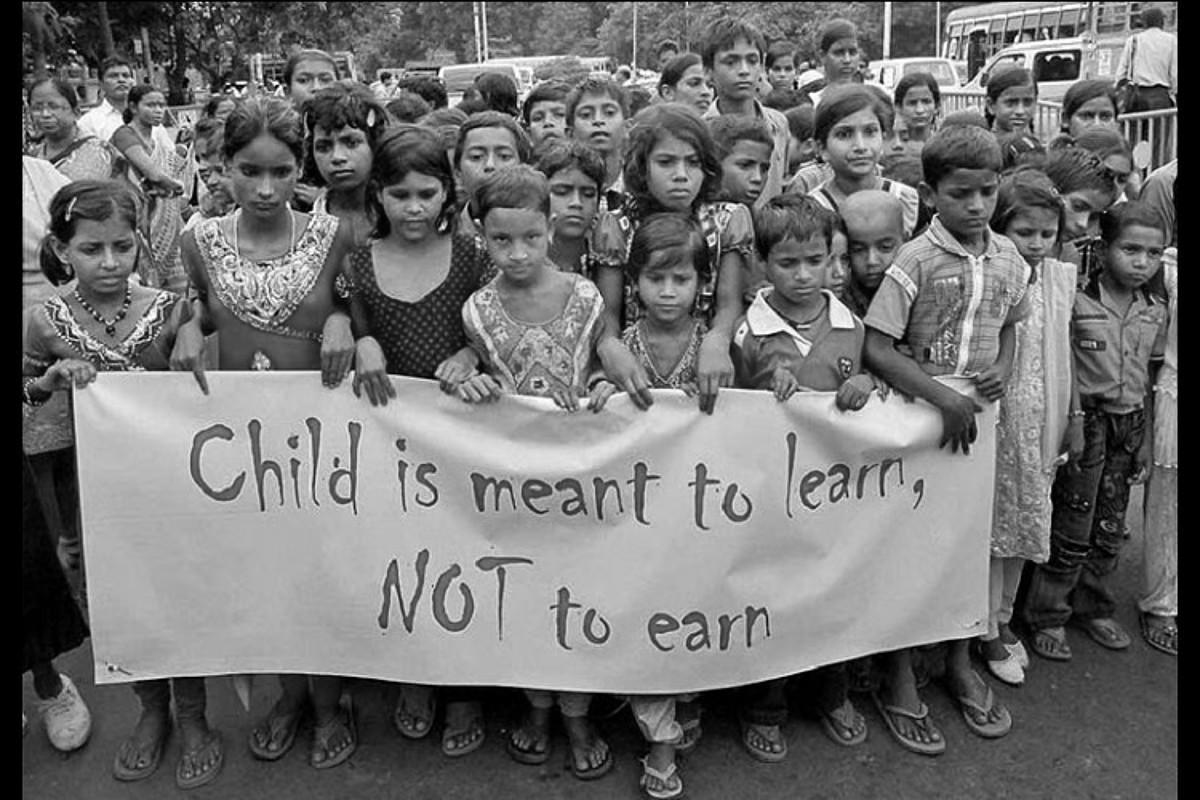
3,800 Children Rescued, 575 FIRs: The Bigger Challenge Begins After Rescue
India’s fight against child labour has a legal framework, but its effectiveness depends on sustained rehabilitation efforts long term.
The Child and Adolescent Labour (Prohibition and Regulation) Act prohibits employment of children below 14 and bars adolescents aged 14-18 from hazardous occupations. Violations can attract criminal penalties. The PENCIL portal allows child-labour complaints to be routed to district officials for action.
Rehabilitation is designed to go beyond rescue. Children may be restored to families when safe, linked with child-protection services, brought back into formal schooling and supported through applicable compensation and welfare schemes. The earlier National Child Labour Project provided bridge education, vocational training, meals, healthcare and stipends before mainstreaming children into schools; it has since been subsumed into Samagra Shiksha.
The NCPCR’s latest campaign illustrates the reach of targeted enforcement. Between June 12 and August 31, its Pan-India Rescue and Rehabilitation campaign, conducted with states, Union Territories, District Magistrates, labour departments and police, rescued more than 3,800 children and saw over 575 FIRs registered. Authorities were asked to report not only rescues, but also restoration, rehabilitation, educational mainstreaming and compensation.
Yet major gaps remain. Informal workplaces, migration, fragmented supply chains and poverty can make children difficult to identify and easy to move elsewhere. Government documents have also acknowledged limitations in the PENCIL platform, including outdated technology, incomplete state and UT onboarding and weak complaint registration.
Prevention therefore requires a shift from one-time rescue to sustained case management. Every rescued child should receive a documented rehabilitation plan, school support and regular follow-up. Police investigations should pursue recruiters, contractors and trafficking networks, not merely workplace employers.
Equally important is supporting families through employment, food security, social protection and livelihood assistance. Stronger inter-state data sharing, recurring hotspot inspections, community reporting and better coordination among labour, education, police and child-protection agencies can reduce repeat exploitation.
The real measure of success is not the number rescued, but the number who remain safely in school, receive entitlements and avoid returning to labour or trafficking.