
₹33,600-cr BHAVYA Clears Cabinet, Plug-and-Play Parks to Fast-Track Manufacturing Growth
India’s push to become a global manufacturing hub took a decisive step forward with the Cabinet approving the ₹33,600-crore Bharat Audyogik Vikas Yojna (BHAVYA) , a scheme that builds directly on the experience of the National Industrial Corridor Development Corporation (NICDC) , which has spent over a decade laying the groundwork for industrial ecosystems across the country.
NICDC’s track record provides the foundation for this scale up. It has already developed greenfield industrial smart cities such as Dholera in Gujarat, Shendra Bidkin in Aurangabad, Greater Noida, and Vikram Udyogpuri in Madhya Pradesh , with plug and play land parcels now available for immediate allotment. Flagship projects like Dholera Special Investment Region, spread over 920 sq km with trunk infrastructure and activation areas largely in place , have begun attracting large scale investments and demonstrate India’s ability to build industrial cities from scratch.
Other nodes such as Palakkad Industrial Smart City, about 1,700 acres with strong investment potential, and Hisar Integrated Manufacturing Cluster of nearly 3,000 acres, underline that NICDC’s model is now spreading across regions and sectors, moving beyond planning into execution. In total, NICDC is developing around 20 greenfield industrial smart cities across multiple industrial corridors, establishing a nationwide industrial backbone.
BHAVYA now seeks to replicate this model at scale, with 100 plug and play industrial parks offering pre cleared land, ready infrastructure and integrated services, sharply reducing the time between investment intent and production. Parks ranging from 100 to 1,000 acres will be supported with up to ₹1 crore per acre , along with additional support for external connectivity.
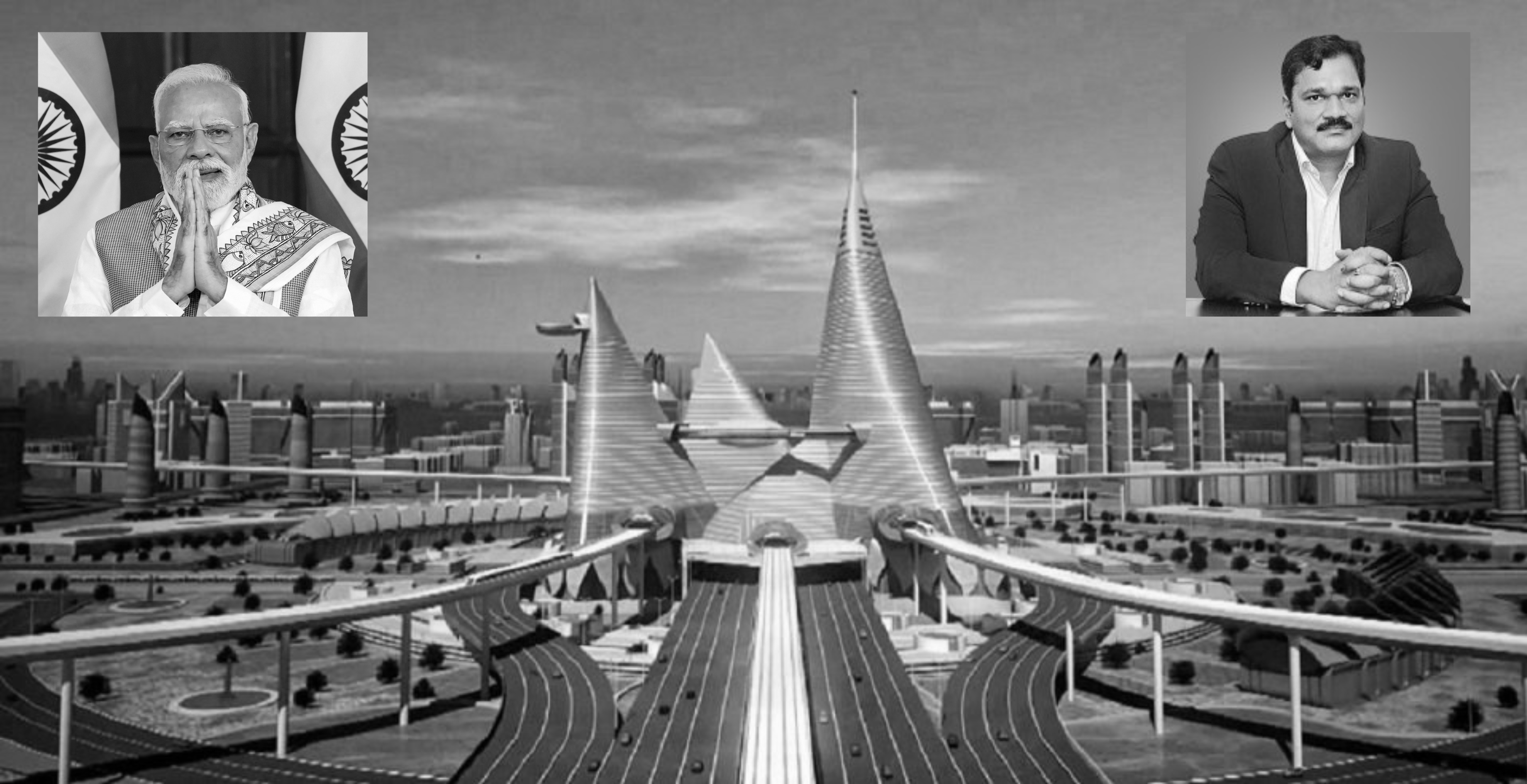
Prime Minister Narendra Modi, in a post on X, described BHAVYA as a “landmark step” that will boost manufacturing, investment and jobs , while significantly improving ease of doing business through streamlined approvals and single window systems.
Unlike earlier Special Economic Zones (SEZs) that were largely export focused enclaves, BHAVYA removes such restrictions, allowing firms to serve both domestic and global markets. This aligns India with the successful industrial park models of China and Vietnam, where ready to use ecosystems have driven manufacturing scale and competitiveness.
With single window approvals, GatiShakti linked logistics, and cluster based development, the scheme is expected to generate around 15 lakh direct jobs while strengthening domestic supply chains and boosting competitiveness.
The scheme could also unlock long pending regional opportunities. The Kurnool Anantapur belt, with its vast stretches of affordable, contiguous land, is ideally positioned for large scale industrialisation. With BHAVYA providing the necessary framework, the long envisioned Hyderabad Bengaluru industrial corridor could finally take off, particularly in Anantapur district, which combines scale, connectivity and strategic location.
Driving this transformation is NICDC CEO Rajat Kumar Saini, an IIT Delhi graduate and Telangana cadre IAS officer , whose experience spans district level administration in Gadwal and Bhadradri Kothagudem and key roles in implementing initiatives like the Dharani land portal . His blend of ground level execution and policy design is now shaping India’s transition to plug and play industrialisation at scale.